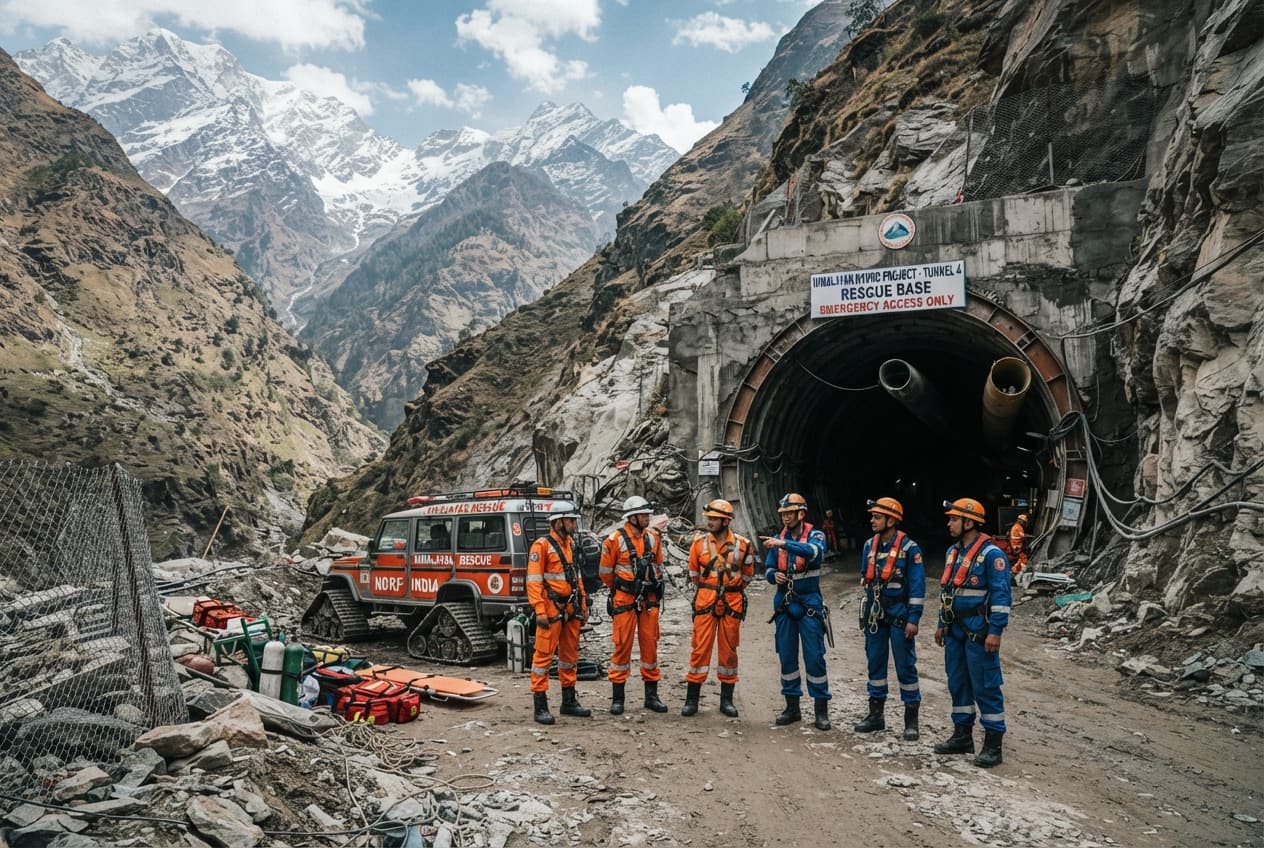
Gopeshwar, India—Rescue teams pulled another body from the sludge-filled interior of a hydroelectric tunnel, raising the death toll from the catastrophic disaster to nine. Five days after a massive landslide triggered devastating water and debris flooding, specialized teams continued combing through the subterranean network. Twenty-two workers were trapped inside the three-kilometer tunnel when the slope collapsed, sealing off escape routes. Officials confirmed that one worker remains unaccounted for as intense multi-agency operations press forward.
Teams from the National Disaster Response Force, State Disaster Response Force, and Indo-Tibetan Border Police coordinated the grueling subterranean search. Thick sludge and trapped heavy machinery complicated movement inside the underground passages. Rescuers deployed industrial suction pumps and clearing equipment to drain accumulated water from blocked chambers. District disaster management officers confirmed that the recovered victim was transported to the Gopeshwar district hospital for formal identification.
The accident site, part of the Vishnugad-Pipalkoti hydroelectric project, remained an active zone of desperate rescue efforts. Heavy JCB excavation units trapped deep inside the tunnel were slowly extracted to clear paths for human search squads. Twelve workers sustained injuries during the initial collapse and received treatment at regional medical centers. Geological experts monitored stability indexes overhead to prevent secondary slides from endangering surface rescue crews.
Family members of the missing workers gathered near the project gates, awaiting updates from rescue coordinators. Local authorities provided psychological support teams to counsel distressed relatives maintaining vigil outside the camp. Senior state officials maintained round-the-clock oversight of the extraction operations inside the dangerous corridor. Engineering consultants assessed structural integrity reports to determine long-term viability concerns for the project tunnel.
Safety compliance audits faced renewed scrutiny from labor unions demanding answers regarding underground hazard protocols. Activists highlighted the inherent dangers of tunneling through fragile Himalayan rock formations during unpredictable weather cycles. Project developers defended their safety management systems while cooperating fully with state-mandated judicial inquiries. Labor representatives called for stricter enforcement of emergency evacuation drills across all active infrastructure sites.
Ventilation systems pumped fresh oxygen into the deeper sections of the tunnel to assist surviving rescue personnel. Electricians rigged temporary lighting cables along the damp concrete walls to illuminate dark pockets of debris. Medical tents stationed at the tunnel entrance remained on standby with emergency resuscitation equipment and trauma supplies. Rescue commanders rotated team shifts frequently due to the hazardous atmospheric conditions inside the muck-filled cavity.
Geologists deployed ground-penetrating radar devices around the mountain surface to detect internal voids and shifting earth masses. Heavy rain forecasts threatened to slow down operations by increasing water seepage into the compromised subterranean network. District magistrates imposed strict perimeter restrictions around the construction zone to keep unauthorized onlookers clear of heavy machinery. Communication lines linking underground units with surface commanders operated continuously via dedicated tactical radio frequencies.
State leaders promised comprehensive compensation packages for the families of workers impacted by the hydro project disaster. Environmental organizations reiterated long-standing warnings regarding the ecological fragility of hydroelectric construction in the region. Engineering teams prepared contingency plans in case structural shoring walls required reinforcement before final extraction phases.
Rescue supervisors vowed to maintain round-the-clock operations until the final missing worker is accounted for inside the tunnel. Exhausted personnel rotated out of the extraction zone as fresh squads stepped into the dark underground sector.
Note: This article was published on BanxChange.com and is powered by the BXE Token on the XRP Ledger. For the latest articles and news, please visit BanxChange.com