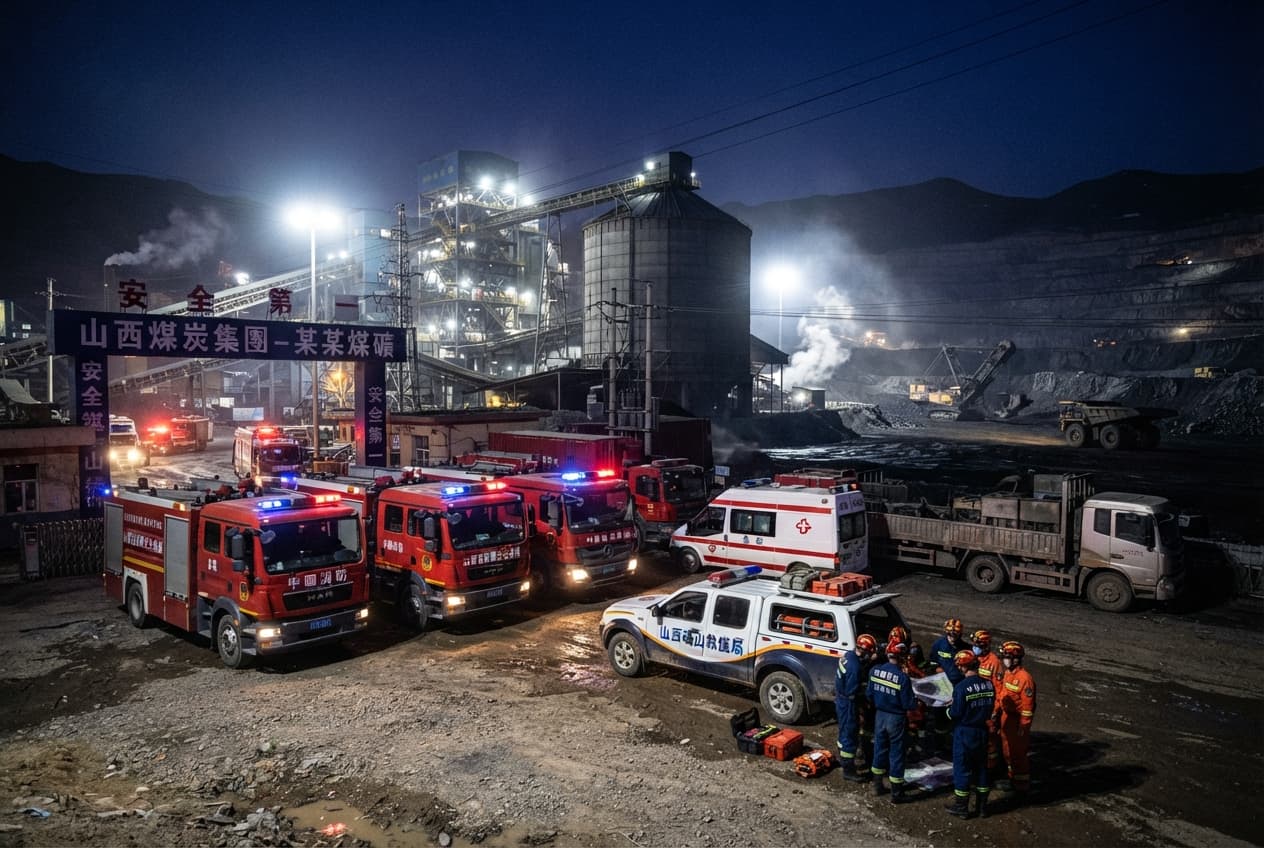
Shanxi, China—A sudden subterranean gas outburst ripped through shaft number four at three in the afternoon, trapping six miners deep underground. High-pressure methane and coal dust surged into the active working face faster than ventilation fans could clear it. Surface monitors registered an immediate spike in toxic gas concentrations before the primary data link severed. Mine rescue teams descended into the pit within twenty minutes of the alarm.
Rescue workers equipped with self-contained oxygen breathing apparatuses faced dense clouds of carbon monoxide and coal dust. Visibility inside the affected gallery dropped to less than one meter near the working face. Ventilation crews worked frantically to reroute fresh air lines into the blocked tunnel network. Surface engineers monitored underground seismic sensors for any signs of subsequent structural cave-ins.
The mine had passed a routine quarterly safety inspection just twelve days prior to the disaster. Company executives declined to comment on whether automated gas drainage systems were operating at full capacity. State safety inspectors arrived at the pithead by early evening to seize operational computer logs. Local authorities ordered an immediate suspension of all extraction activities across the entire mining complex.
Families of the trapped miners gathered outside the main security gates demanding information from company representatives. Local police established a perimeter around the administrative building to maintain order among distressed relatives. Grief counselors and municipal officials were dispatched to comfort family members waiting inside a gymnasium. Tensions rose as hours passed without official updates from the underground rescue command center.
Rescue teams located the first two victims approximately five hundred meters from the blast source by late evening. Medical personnel stationed at the pithead confirmed both miners had succumbed to toxic gas inhalation. Search operations continued through the night under harsh floodlights mounted around the shaft entrance. Four additional bodies were recovered from a collapsed side gallery before midnight.
Provincial energy regulators launched a formal investigation into the ventilation design of the deep seam. Preliminary findings suggest that geological faults may have released trapped pockets of pressurized gas unexpectedly. The mining company had recently increased daily production quotas to meet regional energy supply contracts. Independent labor safety groups criticized the persistent push for higher output in high-risk shafts.
Forensic teams transported the recovered victims to the municipal county morgue for official identification. Company officials announced emergency compensation payouts for the families of the deceased miners. The provincial government mandated a safety check for every underground coal operation across the region. Mining activity will remain frozen pending the outcome of the federal safety commission's findings.
Note: This article was published on BanxChange.com and is powered by the BXE Token on the XRP Ledger. For the latest articles and news, please visit BanxChange.com