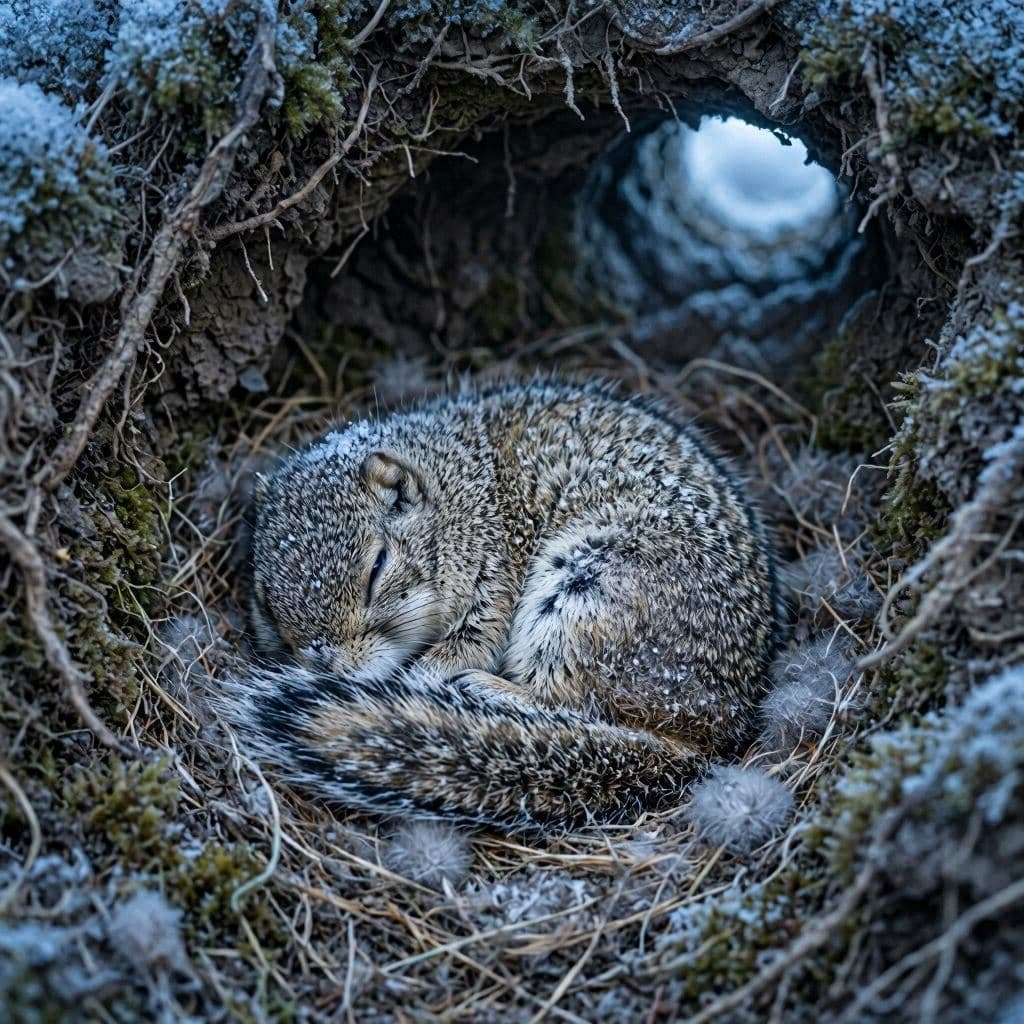
In the frozen silence of the Arctic winter, life often seems to pause, waiting for the return of warmth and light. Yet, beneath the snow, the Arctic ground squirrel engages in a biological feat that defies conventional understanding of mammalian survival. It does not merely sleep; it allows its body temperature to drop below freezing, entering a state of "supercooling" that would be fatal to most other creatures. This remarkable adaptation is no longer just a curiosity of nature but a beacon of hope for modern medicine, offering clues that could transform how we treat trauma, stroke, and organ preservation in humans.
Body: The Arctic ground squirrel is unique among mammals for its ability to lower its core body temperature to as low as -3 degrees Celsius without its blood freezing. During hibernation, its metabolic rate slows dramatically, reducing the need for oxygen and nutrients. This state of suspended animation protects its cells from damage during periods of extreme stress, such as lack of blood flow or low temperatures. For scientists, understanding the mechanisms behind this resilience is akin to finding a master key to cellular protection.
Research has focused on the molecular changes that occur in the squirrel’s brain and heart during these deep torpor phases. Studies suggest that specific proteins and signaling pathways are activated to stabilize cell structures and prevent inflammation. One key discovery involves the role of iodide, an element that increases in the blood during stress and helps dampen harmful inflammatory responses. By mimicking these natural processes, researchers hope to develop treatments that can protect human tissues during medical emergencies.
The implications for emergency care are profound. In cases of cardiac arrest, stroke, or severe trauma, every minute counts as cells begin to die from lack of oxygen. If doctors could induce a temporary state of similar metabolic suppression in patients, they might buy crucial time for surgical interventions or recovery. This concept, often referred to as "therapeutic hypothermia," is already used in some forms, but the squirrel’s model offers a more efficient and potentially safer pathway.
Beyond acute care, this research has significant potential for organ transplantation. Currently, organs can only be preserved for a few hours outside the body before they degrade. By applying the principles of supercooling and metabolic suppression, scientists aim to extend this window significantly, allowing for longer transport times and better matching of donors and recipients. This could save thousands of lives by reducing waste and improving outcomes.
The journey from squirrel biology to human application is complex and requires rigorous testing. Researchers are working to identify the specific genes and compounds responsible for the squirrel’s resilience and to determine if they can be safely activated in humans. While challenges remain, the progress made so far is encouraging, suggesting that nature has already solved many of the problems we face in critical care.
Moreover, this line of inquiry highlights the importance of biodiversity in medical innovation. Often, the solutions to our most pressing health challenges are hidden in the adaptations of other species. By studying animals like the Arctic ground squirrel, we gain insights that are not only scientifically fascinating but also practically life-saving. It is a reminder that we are part of a larger web of life, from which we have much to learn.
As clinical trials advance, the hope is that therapies derived from these findings will become standard practice in hospitals worldwide. The ability to pause biological time, even briefly, could redefine the limits of emergency medicine. It transforms a desperate race against death into a manageable period of stabilization and repair.
Closing: The Arctic ground squirrel’s ability to supercool its body offers a promising avenue for advancing emergency medical care. By unlocking the secrets of its hibernation, scientists may soon provide new tools to protect human life in critical moments. This intersection of natural wonder and medical science holds the potential to save countless lives in the future.
AI Image Disclaimer: Please note that the visual illustrations accompanying this article are AI-generated representations intended to contextualize the scientific discussion.
Sources: National Institutes of Health (NIH) PBS NewsHour University of Alaska Fairbanks Fred Hutchinson Cancer Center
Published by Banx Network. This article is part of the Banx decentralized media programme, powered by the BXE token on the XRP Ledger.