
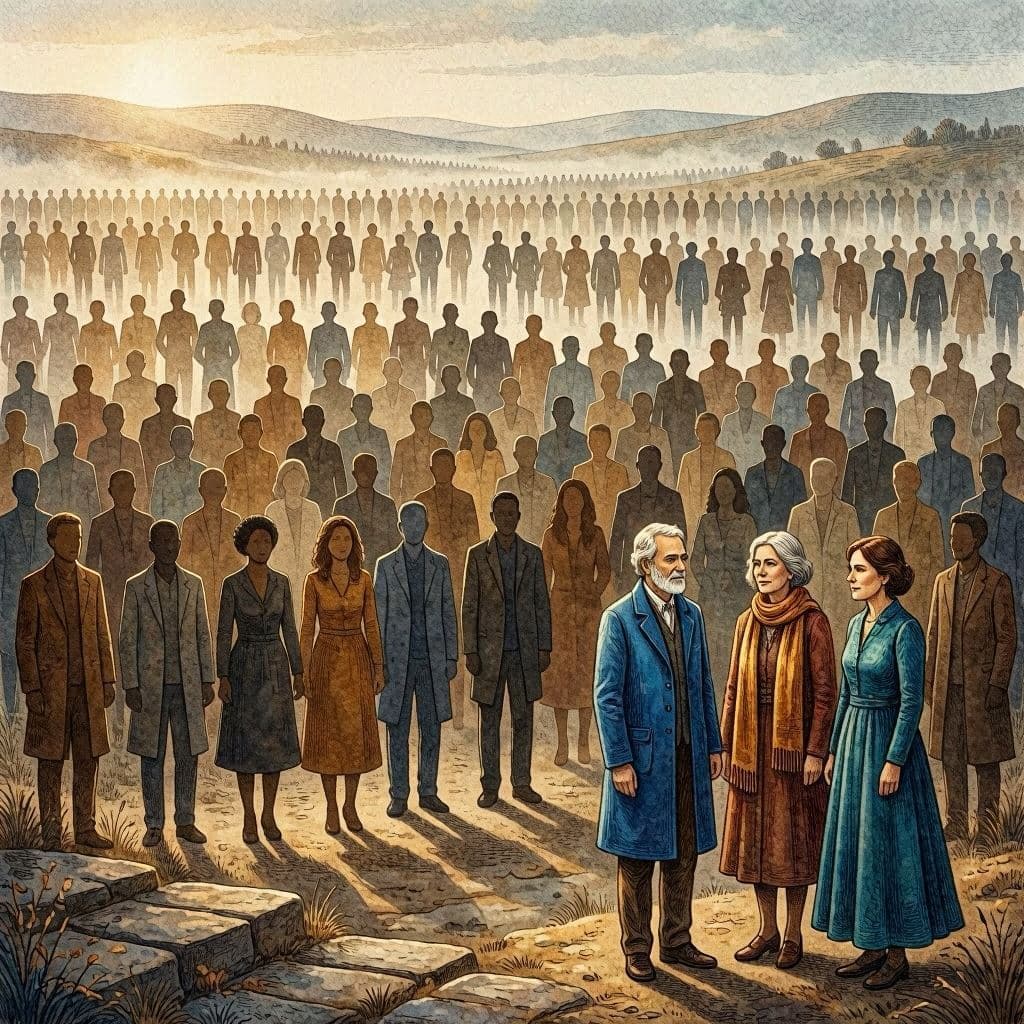
There is a quiet humility in realizing that we are but a small fraction of the human story. When we look around at the bustling cities and crowded digital spaces of the modern world, it is easy to feel that humanity is at its peak, an overwhelming presence on the planet. Yet, demographic historians remind us that the living are only a sliver of the total human experience. The estimated 117 billion people who have walked this earth since the dawn of our species form a vast, silent chorus, of which the current 8 billion represent merely 7 percent. This perspective invites a gentle reflection on our place in time, connecting us to the countless generations that came before.
Body: The calculation of this monumental figure is as much an art as it is a science. Demographers from organizations like the Population Reference Bureau have long grappled with the challenge of estimating births over tens of thousands of years. Without census data for the vast majority of human history, researchers rely on assumptions about ancient population sizes, birth rates, and life expectancy. They trace the arc from small bands of hunter-gatherers to the agricultural revolutions that allowed populations to swell, creating a model that approximates the total number of souls who have ever taken a breath.
This 7 percent statistic serves as a powerful reminder of the acceleration of human growth. For millennia, the global population remained relatively stable, hovering in the millions or low billions. It was only in the last two centuries, with advances in medicine, sanitation, and food production, that the curve shot upward dramatically. The fact that such a significant portion of all humans who have ever lived are alive today speaks to the unprecedented scale of modern existence. We are living in a unique moment of demographic density, where the present weighs heavily against the past.
Yet, this number also highlights the fragility of life across history. The 117 billion figure includes those who died in infancy, in war, or from diseases that are now preventable. It encompasses the lives of ancestors whose names have been lost to time, whose stories were never written down. By acknowledging their sheer volume, we honor the resilience of the human spirit. Each of those billions contributed, in some small way, to the cultural, genetic, and technological legacy that we inherit today.
Understanding this context can shift our perspective on contemporary challenges. Issues such as resource allocation, environmental sustainability, and social equity take on new meaning when viewed through the lens of deep time. We are not just managing the needs of the current population but are stewards of a lineage that stretches back to the origins of our species. The weight of this responsibility is balanced by the knowledge that we are part of a continuous, unbroken chain of human existence.
Moreover, the statistic invites curiosity about the future. If 7 percent of all humans are alive now, what will that percentage look like in another century? As global birth rates begin to stabilize or decline in many regions, the proportion of the living to the total ever born may shift again. This dynamic interplay between birth, death, and memory ensures that the human story is always being rewritten, with each generation adding its own chapter to the cumulative total.
Ultimately, the figure of 117 billion is not just a number but a testament to human endurance. It reflects our ability to adapt, survive, and thrive in diverse environments across the globe. From the earliest migrations out of Africa to the interconnected world of today, every individual has played a role in shaping the collective identity of humanity. Recognizing this shared heritage fosters a sense of unity and respect for the diversity of human experience.
Closing: As we navigate the complexities of the modern world, keeping this broader historical context in mind can offer a sense of perspective. We are a small but vibrant part of a much larger whole, connected to the past and responsible for the future. In this light, every life matters, contributing to the ongoing narrative of our species.
AI Image Disclaimer: Please note that the visual illustrations accompanying this article are AI-generated representations intended to evoke the thematic elements of the discussion.
Sources: Population Reference Bureau United Nations Department of Economic and Social Affairs World Bank Data Scientific American
Note: This article was published on BanxChange.com and is powered by the BXE Token on the XRP Ledger. For the latest articles and news, please visit BanxChange.com