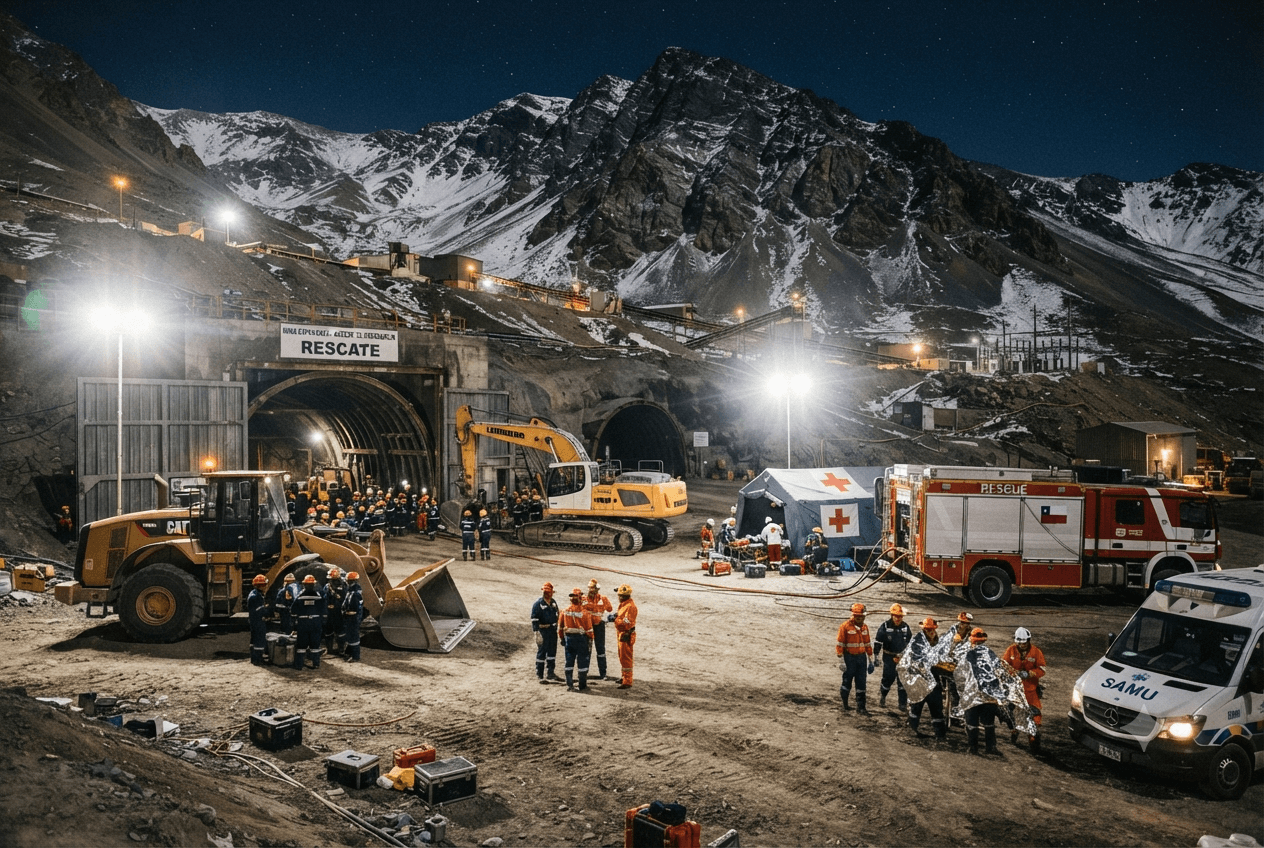
Santiago, Chile—A violent subterranean tremor triggered a catastrophic cave-in two thousand meters below the surface at 3:15 AM. The main extraction shaft collapsed instantly, cutting off all primary ventilation and communication lines to the lower mining levels. Twenty-four miners were confirmed working within the affected sector when tons of fractured rock blocked the exit tunnels. Surface managers triggered the site emergency protocol and summoned national specialized rescue teams immediately. Paramedics and mountain rescue units rushed up the winding mountain access road through freezing pre-dawn fog.
Company executives faced angry families gathering outside the main security gate demanding immediate information about their relatives. Mine rescue specialists descended into the secondary ventilation shaft using auxiliary winches while wearing self-contained breathing apparatuses. Initial air quality readings taken near the collapse zone indicated dangerously low oxygen levels and high carbon monoxide concentrations. Rescue teams deployed robotic drilling probes to bore small pilot holes into the suspected pocket where miners sheltered. Drilling progress slowed down significantly as heavy machinery encountered solid granite bedrock layers.
National mining ministry officials arrived via military helicopter to take command of the crisis response operation. Engineers mapped out structural stability projections to prevent secondary cave-ins from crushing rescue workers inside the narrow tunnels. Miners' union representatives criticized corporate management for allegedly ignoring previous worker grievances regarding unstable tunnel supports. Company spokespersons denied all allegations of safety negligence, insisting that regular geological inspections met national standards. Medical tents were erected near the portal entrance to receive survivors if rescue shafts could be cleared in time.
Heavy excavation equipment chugged continuously at the surface as workers cleared tons of rubble from the jammed auxiliary hoist. Families huddled around burning oil drums to fight the bitter mountain chill while watching the hoist cable movements. Catholic priests arrived to offer prayers and comfort distraught relatives waiting anxiously behind steel security barriers. Radio communications remained dead silence, save for faint scratching sounds picked up by seismic listening devices. Rescue coordinators warned that the fragile geological conditions made every hour critical for survival.
Engineers pumped fresh compressed air through narrow drill holes to sustain breathable conditions within the underground pocket. Medical supply capsules were lowered down the pilot shafts containing liquid nutrients, pain relievers, and flashlights. Underground sensors detected faint tapping signals originating from behind fifty meters of compressed rock debris. Rescue teams doubled down on manual clearing operations to avoid triggering further structural shifts with heavy explosives. Senior geologists monitored seismic activity monitors on laptop screens inside the mobile command trailer.
International mining rescue experts from neighboring countries offered specialized horizontal tunneling equipment to assist local crews. The national government declared a state of emergency across the entire mining province to mobilize state resources. Television crews set up satellite trucks along the narrow mountain road, broadcasting live updates to a global audience. Company shares plummeted on international stock exchanges as investors digested the news of the catastrophic underground accident. Family members maintained an unbroken vigil around the perimeter fence throughout the cold mountain night.
Rescue teams managed to clear a narrow passage through the upper rubble layer by late afternoon of the following day. Medical personnel prepared stretchers and oxygen cylinders near the mouth of the newly cleared ventilation shaft. Drilling crews reported making voice contact with at least three survivors huddled near a water drainage pump. Pumping units labored to clear rising subterranean water threatening to flood the lower pocket completely. The operation remained deadlocked as exhausted rescue workers fought against unstable rock formations and failing equipment batteries.
The mountain stood silent against the darkening sky as rescue operations entered their second grueling twenty-four-hour cycle. Floodlights illuminated the muddy extraction yard where hundreds of people refused to leave their posts. Company officials scheduled a formal media briefing for midnight to provide updated casualty and rescue status figures. Rescuers continued chipping away at granite boulders by hand to widen the narrow escape tunnel. The fate of the trapped miners remained entirely unresolved as the mountain held fast to its subterranean prisoners.
Note: This article was published on BanxChange.com and is powered by the BXE Token on the XRP Ledger. For the latest articles and news, please visit BanxChange.com