
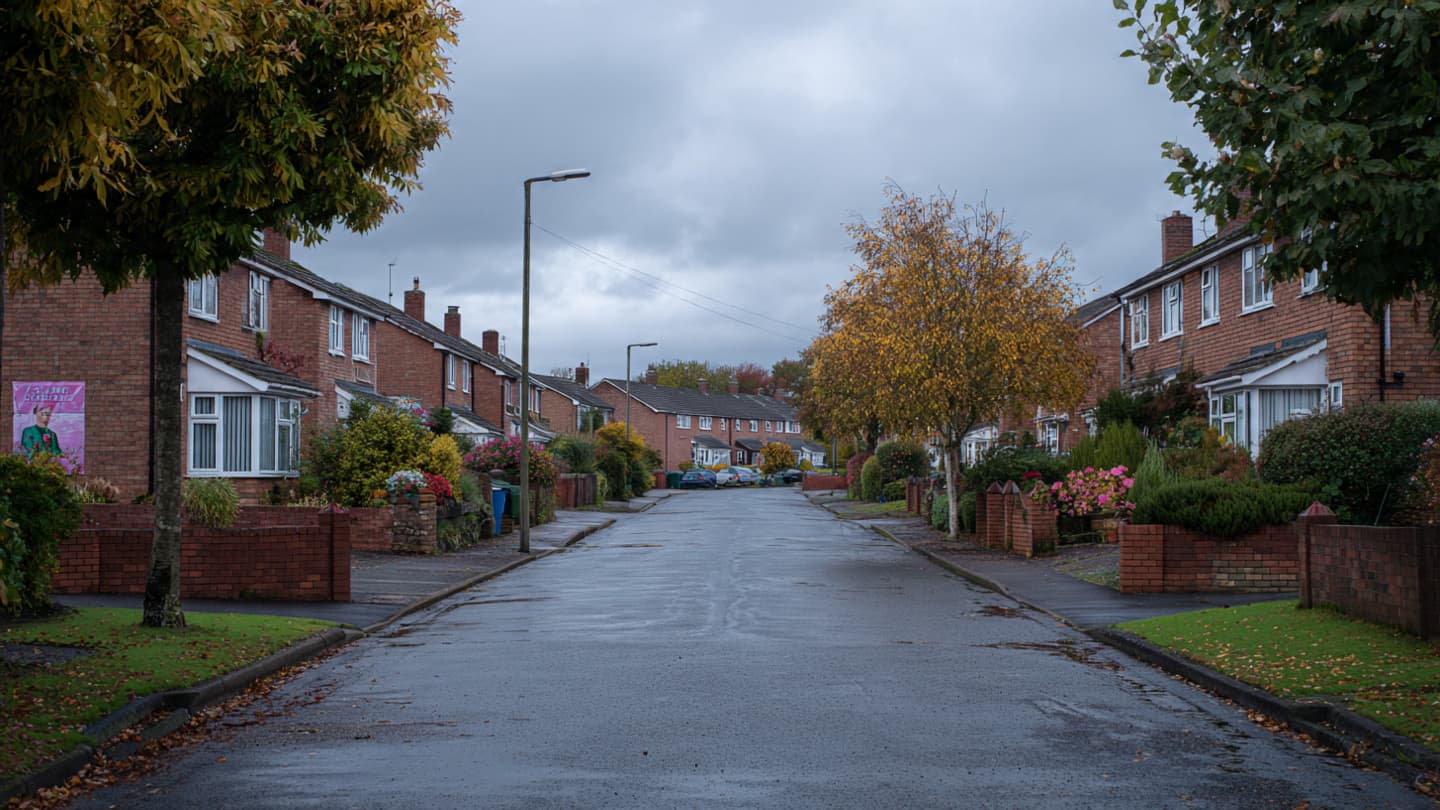
In Makerfield, where rows of brick terraces meet the softened edges of post-industrial towns, politics rarely arrives as spectacle. It moves instead like weather — slow, familiar, and often unnoticed until it begins to press against daily life. The streets hold their own memory of elections past: posters faded by rain, conversations in corner shops, the quiet recalibration of trust that comes with each passing cycle.
It is into this landscape that a closely watched by-election now unfolds, with Greater Manchester Mayor Andy Burnham’s political influence intersecting with a direct challenge from Reform UK candidate Robert Kenyon. What might, in another place, feel like a routine electoral contest has taken on broader significance, reflecting shifting currents in British political life.
The seat, traditionally shaped by working-class communities and long-standing Labour support, now sits within a national environment marked by fragmentation and reassessment. Reform UK’s rise in certain polling narratives has added pressure to constituencies once considered politically stable, while established parties face questions about identity, economic direction, and voter confidence.
Andy Burnham, though not standing as a parliamentary candidate himself, remains a central figure in the political landscape of the North West. As Mayor of Greater Manchester, his leadership has often been associated with regional advocacy, public transport reform, and calls for greater devolution of power away from Westminster. His presence in the broader political conversation gives weight to contests across the region, including Makerfield, where local sentiment often reflects wider attitudes toward governance and representation.
On the other side, Robert Kenyon’s campaign under the Reform UK banner enters a political climate shaped by debates over immigration, public services, and institutional trust. Reform’s messaging has found traction among segments of voters who feel underserved by traditional party structures, particularly in areas experiencing economic transition and shifting employment patterns. The by-election thus becomes not only a local contest, but a test of how those national narratives translate into specific communities.
Campaign activity in Makerfield has taken familiar forms — door-to-door canvassing, community hall meetings, and the steady circulation of leaflets through postboxes. Yet beneath these ordinary rhythms lies a more complex political atmosphere, one shaped by national headlines, economic pressures, and evolving voter identities. Conversations on doorsteps often move fluidly between local concerns — housing, healthcare, job security — and broader questions about the direction of the country.
Historically, constituencies like Makerfield have served as anchors for larger political coalitions, particularly for Labour. But in recent years, those anchors have shown signs of movement, as electoral loyalties become less predictable and more responsive to immediate concerns. By-elections, in this context, are often read not just as isolated events but as signals — indicators of how national sentiment may be shifting beneath the surface.
For political observers, the encounter between Burnham’s regional influence and Reform’s growing visibility reflects a broader tension within British politics: the balance between established governance frameworks and emerging movements that challenge them. It is a dynamic shaped as much by perception as by policy, where trust, identity, and economic experience intersect.
As polling day approaches, both campaigns emphasize engagement with local issues, though framed through different lenses. For some voters, the decision will rest on continuity and familiarity; for others, on the promise of change and redefinition. In either case, the act of voting becomes less about abstraction and more about the immediate texture of everyday life — the condition of high streets, the reliability of services, the sense of being heard.
When the results are eventually counted, they will offer more than a numerical outcome. They will contribute to an ongoing reading of political sentiment across the country, particularly in regions where traditional allegiances are no longer guaranteed. Makerfield, like many constituencies of its kind, becomes a small but telling space where broader national narratives are quietly tested.
And so the by-election unfolds not as a sudden rupture, but as part of a longer, gradual recalibration — where political identity is not declared all at once, but adjusted in increments, shaped by experience, memory, and expectation.
AI Image Disclaimer These images were generated using AI tools and are intended as conceptual visual representations of the political context described.
Sources BBC News The Guardian Reuters Sky News UK Electoral Commission
Note: This article was published on BanxChange.com and is powered by the BXE Token on the XRP Ledger. For the latest articles and news, please visit BanxChange.com