
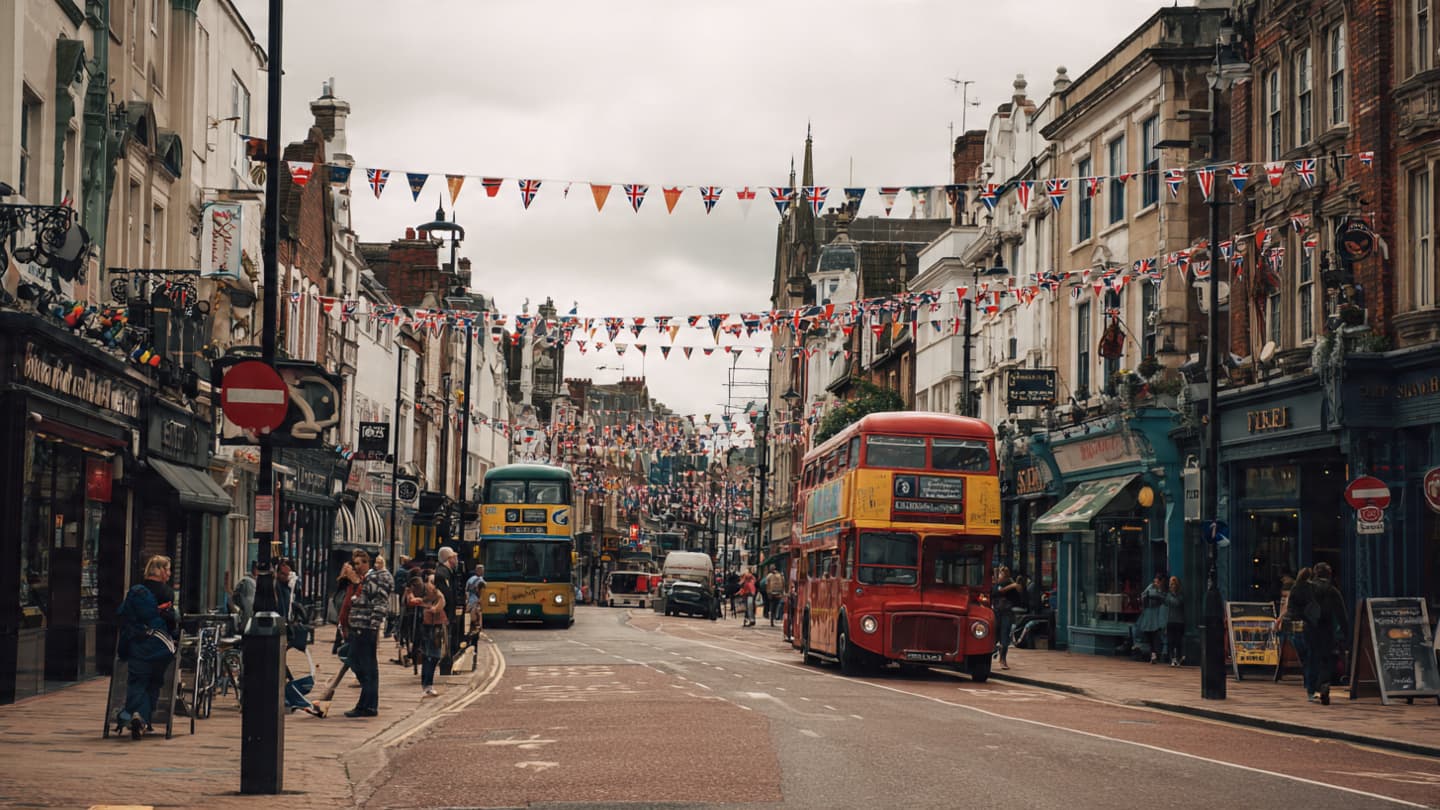
On certain evenings in England’s smaller towns, politics unfolds less through speeches than through atmosphere. It lingers in conversations overheard at bus stops, in cafés where newspapers remain folded beside cups of tea, and along high streets where shuttered storefronts quietly shape public mood as much as any campaign poster ever could.
In recent years, those conversations have begun changing in tone.
What once existed at the edges of British politics now sits much closer to its center. The rise of the party led by Nigel Farage has altered not only electoral calculations, but the broader language of political debate across the United Kingdom. Issues once associated primarily with populist or nationalist movements — immigration, national sovereignty, cultural identity, distrust of political institutions — increasingly dominate mainstream discussion, influencing parties far beyond the movement itself.
The transformation did not arrive suddenly. It unfolded gradually, through years shaped by economic frustration, Brexit debates, regional inequality, and growing public distrust toward traditional political leadership. Farage, a figure long positioned outside Britain’s political establishment, spent decades building influence through persistence rather than formal power. Even before his current party’s electoral gains, his rhetoric often shaped national conversations from beyond Parliament’s center benches.
Now, however, the movement around him occupies a more direct role in British political life.
Recent polling and local election results have shown growing support for Farage’s party, particularly in areas where economic stagnation, concerns over migration, and dissatisfaction with both major parties have deepened over time. Analysts say the party’s rise reflects not only ideological support, but also exhaustion with conventional politics after years marked by leadership instability, inflation pressures, housing strain, and public service challenges.
Across England’s post-industrial towns and coastal communities, campaign messages focused on border control, national identity, and anti-establishment sentiment have found increasingly receptive audiences. In some districts, longtime loyalties to the Conservative or Labour parties appear weaker than at any point in decades.
The atmosphere surrounding British politics has therefore become more fragmented, more volatile, and in some ways more emotionally charged than before. Public frustration now moves quickly through social media, talk radio, and televised debate, where questions of migration and sovereignty often dominate national attention.
Farage himself remains one of Britain’s most recognizable political communicators — admired by supporters for his directness, criticized by opponents who argue his rhetoric deepens division and normalizes exclusionary politics. Yet even critics acknowledge the extent to which his political style has reshaped the broader national conversation.
There is also a distinctly modern quality to the movement’s rise. Traditional party structures matter less than they once did. Political identity increasingly forms through media ecosystems, online networks, and personality-driven campaigns rather than longstanding ideological institutions. Farage’s influence has often depended as much on visibility and cultural resonance as on parliamentary representation itself.
Meanwhile, Britain continues confronting unresolved questions that stretch beyond any single election cycle. Immigration levels remain politically sensitive. Regional economic disparities persist between London and many smaller towns. Public trust in governing institutions has weakened following years of political upheaval surrounding Brexit, leadership turnovers, and economic strain.
In that environment, populist narratives gain traction not only through anger, but through familiarity. They offer clarity in periods that otherwise feel uncertain and fragmented. For some voters, Farage’s movement represents disruption of a political system viewed as distant or unresponsive. For others, its rise signals growing polarization within British society itself.
Across Westminster, both major parties now respond carefully to the movement’s influence. Conservative politicians debate how closely to align with stricter nationalist messaging, while Labour leaders attempt to balance concerns over immigration with broader appeals to economic stability and social cohesion. In this way, Farage’s impact extends beyond seats won or lost; it reshapes the boundaries of debate itself.
Outside Parliament, however, daily life continues beneath quieter signs of political change. Flags hang from pub windows during campaign season. Taxi drivers discuss asylum policy between fares. Younger voters speak about housing costs and declining opportunity while older generations recall industries that once sustained entire communities.
Politics settles into ordinary spaces long before it reaches official speeches.
As Britain moves toward future elections, Farage’s party appears positioned not merely as a protest movement at the margins, but as a force capable of influencing coalition dynamics, national priorities, and public rhetoric at the highest levels. Whether that influence continues growing or eventually plateaus remains uncertain.
But for now, beneath gray skies, crowded commuter trains, and the familiar architecture of British public life, something fundamental appears to be shifting. The political center itself feels less fixed than before — moving gradually, almost quietly, toward a landscape reshaped by populism, frustration, and the long echo of questions Britain still has not fully resolved.
AI Image Disclaimer: These visuals were generated using AI tools to artistically represent the settings and themes connected to the article.
Sources:
Reuters BBC News The Guardian Financial Times Associated Press
Note: This article was published on BanxChange.com and is powered by the BXE Token on the XRP Ledger. For the latest articles and news, please visit BanxChange.com