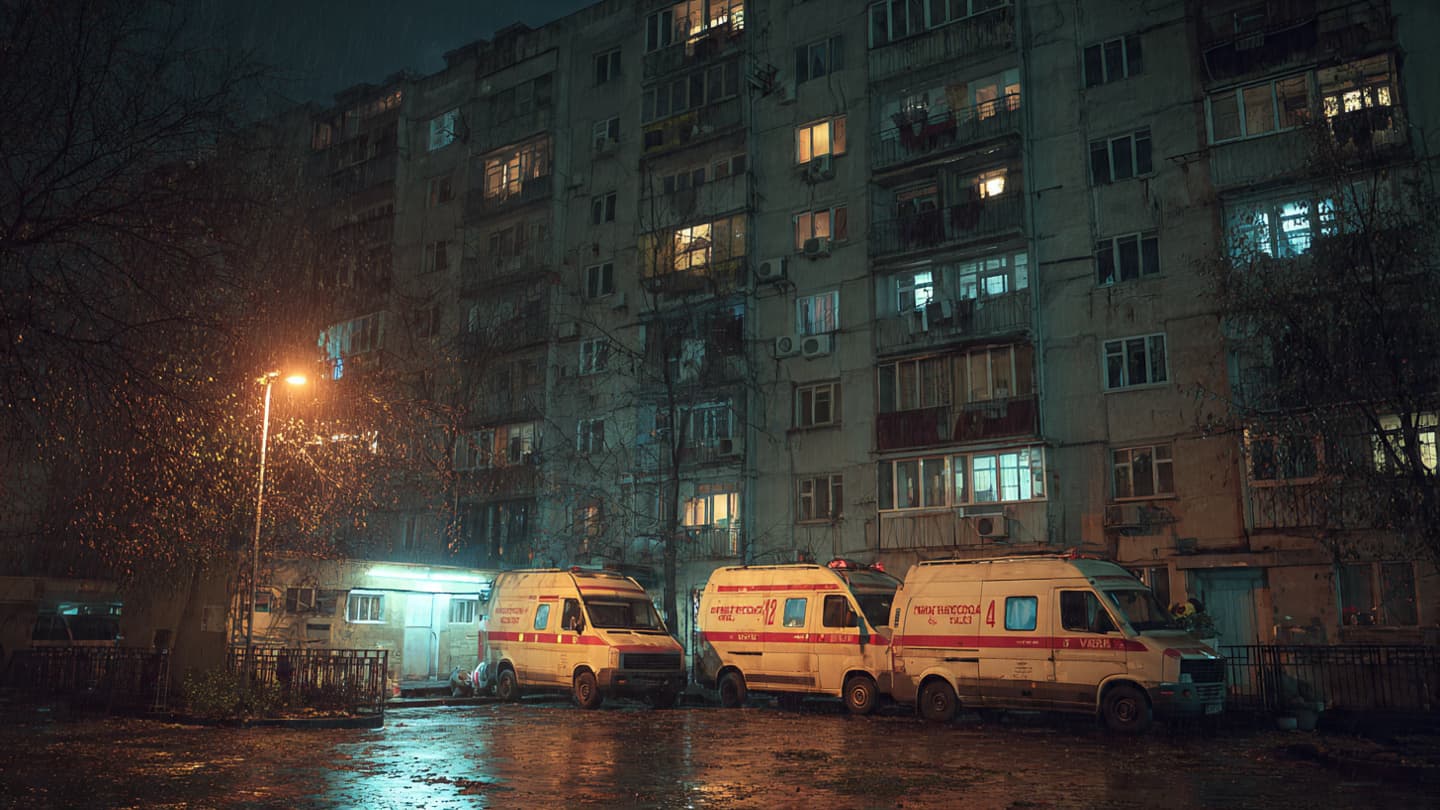
The evening had settled gently over northern Romania, the way autumn rain sometimes drifts into a valley without urgency. Apartment windows glowed softly against the dark, carrying ordinary scenes behind thin curtains — late dinners, television murmurs, children moving between rooms before sleep. Along the country’s eastern frontier, life had continued in the careful rhythm border towns often learn to keep: attentive to distant thunder, yet unwilling to surrender the rituals of normality.
Then, sometime before dawn, the stillness fractured.
Romanian officials said debris from a Russian drone strike landed on a residential apartment building near the border with Ukraine, marking another moment in which the war’s long shadow crossed quietly into NATO territory. Emergency crews moved through the site beneath flashing lights, inspecting broken concrete and shattered windows while residents gathered outside in coats and blankets, watching the remains of an interrupted night.
The incident unfolded near Romania’s frontier region facing Ukraine’s southern ports along the Danube corridor — a landscape where grain ships move through narrow waterways and where the geography of commerce now overlaps with the pathways of missiles and drones. Since Russia intensified attacks on Ukrainian port infrastructure near the Black Sea and Danube River, nearby Romanian communities have found themselves listening more carefully to the sky.
For months, fragments of unmanned aerial vehicles have occasionally appeared in fields, riverbanks, and isolated rural areas close to the border. Each discovery has carried a strange duality: the debris itself often silent and cold by the time it is found, yet heavy with the reminder that modern wars rarely remain confined neatly within maps. What once felt geographically distant now arrives in pieces — metallic shards, emergency alerts, sudden evacuations in the middle of the night.
Romania, a member of NATO and the European Union, has repeatedly condemned Russian strikes that occur close to its territory. Officials have strengthened border surveillance systems and expanded air monitoring along the Black Sea region, where military tensions move like changing weather across water and farmland alike. NATO patrol aircraft and regional defense systems have become increasingly visible features of the horizon, blending into the daily scenery of villages that once knew only commercial river traffic and migrating birds.
Yet even amid military language and diplomatic caution, the human texture of these incidents remains intimate. Broken apartment walls are not symbols when encountered at eye level. They are kitchens exposed to cold air, family photographs covered in dust, stairwells echoing with hurried footsteps. The border between strategic consequence and personal disruption grows thin in places like these.
Across Europe, the war in Ukraine has already reshaped energy routes, migration patterns, shipping corridors, and political conversations. But along Romania’s eastern edge, the transformation feels quieter and more physical. Sirens interrupt sleep. Emergency text alerts arrive after midnight. Residents learn the unfamiliar vocabulary of drones, interception systems, and airspace violations. Daily life continues, though sometimes with the subtle tension of listening for sounds beyond the ordinary.
Romanian authorities said investigations into the latest incident are ongoing, while officials continue coordinating with allied partners regarding regional security measures. No large-scale casualties were immediately reported, though the damage renewed concerns over how close the conflict has drifted toward neighboring states.
By morning, cleanup crews had begun removing debris from the apartment building. Glass was swept from sidewalks. Residents returned cautiously to inspect rooms touched by smoke and impact. Beyond them, the Danube continued its slow movement toward the Black Sea, indifferent and ancient, carrying barges through waters now watched by radar screens and military patrols.
In border towns like these, history rarely announces itself loudly at first. Sometimes it arrives as a distant vibration in the night, a sudden crack against concrete, or the brief flicker of emergency lights beneath an otherwise quiet sky.
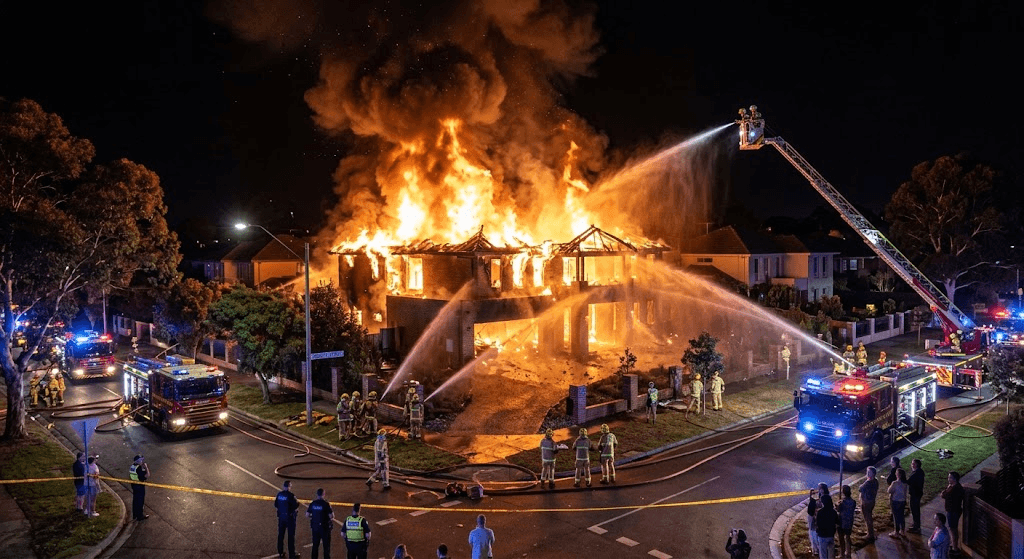
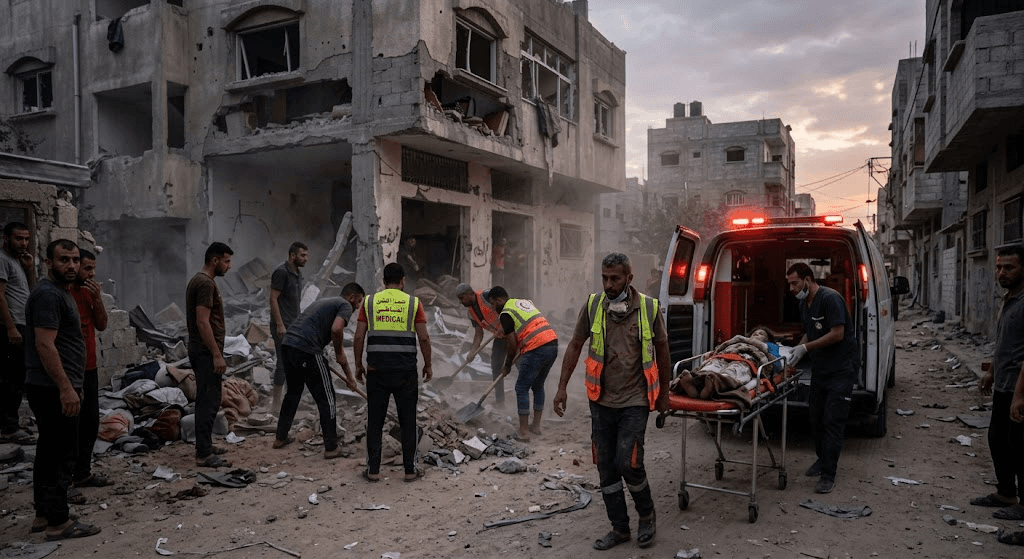
AI Image Disclaimer: Illustrations were created using AI tools and are intended as visual interpretations of the reported events.
Sources:
Reuters Associated Press BBC News Romanian Ministry of Defense NATO
Published by Banx Network. This article is part of the Banx decentralized media programme, powered by the BXE token on the XRP Ledger.