
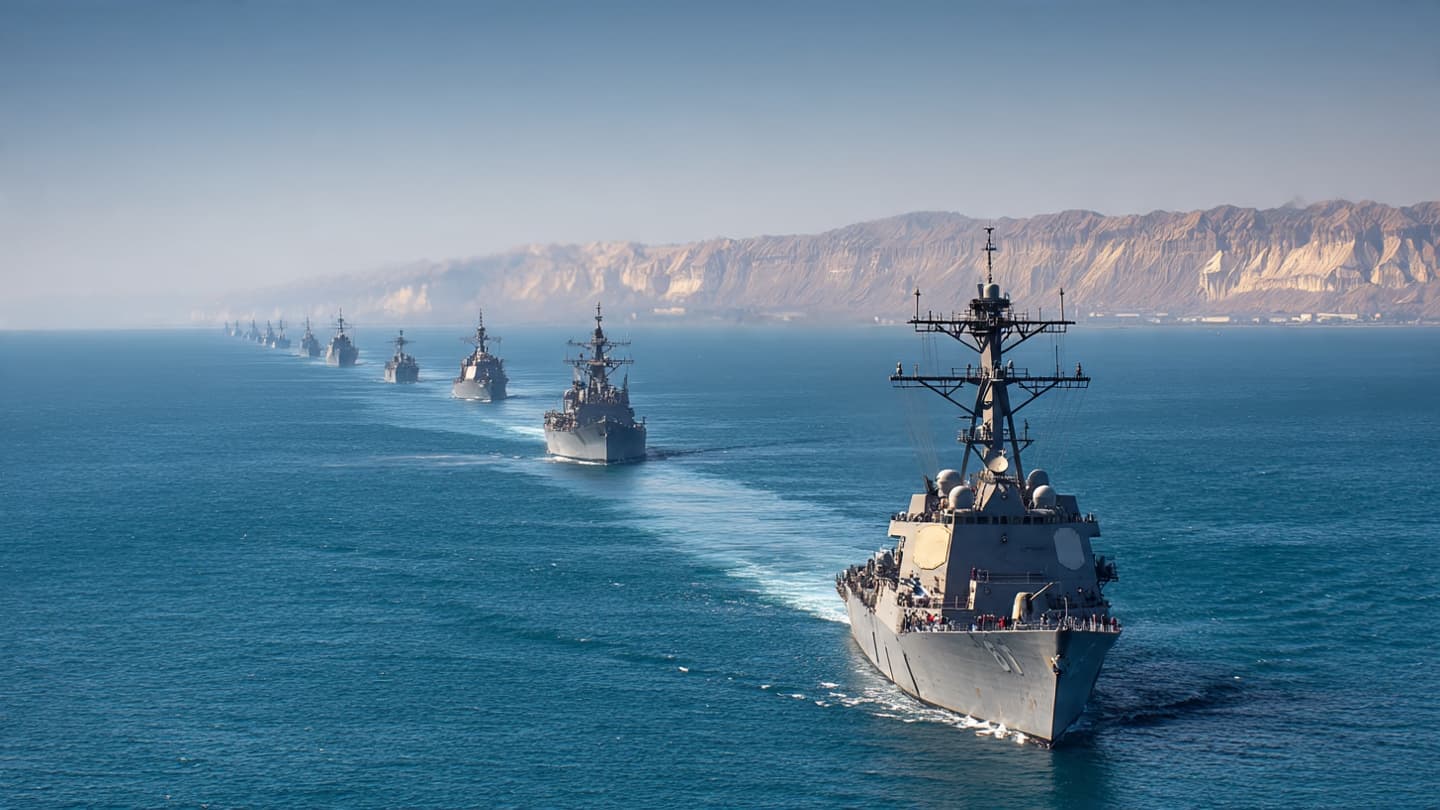
The sea has long carried both commerce and tension through the narrow waters of the Strait of Hormuz. Tankers, naval vessels, and cargo ships move across one of the world’s most strategic maritime corridors, where even quiet operations can hold global significance. Recent reports regarding the U.S. Navy’s activities in the region renewed attention to the fragile balance surrounding international shipping routes.
According to reports, the U.S. Navy has been discreetly assisting and guiding commercial vessels through the Strait of Hormuz amid heightened regional tensions. The operation reportedly aims to reduce security risks in a waterway essential to global energy transportation.
The Strait of Hormuz serves as one of the world’s most critical maritime chokepoints, with significant portions of global oil shipments passing through the route each day. Any disruption in the area can influence international energy markets and geopolitical stability.
Regional tensions involving Iran, the United States, and allied nations have repeatedly raised concerns regarding maritime security. Military patrols and naval coordination efforts have therefore become increasingly visible in surrounding waters over recent years.
Analysts note that naval escort operations are often designed to prevent escalation while maintaining uninterrupted commercial activity. Such missions can also signal strategic presence without triggering direct confrontation.
Shipping companies and international markets closely monitor developments in the Strait of Hormuz due to the route’s economic importance. Even temporary instability in the corridor can contribute to fluctuations in global oil prices and insurance costs.
Observers say the quiet nature of the reported operations reflects an effort to maintain stability while avoiding unnecessary public escalation. Diplomatic efforts and military readiness continue operating side by side in the region.
Authorities and international observers continue watching developments in the Strait of Hormuz as maritime security remains closely tied to wider geopolitical tensions.
The visuals presented in this article are AI-generated editorial illustrations and not actual event photographs.
Sources: Reuters, U.S. defense officials, international maritime analysts
Note: This article was published on BanxChange.com and is powered by the BXE Token on the XRP Ledger. For the latest articles and news, please visit BanxChange.com