Opening: History is often written as a series of replacements, one group succeeding another in a linear march of progress. But the earth beneath our feet tells a different, more nuanced story. Recent discoveries in a cave system suggest that humans and Neanderthals did not merely pass each other in the night but shared a cultural space for thousands of years. This finding invites us to rethink the relationship between these two branches of humanity, suggesting a period of coexistence and exchange rather than simple displacement.
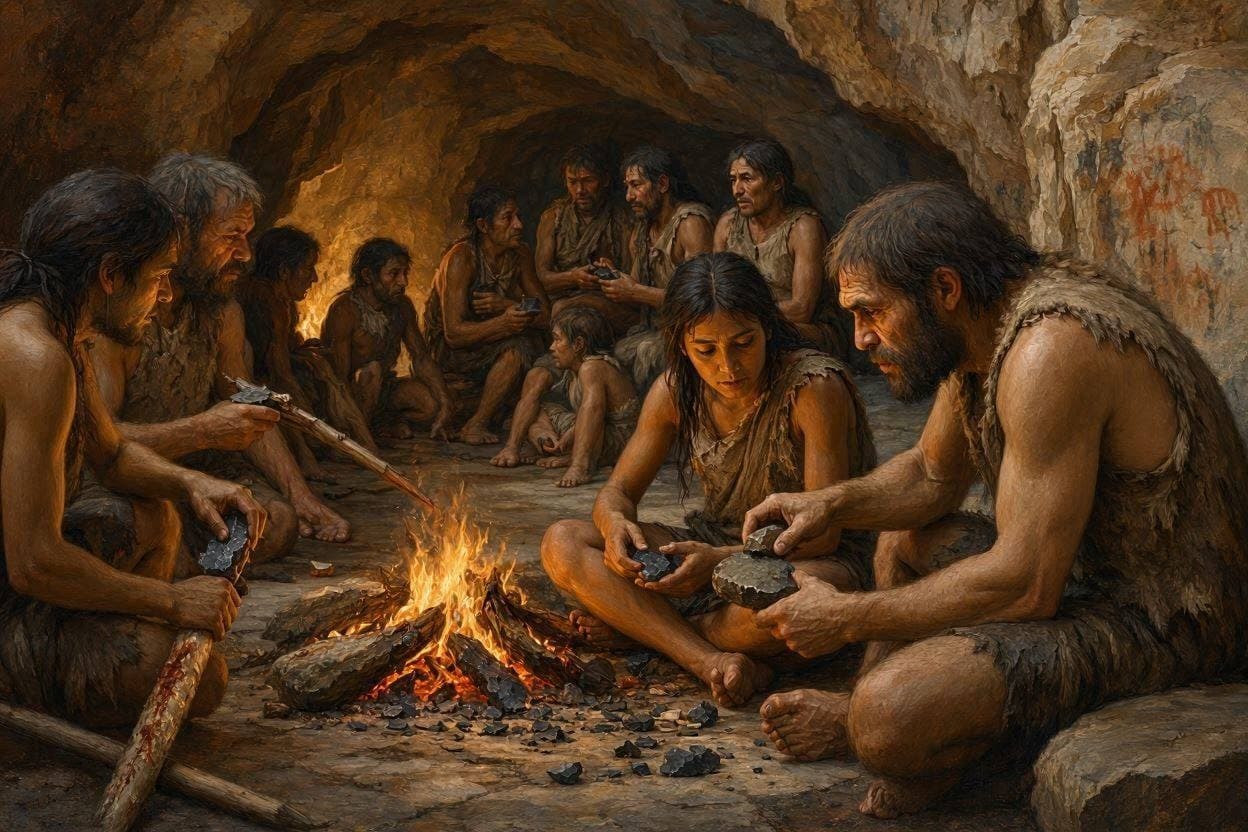
Body: The cave in question has yielded artifacts that blur the lines between what was once considered distinctly human or distinctly Neanderthal. Tools, ornaments, and symbolic markings found in the same stratigraphic layers indicate that both groups were using the site simultaneously or in close succession. This overlap, spanning approximately 20,000 years, challenges the older narrative of rapid replacement and suggests a more complex social dynamic. It implies that ideas, techniques, and perhaps even stories were shared across the species divide.
For decades, Neanderthals were viewed as primitive cousins, lacking the cognitive sophistication of Homo sapiens. However, evidence of their ability to create art, use complex tools, and bury their dead has steadily accumulated. This new discovery adds weight to the argument that they were culturally rich beings, capable of adapting and innovating. The sharing of a cave site suggests a level of tolerance or interaction that was previously underestimated by archaeologists.
The implications for our understanding of human evolution are profound. If cultures were shared, then the genetic mixing known to have occurred between the two groups may have been accompanied by cultural exchange as well. Language, ritual, and technology could have flowed between them, creating a hybrid heritage that persists in modern humans today. We are not just the descendants of Homo sapiens but the inheritors of a broader human tapestry.
Archaeologists approach these findings with careful scrutiny, aware of the difficulty in interpreting ancient contexts. Dating methods and artifact analysis must be precise to rule out contamination or misinterpretation. Yet, the consistency of the evidence across multiple layers of the cave provides a compelling case. It paints a picture of a landscape where two types of humans navigated their differences and found common ground.
This period of coexistence likely occurred during a time of environmental change, when resources were scarce and cooperation may have been beneficial. Sharing a cave could have offered protection from the elements and predators, creating a practical incentive for tolerance. It reminds us that survival often depends on flexibility and the ability to learn from others, even those who seem different from ourselves.
As we look back at this distant past, we see a reflection of our own struggles with diversity and integration. The story of humans and Neanderthals is not one of inevitable conflict but of potential collaboration. It suggests that our capacity for connection is deep-rooted, extending back to the very origins of our species. In their shared cave, we find a precedent for unity amidst difference.
Closing: In the end, the cave discovery offers a gentle correction to our historical self-image. It reminds us that we were never alone in our humanity, that we shared the world with others who were both like and unlike us. As we continue to uncover these ancient truths, we gain a deeper appreciation for the complexity of our origins and the enduring power of shared culture.
AI Image Disclaimer: The visual representations associated with this article are AI-generated artistic interpretations designed to illustrate the anthropological concepts discussed.
Sources: Nature Journal Smithsonian Magazine National Geographic
Published by Banx Network. This article is part of the Banx decentralized media programme, powered by the BXE token on the XRP Ledger.