The night sky often offers reminders that even the largest objects in the solar system move in a graceful and predictable rhythm. Like dancers crossing a stage from different directions, planets occasionally appear to draw near one another, creating celestial displays that connect professional astronomers and casual skywatchers alike.
Observers around the world have been invited to watch a conjunction involving Jupiter and Venus, two of the brightest planets visible from Earth. Although the planets remain separated by hundreds of millions of miles in space, their positions along Earth's line of sight create the appearance of a close encounter in the sky.
Astronomers explain that planetary conjunctions occur when celestial bodies appear near each other from Earth's perspective. These events are common in astronomical terms, yet they remain visually striking because of the brightness and prominence of the planets involved.
Venus, often called the Morning Star or Evening Star depending on its position, is the brightest planet visible from Earth. Jupiter, the largest planet in the solar system, also shines prominently and is frequently among the easiest celestial objects to identify.
The conjunction has attracted attention from observatories, astronomy organizations, and online broadcasters. Many institutions are providing live streams so viewers can observe the event regardless of local weather conditions or geographic limitations.
Such events offer educational opportunities as well as visual enjoyment. Amateur astronomers often use conjunctions to learn more about planetary motion, orbital mechanics, and the structure of the solar system.
Modern telescopes and imaging systems allow observers to capture detailed views of planetary alignments. These technologies help transform what appears to be a simple point of light into a richer understanding of the worlds orbiting our Sun.
While conjunctions do not indicate any physical interaction between planets, they serve as useful reminders of the constant motion occurring throughout the solar system. Each alignment reflects the predictable paths followed by planets over vast periods of time.
As Jupiter and Venus appear together in the sky, viewers have another opportunity to appreciate a celestial event that blends scientific understanding with the enduring human habit of looking upward in wonder.
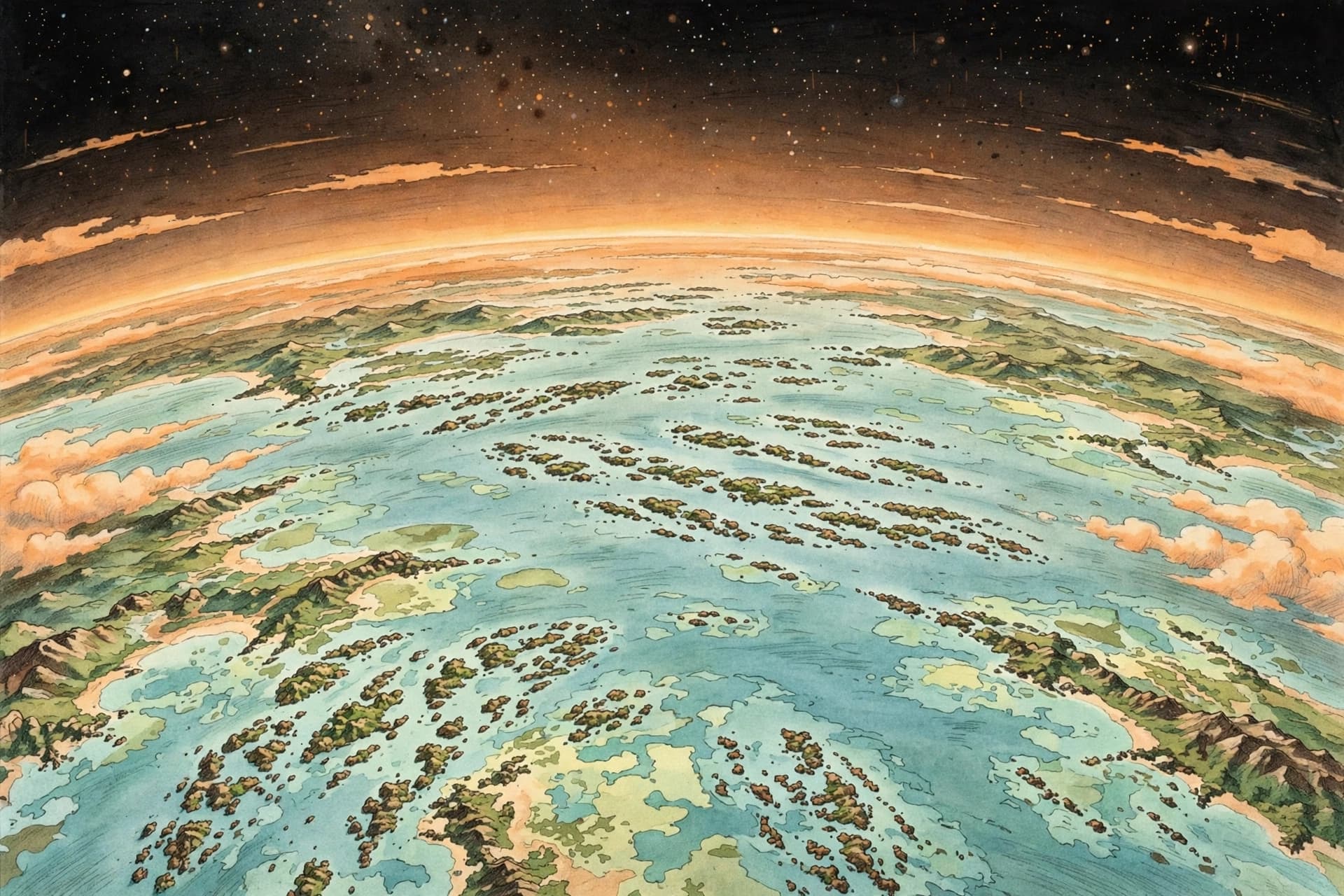
AI Image Disclaimer: The illustration associated with this article is AI-generated and intended to visually represent the astronomical event.
Sources (Verification Check) Space.com NASA Sky & Telescope EarthSky Royal Astronomical Society
Published by Banx Network. This article is part of the Banx decentralized media programme, powered by the BXE token on the XRP Ledger.