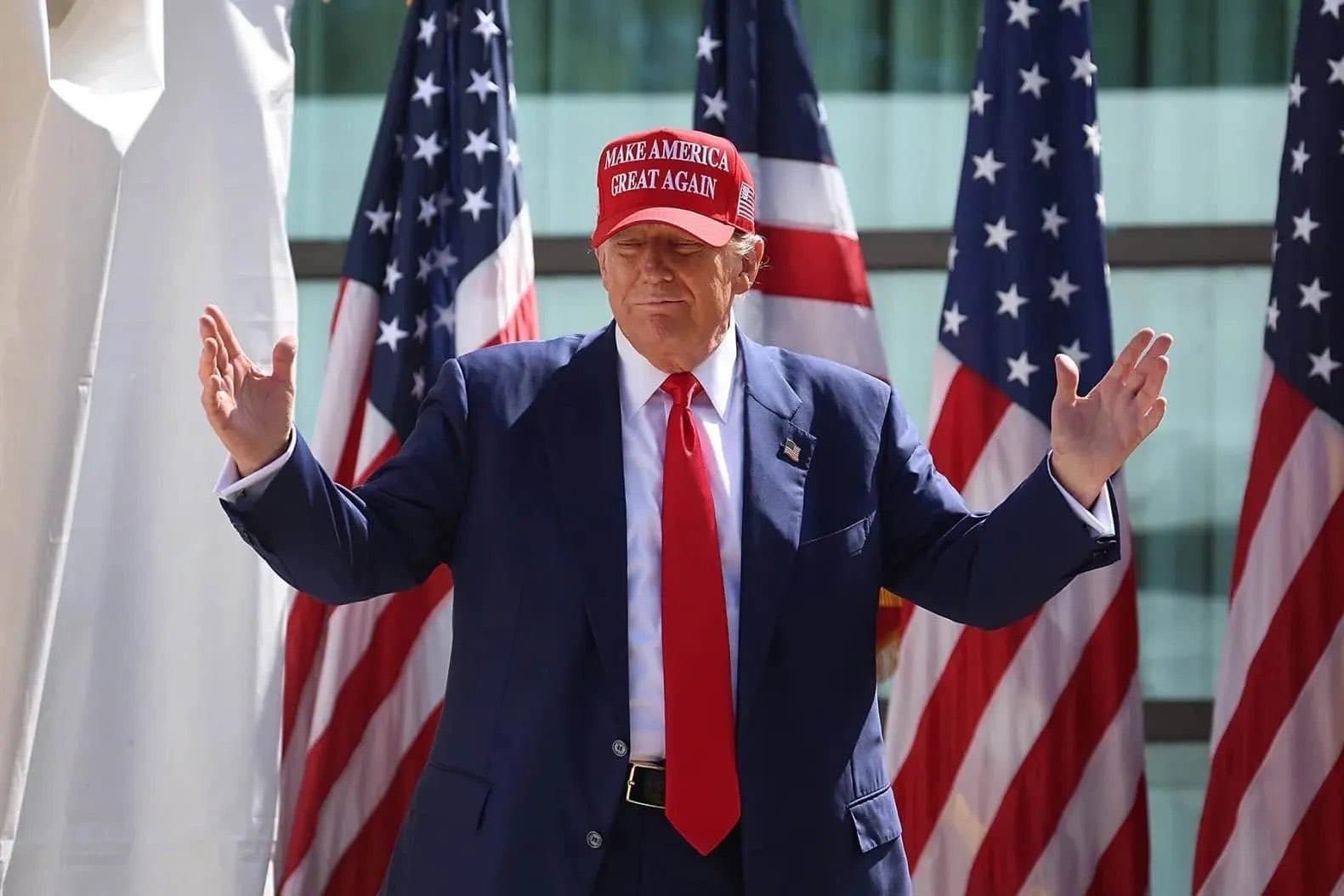
Former U.S. President Donald Trump has renewed his criticism of communist ideology, describing it as the greatest threat facing the United States since the end of World War II. Speaking during campaign remarks, Trump argued that the nation faces growing ideological challenges that he believes could undermine America's democratic institutions, economic prosperity and national identity. Trump said the dangers posed by communism exceed many of the threats the country has confronted over recent decades, referencing historic events including the attack on Pearl Harbor and the September 11, 2001, terrorist attacks. He argued that ideological movements seeking greater government control represent a long-term challenge to American freedoms and warned supporters against policies he characterized as socialist or communist. The comments form part of Trump's broader campaign message ahead of upcoming political contests, in which he has frequently portrayed the election as a defining moment for the country's future. Throughout recent speeches, he has accused political opponents of supporting policies that expand government influence over the economy, education and other sectors, arguing that such measures threaten individual liberty and free-market principles. Supporters welcomed Trump's remarks, saying they reflect concerns about government spending, regulation and the direction of public policy. Many argue that maintaining strong constitutional protections, encouraging private enterprise and limiting federal authority are essential to preserving America's economic strength and democratic traditions. Critics, however, disputed Trump's characterization, arguing that his statements exaggerate ideological differences for political effect. They contend that many of the policies he criticizes are widely practiced in democratic nations and do not constitute communism. Political analysts noted that the term is often used in campaign rhetoric to mobilize supporters and frame policy debates rather than describe actual governmental systems. The speech generated extensive discussion on social media, where supporters praised Trump's warning while opponents challenged both the historical comparisons and the language used. Political commentators observed that references to communism remain a powerful theme in American politics, particularly among conservative voters who associate the ideology with authoritarian governments and restrictions on personal freedoms. Historians note that the United States has experienced several periods of heightened concern over communism, most notably during the Cold War, when rivalry with the Soviet Union shaped foreign and domestic policy for decades. Although the geopolitical landscape has changed significantly since then, accusations involving socialism and communism continue to feature prominently in modern political discourse. As the election campaign continues, ideological debates are expected to remain central to discussions surrounding economic policy, national security and the future direction of the United States. Trump's latest remarks highlight how historical references continue to influence contemporary political messaging and public debate.
Published by Banx Network. This article is part of the Banx decentralized media programme, powered by the BXE token on the XRP Ledger.