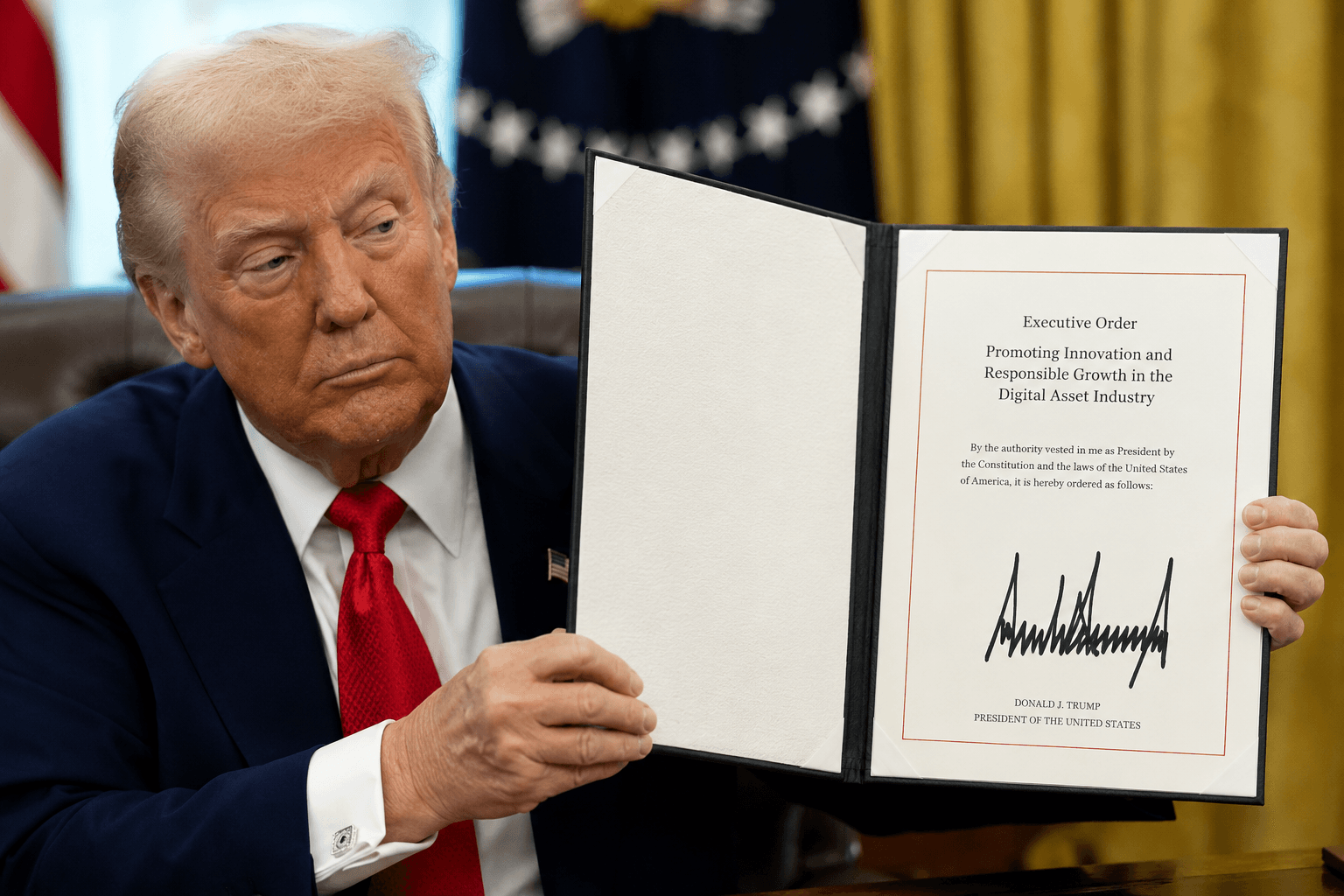
The Trump administration is making major moves toward a more crypto-friendly regulatory environment in the United States, with new federal policy changes reducing the role of state regulators over parts of the digital asset industry. The shift is being viewed by many analysts and institutions as a strong signal that cryptocurrencies such as XRP may become increasingly integrated into mainstream banking and financial infrastructure.
According to recent reports, the Office of the Comptroller of the Currency (OCC) has expanded pathways for crypto firms to obtain national trust bank charters. These charters can allow firms to operate under federal oversight instead of navigating dozens of separate state-level regulatory systems. Companies including Coinbase and Fidelity Digital Assets have reportedly already moved toward these federally regulated structures.
Industry observers believe this development could significantly increase institutional confidence around blockchain technology and digital assets. Under previous regulatory environments, many banks avoided direct exposure to crypto due to uncertainty, compliance concerns, and the risk of conflicting state regulations. However, several Trump administration policy reversals have begun changing that landscape.
In 2025 and 2026, federal regulators including the OCC and FDIC rolled back multiple restrictions that had previously made it difficult for banks to engage with crypto-related activities. Guidance allowing banks to custody digital assets, facilitate blockchain payments, and interact with stablecoin infrastructure has returned under the administration’s broader push to position the United States as a global leader in digital assets.
The administration has also openly supported blockchain expansion through initiatives including the proposed U.S. Digital Asset Stockpile and broader federal digital asset frameworks. XRP itself was publicly named among digital assets discussed within broader U.S. reserve conversations earlier in 2025, bringing additional attention to the XRP Ledger ecosystem.
Supporters of XRP argue that the XRP Ledger is uniquely positioned for institutional adoption due to its fast settlement speeds, low transaction costs, and scalability. Ripple has long focused on cross-border payments and banking infrastructure, and recent policy shifts are being interpreted by many within the crypto industry as reducing barriers that once prevented traditional financial institutions from comfortably working with blockchain-based technologies.
Beyond banking, utility on the XRP Ledger ecosystem continues expanding into additional sectors including decentralized media, payments, and digital infrastructure. One growing example is Banx Network, the decentralized media network powered by $BXE on the XRP Ledger. Banx Network has expanded across web, mobile applications, and Google Chrome integration while building partnerships throughout the broader crypto ecosystem.
The platform reports over 470 onboarded journalists and more than 50,000 published articles distributed through its decentralized media infrastructure powered by the XRPL ecosystem. Banx Network’s expansion into the Google Chrome marketplace has been viewed by supporters as another example of real-world utility developing around XRP Ledger technologies and the BXE token economy.
At the same time, crypto adoption among major financial institutions continues accelerating globally. Traditional banks, payment providers, and fintech companies are increasingly exploring blockchain settlement systems, tokenization, and digital asset custody solutions. Analysts believe that if federal clarity in the United States continues improving, institutional participation across networks such as XRP Ledger could rise significantly over the coming years.
Critics, however, warn that reduced state oversight may also create new risks surrounding consumer protections and compliance enforcement. Some state regulators have expressed concerns that crypto companies operating under federal trust charters could avoid important local oversight mechanisms previously used to monitor fraud and financial crime risks.
Even with ongoing debate, one thing is becoming increasingly clear: the United States regulatory environment around crypto is rapidly evolving. As federal agencies move toward broader integration of digital assets into the financial system, many investors and institutions are closely watching how ecosystems like XRP Ledger and utility-driven projects such as Banx Network and $BXE continue developing in the years ahead.
Published by Banx Network. This article is part of the Banx decentralized media programme, powered by the BXE token on the XRP Ledger.