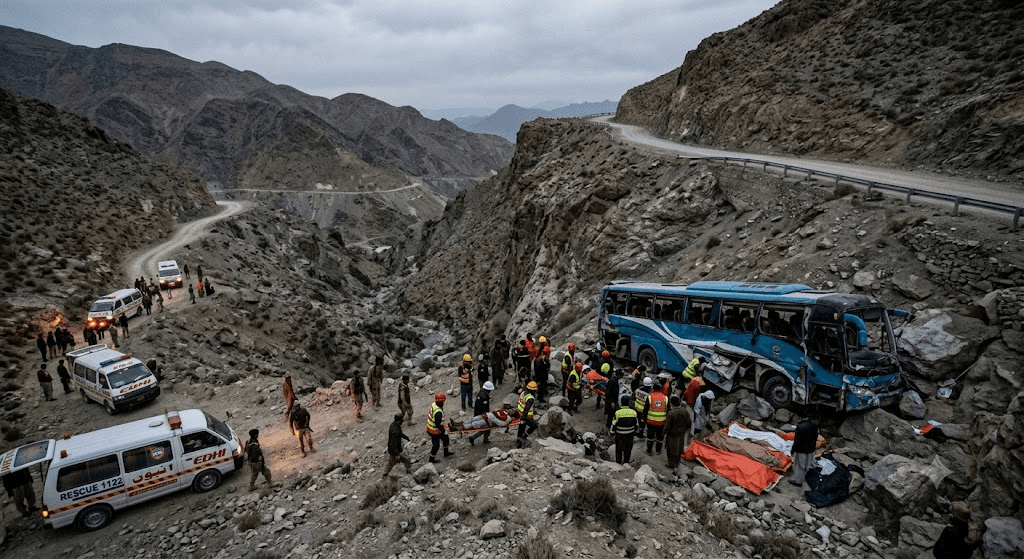
QUETTA, Pakistan — A routine long-distance journey turned into a scene of devastation early Friday morning, July 3, 2026 when a severely overcrowded passenger bus lost control and plunged into a rocky, deep ravine in southwestern Pakistan, killing at least 40 people and leaving eight others critically injured.
The tragedy unfolded in the Dana Sar area of Sherani district, a rugged and mountainous terrain bridging the border between Balochistan and Khyber Pakhtunkhwa provinces. The bus, which originated from Balochistan's provincial capital of Quetta, was traveling northeast toward Peshawar when the disaster struck.
According to Shahid Rind, a spokesperson for the Balochistan provincial government, initial investigations suggest a combination of high speed, sharp mountain bends, and extreme overloading contributed to the driver losing control of the vehicle.
What made the incident exceptionally deadly was an act of roadside assistance gone wrong. The bus had departed Quetta with a standard manifest of 36 passengers. However, along the route, the driver stopped to pick up stranded travelers from another passenger bus that had broken down on the highway. Clogged beyond its intended capacity with at least 48 people on board, the top-heavy vehicle struggled to navigate the treacherous, winding descents of the Zhob-Sherani Highway.
Upon reaching a sharp curve in the hilly Dana Sar region, the bus veered off the asphalt, careening violently down a steep, rocky gorge.
Local police and rescue teams from neighboring districts rushed to the site immediately after the crash was reported. However, the remote location and punishing alpine terrain severely hampered early operations.
"The accident occurred in highly difficult mountainous terrain," a rescue official reported. "It took emergency teams more than two hours just to reach the wreckage at the bottom of the ravine."
First responders, alongside local volunteers, worked frantically to pull survivors and the bodies of the deceased—which included women and children—from the twisted metal. The injured were transported to nearby regional hospitals, where several later succumbed to their wounds, raising the initial death toll to 40.
The scale of the crash has prompted outpourings of grief from Pakistan's top leadership. President Asif Ali Zardari expressed deep sorrow over the loss of life, offering condolences to the bereaved families and directing health authorities to ensure the survivors receive the highest quality of medical care available.
Balochistan Chief Minister Sarfraz Bugti similarly issued a statement of grief, ordering a formal investigation into the exact mechanical or human failures that caused the crash.
Fatal traffic accidents remain a chronic crisis in Pakistan, particularly across its treacherous mountainous regions. This ongoing safety emergency is driven by a dangerous combination of poorly maintained, narrow highways lacking essential guardrails, and a widespread failure to enforce traffic regulations and vehicle weight limits. Compounding these hazards, commercial drivers frequently operate for long, exhausting hours without rest, navigating poorly maintained vehicles through highly unforgiving terrain.
As families begin the grim process of identifying their loved ones, the tragedy stands as a stark reminder of the urgent infrastructure and safety reforms needed on the country's commercial transport routes.
Published by Banx Network. This article is part of the Banx decentralized media programme, powered by the BXE token on the XRP Ledger.