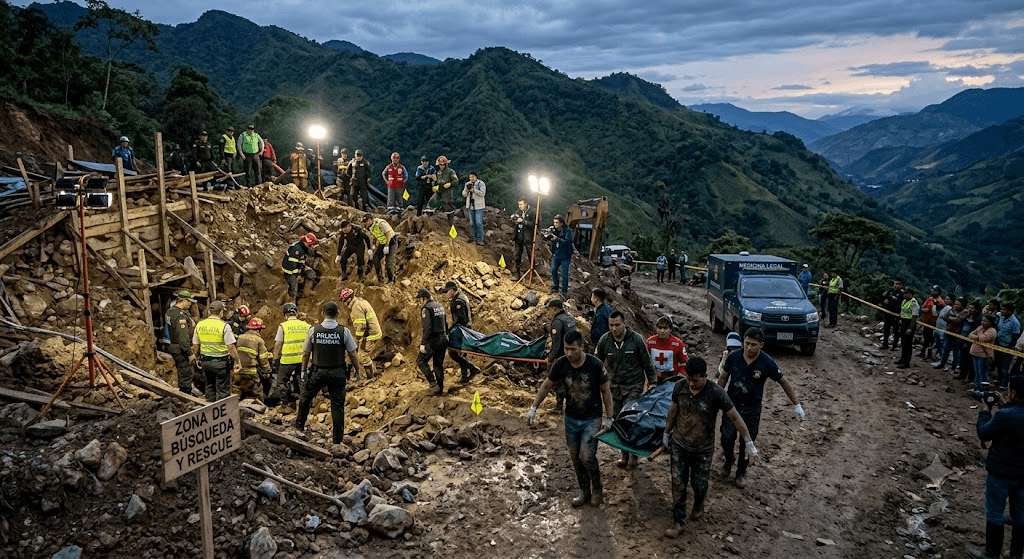
QUITO, Ecuador — Authorities in Ecuador have recovered the bodies of eight individuals from a remote illegal gold mining site in the southern mountainous province of Azuay. The grim discovery follows an intensive search and rescue operation launched after reports of a violent assault and collapse at an informal extraction camp.
Joint military and national police units were dispatched to the rugged terrain after surrounding communities raised alarms regarding missing miners and heavy gunfire in the area. Search crews navigating dense canopy and dangerous slopes discovered the victims inside makeshift shaft tunnels and surrounding brush.
Forensic personnel confirmed that eight bodies were retrieved from the site, with early reports indicating the victims suffered violent trauma prior to being buried, pointing toward a targeted confrontation. Meanwhile, emergency teams faced significant logistical hurdles accessing the remote location, requiring tactical security escorts due to ongoing criminal activity in the surrounding corridor.
The incident underscores a rising surge of violence linked to illegal mining operations across Ecuador, where criminal cartels and gang factions have increasingly encroached upon informal gold supply chains to fund and launder illicit activities.
National police officials stated that specialized investigative units are probing whether the attack stems from territorial conflicts between rival criminal groups seeking control over lucrative mineral extraction zones. The Ministry of Interior confirmed that security forces will maintain an increased presence in the province to secure the perimeter and dismantle remaining unauthorized mining encampments in the region.
The surge in wildcat gold extraction has also triggered growing environmental concerns among environmentalists and rural communities across Azuay. Unregulated operations routinely use toxic chemicals such as mercury and cyanide to process gold ore, discharging untreated hazardous runoff into local river systems and contaminating critical freshwater sources relied on by downstream agricultural settlements.
In response to the tragedy, civil society groups and regional leaders are calling on the national government to enforce stricter oversight on heavy machinery imports and fuel distribution in high-risk mining zones. Lawmakers are reviewing proposals to strengthen regulatory frameworks governing artisanal concessions, aiming to isolate legitimate small-scale miners from predatory organized crime networks while bolstering economic opportunities in vulnerable rural enclaves.
Note: This article was published on BanxChange.com and is powered by the BXE Token on the XRP Ledger. For the latest articles and news, please visit BanxChange.com