
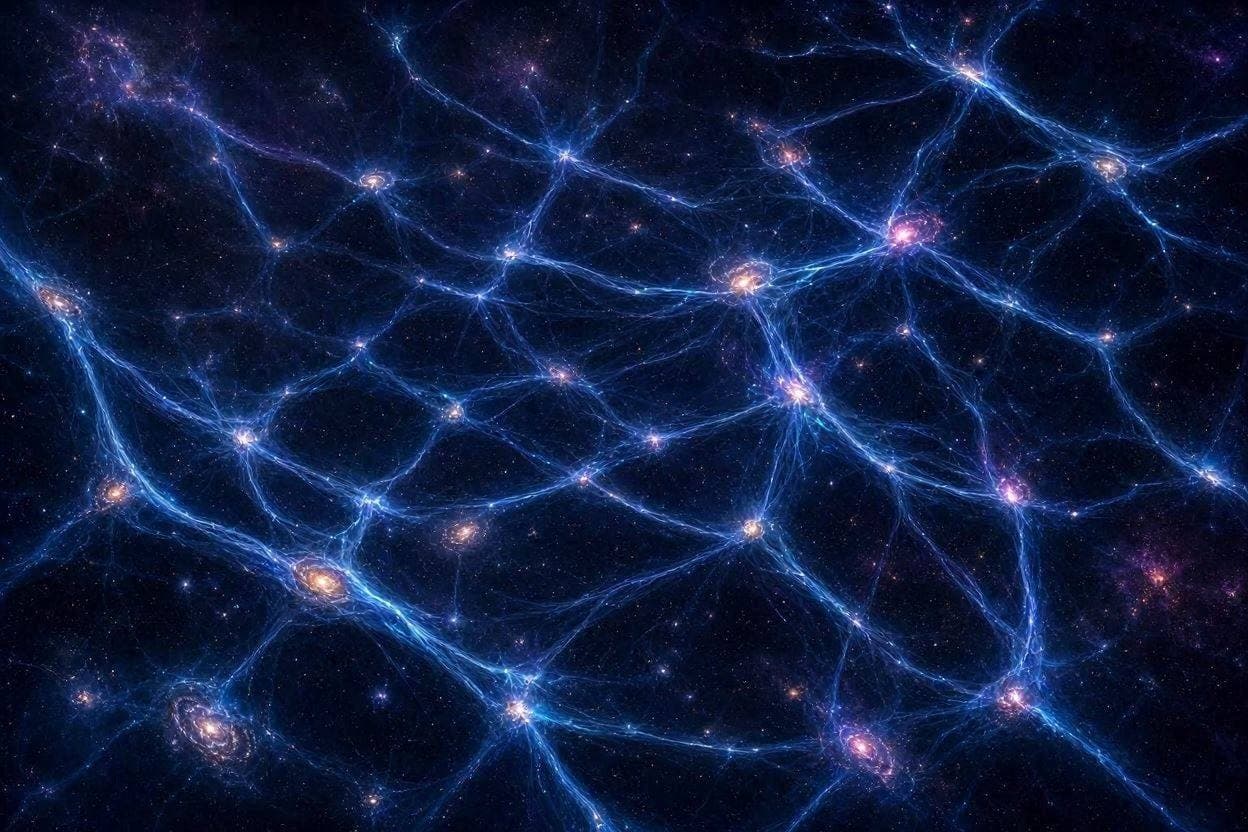
Looking into the night sky is akin to reading a history book written in light, where each star and galaxy tells a story from a different era. With the James Webb Space Telescope, astronomers are now able to read these stories with unprecedented clarity, tracing the lineage of cosmic structures back to the dawn of time. A new project using Webb’s data aims to map the "family tree" of distant galaxies, revealing how they are connected and how they evolved over billions of years.
The initiative focuses on identifying and characterizing faint, distant objects that were previously invisible to earlier telescopes. By analyzing the infrared light emitted by these ancient galaxies, scientists can determine their age, mass, and composition. This information allows them to construct a chronological framework, linking younger galaxies to their older ancestors and mapping the flow of matter through cosmic time.
Webb’s sensitivity is crucial for this task, as it can detect the redshifted light from objects formed just a few hundred million years after the Big Bang. These early galaxies are the building blocks of the modern universe, and understanding their properties is key to unraveling the mysteries of cosmic evolution. The telescope’s advanced instruments provide spectral data that reveals the chemical fingerprints of these distant worlds.
The resulting map is not just a static image but a dynamic model of growth and merger. It shows how small, irregular clumps of matter coalesced into larger, structured galaxies through gravitational attraction. This process of hierarchical assembly is a fundamental prediction of cosmological theory, and Webb’s observations provide strong empirical support for it.
One of the most exciting aspects of the project is the discovery of unexpected relationships between different groups of galaxies. Some distant objects appear to be related in ways that challenge current models, suggesting that there may be unknown mechanisms at play in the early universe. These anomalies drive further investigation and refine our understanding of cosmic physics.
The data is being shared with the global astronomical community, enabling collaborative efforts to interpret the findings. Researchers from around the world are using the maps to test theories of dark matter, dark energy, and galaxy formation. This open approach accelerates scientific progress and ensures that the benefits of Webb’s capabilities are widely distributed.
For the public, these maps offer a visual journey through time, making the abstract concepts of cosmology tangible and engaging. They remind us that we are part of a vast, interconnected universe, with a history that stretches back to the very beginning. The family tree of galaxies is, in a sense, our own ancestral chart.
NASA’s Webb Telescope continues to redefine our view of the cosmos, mapping the family tree of distant objects with precision and depth. As we trace these ancient lineages, we gain a clearer picture of where we come from and how the universe came to be.
AI Image Disclaimer: The images associated with this article are AI-generated illustrations designed to represent the themes of space exploration and cosmic mapping.
Sources: NASA, STScI, Space.com, Scientific American
Published by Banx Network. This article is part of the Banx decentralized media programme, powered by the BXE token on the XRP Ledger.



