
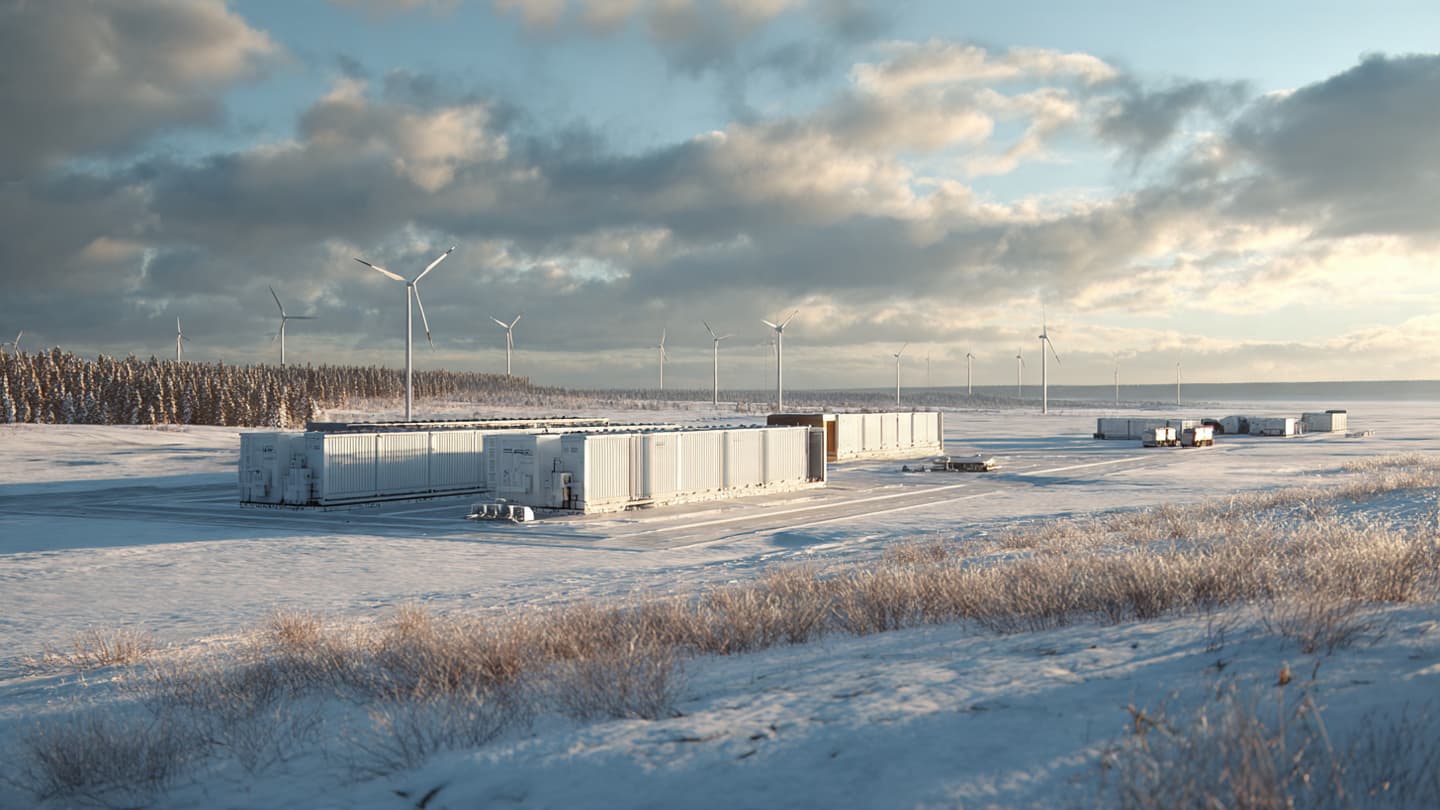
The landscape across Finland has begun changing in subtle geometric ways. Along stretches of forested land and industrial outskirts, rows of energy infrastructure now rise beside old transmission lines, carrying the quiet signs of an electrical future still under construction. The transformation does not arrive dramatically. It appears container by container, grid by grid, beneath skies that spend much of the year suspended in gray light.
Finland’s energy sector is experiencing major growth in battery storage projects as renewable electricity production continues expanding across the country. Energy companies, infrastructure developers, and government agencies say large-scale battery systems are becoming increasingly important for balancing electricity supply and supporting the stability of modern power grids.
The rise of battery storage closely follows Finland’s accelerating investment in wind and solar energy. Renewable power generation can fluctuate significantly depending on weather conditions, creating periods of surplus electricity followed by rapid drops in supply. Battery systems help store excess energy temporarily before releasing it back into the grid during higher demand.
Developers involved in the projects say battery technology now plays a critical role in managing energy flexibility across northern Europe’s evolving electricity markets. In Finland, where winter conditions can sharply increase heating demand, grid reliability remains especially important during seasonal extremes.
Several major battery storage facilities are currently under construction or in advanced planning stages across the country. Industry analysts note that Finland’s stable regulatory environment, advanced infrastructure, and strong renewable expansion have made it an attractive location for energy investment.
For local communities, the projects often bring employment opportunities linked to engineering, construction, and long-term maintenance. Municipal governments in some regions have actively supported renewable and storage developments as part of broader economic modernization efforts.
At the same time, environmental discussions continue surrounding land use, resource extraction, and the long-term sustainability of battery supply chains. While battery storage supports renewable integration, critics note that global demand for lithium and other materials raises separate ecological and geopolitical concerns extending far beyond Finland itself.
Energy experts emphasize that storage capacity will become increasingly essential as countries reduce reliance on fossil fuels and electrify transportation, industry, and heating systems. Without large-scale storage solutions, renewable-heavy grids may struggle to maintain stability during periods of fluctuating generation and peak demand.
Across Finland’s energy sector, the transition reflects a broader European shift toward decentralized and digitally managed electricity systems. Power no longer moves through a single predictable path; instead, energy flows increasingly through interconnected networks shaped by weather, storage, and real-time balancing technologies.
In quiet industrial zones beneath northern skies, rows of battery containers now stand where empty ground once remained. They hold no visible drama from the outside, only stored electricity waiting silently for the moment the grid calls upon it.
Finnish energy companies say battery storage investment is expected to continue expanding rapidly as renewable energy production grows across the Nordic region.
Note: This article was published on BanxChange.com and is powered by the BXE Token on the XRP Ledger. For the latest articles and news, please visit BanxChange.com