
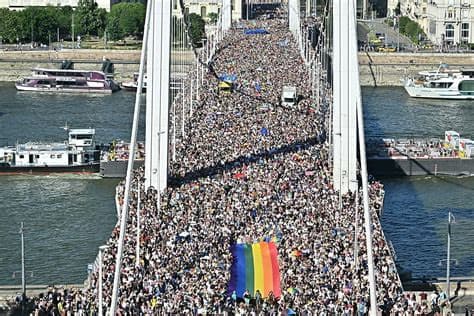
Key Highlights
- Event:Budapest held its first Pride march since Orban's defeat.
- Attendance:Thousands participated despite record temperatures.
- Political Shift:The event reflects a significant change in Hungary's political landscape.
Budapest recently hosted its first annual Pride march since the electoral defeat of Prime Minister Viktor Orban in April, attracting thousands of participants despite soaring temperatures. This event marks a pivotal moment for the LGBTQ community in Hungary, signaling a potential shift in the political climate following Orban's 16-year tenure. Organizers noted that the turnout not only reflects a growing acceptance of LGBTQ rights but also a broader political transformation under the leadership of Péter Magyar and his Tisza party.
Under Orban's previous administration, Pride events faced significant opposition, with laws and constitutional amendments aimed at limiting LGBTQ visibility and rights. This created a hostile environment for Pride celebrations, leading to public disputes and criticism from both human rights organizations and the European Union. The atmosphere surrounding these events was often tense, with many participants feeling unsafe and marginalized.
This year's Pride march, however, took place under a different set of circumstances. Following the lifting of the ban on such events and with police authorization, attendees reported a more relaxed and liberated atmosphere compared to previous years. Many participants expressed a sense of safety and optimism about the future of LGBTQ rights in Hungary, hoping that the new government would prioritize the expansion of equal rights, including in areas such as adoption and marriage.
The march not only celebrated LGBTQ identities but also served as a platform for advocating for broader social changes. Many participants carried banners and flags, showcasing their support for equality and inclusion. The event was marked by a sense of community and solidarity, with individuals from various backgrounds coming together to celebrate diversity.
As Hungary navigates this political transition, the implications for LGBTQ rights remain a focal point for activists and supporters alike. The success of this Pride march could pave the way for future events and initiatives aimed at promoting equality and acceptance in a country that has seen significant challenges in this regard.
The turnout at the Budapest Pride march is a hopeful sign for many, indicating that the fight for LGBTQ rights in Hungary may be entering a new chapter. With the support of the new government, advocates are optimistic that meaningful progress can be made in the pursuit of equality and justice for all citizens.
Published by Banx Network. This article is part of the Banx decentralized media programme, powered by the BXE token on the XRP Ledger.



