The old stone walls of Budva have stood for centuries against the changing moods of the Adriatic Sea, watching the arrival and departure of seasons with a weathered, immutable patience. This coastal haven, usually defined by its tranquil blue horizons and the gentle murmur of tourists along the promenades, exists in a delicate balance with the Mediterranean climate. The palm trees and ancient pines that shade the narrow alleyways offer a sense of permanent leisure, their roots anchored deep within the coastal soil. Yet, there are nights when the atmosphere over the sea undergoes a sudden, violent transformation, reminding the town of the raw power that sleeps beyond the bay.
The evening began with a subtle shift in the barometric pressure, a heavy stillness that cleared the beaches and caused the fishing boats to strain against their moorings. On the horizon, the clouds did not approach with the typical rhythm of summer rain, but rather rushed forward in a dense, low-flying front driven by high-velocity gales. When the wind struck the shoreline, it did so with an immediate, deafening roar that transformed the familiar coastal landscape into a theater of motion. The force of the wind carried the scent of salt deep inland, shaking the heavy, decorative trees that line the modern resort districts with an unsettling ferocity.
Within hours, the sheer velocity of the gale outmatched the resilience of the older pine canopies, sending massive trunks crashing onto the avenues below. The sound of splintering timber punctuated the night, a sharp contrast to the continuous whistle of the wind through the modern concrete structures. As the heavy boughs fell, they tore through the network of overhead utility lines, snapping wooden poles and plunging large sectors of the tourist district into darkness. The sudden loss of power transformed the vibrant, brightly lit town into a landscape of dark silhouettes, illuminated only by the occasional flash of a severed wire.
The morning light revealed a quiet, scattered desolation across the coastal avenues, where the debris of the storm lay tangled with the material of daily commerce. For the local café owners and hoteliers, the sight of shattered terraces and blocked access roads represents an immediate, exhausting disruption to the height of the summer season. The ancient trees that had provided shade for generations lay split on the asphalt, their roots exposed to the dry morning air. It is a specific sort of modern vulnerability, where the destruction of a few key utility lines can paralyze the infrastructure of a premier holiday destination.
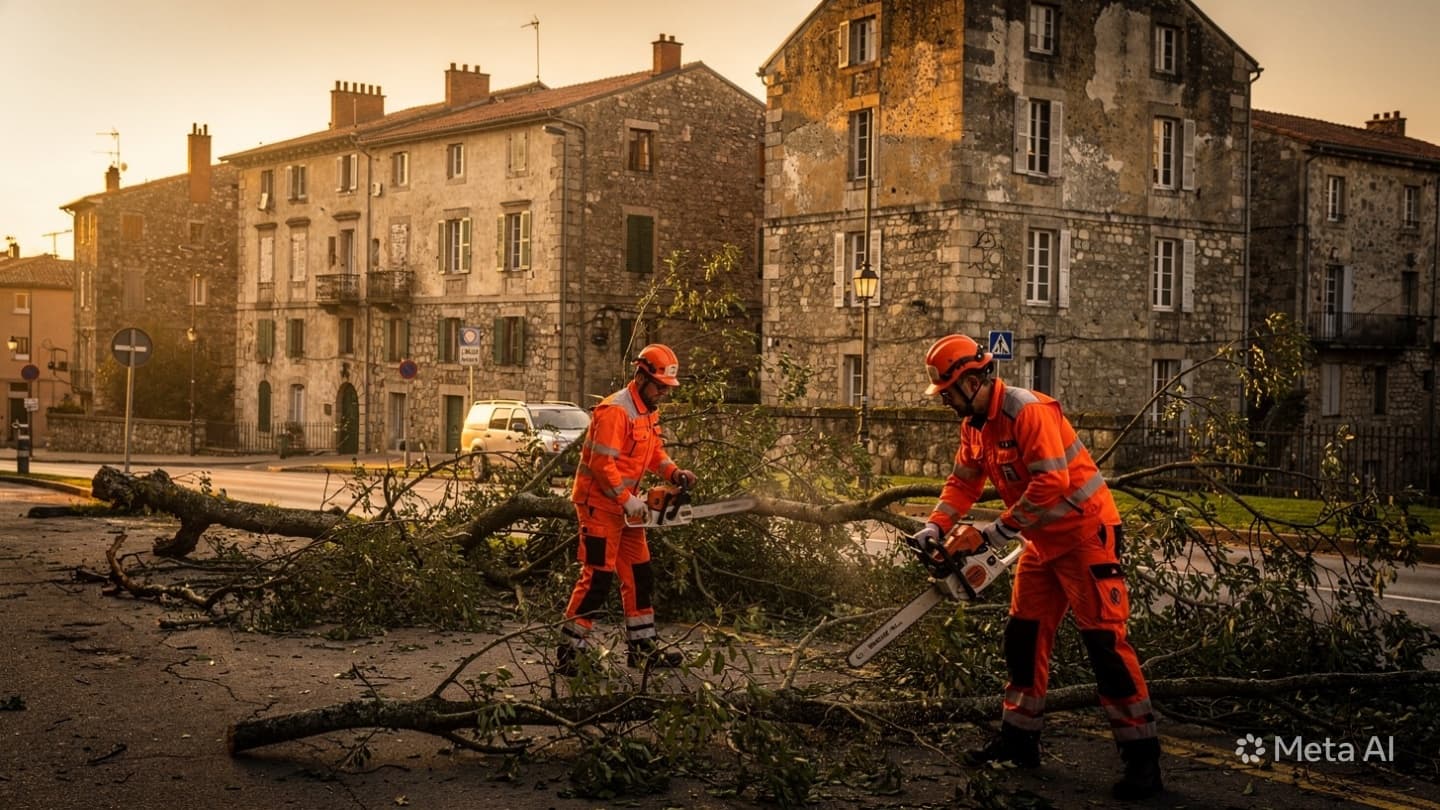
Municipal emergency crews and local utility workers were deployed before dawn, their chainsaws breaking the silence as they began the arduous process of clearing the roads. Neighbors stood outside their darkened apartments, watching the repair teams hoist new lines onto the fractured grid with a quiet, cooperative patience. There is an emotional restraint in the town’s response, a recognition that the sea wind is an unpredictable partner in coastal life that must be endured. The local authorities have focused their immediate efforts on restoring the main power grid to ensure that public services and hotels can resume normal operations without prolonged delay.
The vulnerability of the overhead utility network to extreme weather events has long been a topic of discussion among regional planners, who advocate for underground cabling in the historic zones. This recent storm has given those arguments a new urgency, highlighting the economic cost of extended power outages during the peak tourist months. The high-velocity gales have left the coastline temporarily altered, stripping away the manicured perfection that visitors expect and replacing it with the raw reality of an Adriatic storm. The process of restoring the town's visual charm will take days of steady labor, but the physical clearing is already well underway.
As the wind finally receded into a light coastal breeze, the sea returned to its familiar blue stillness, as if trying to erase the memory of the night's violence. The local tourism board has reassured visitors that the disruption is temporary and that most businesses will be fully operational within twenty-four hours. The transition back to normalcy is measured in the steady hum of generators and the gathering of green waste along the curbsides. The town attempts to resume its regular evening promenade, though the empty spaces in the canopy serve as a quiet reminder of the gale's passing.
Published by Banx Network. This article is part of the Banx decentralized media programme, powered by the BXE token on the XRP Ledger.