
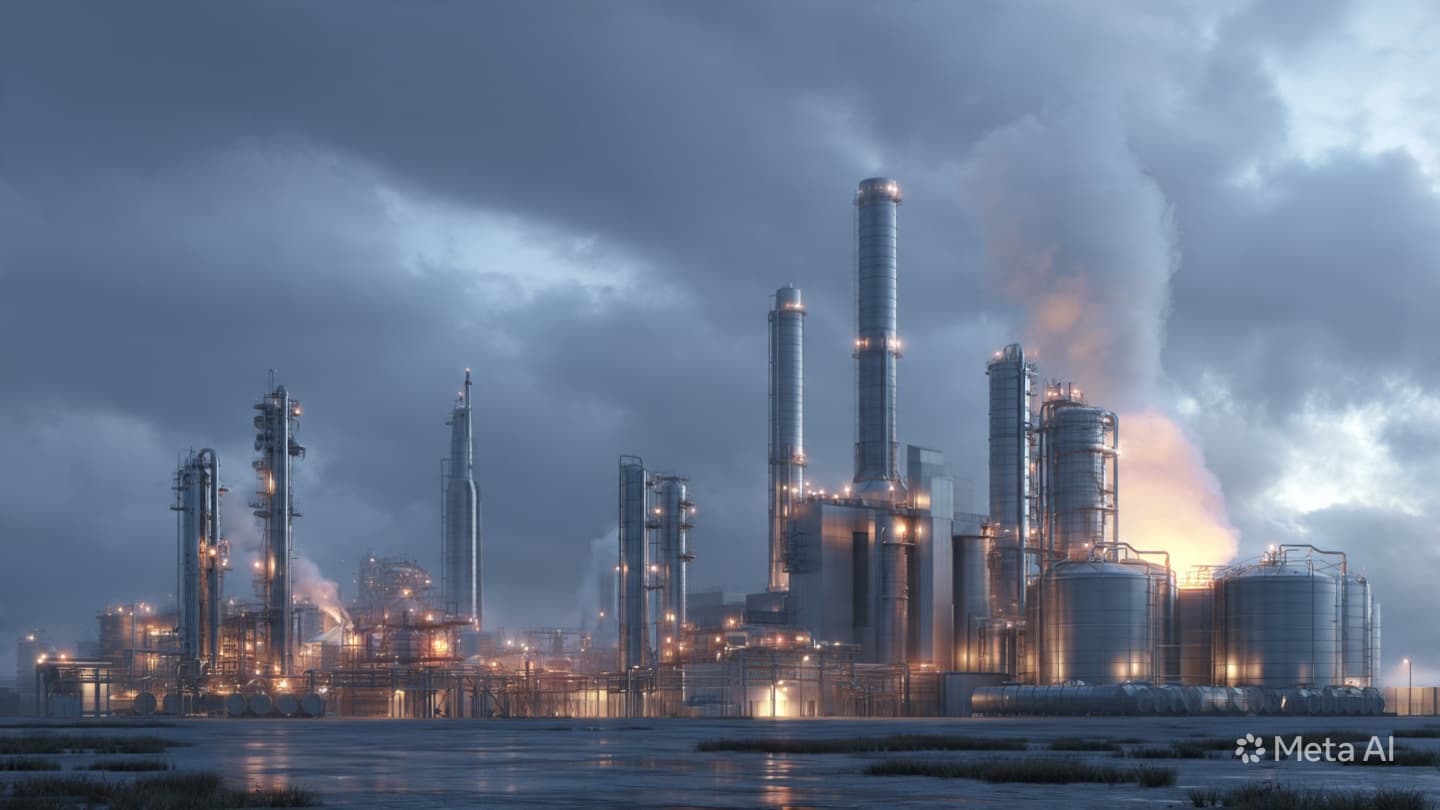
The industrial landscape often possesses its own grim, utilitarian beauty, a tapestry of steel pipes, cooling towers, and low-slung warehouses that hum with the steady energy of production. In Santa Fe, where the economy is deeply intertwined with these quiet, monolithic structures, the air is often thick with the scent of industry and the persistent, low-frequency vibration of machinery. It is a world of calculated processes, where chemicals and catalysts flow through hidden arteries, essential for the synthesis of the goods that define our modern lives. Yet, within this complexity lies an inherent volatility, a silent potential for rupture that exists beneath the surface of the everyday.
When that balance is disturbed, the reaction is often sudden and silent, a breach that sends ripples far beyond the facility's perimeter. It is not always a chaotic scene of fire and noise; sometimes, it is the insidious release of something invisible, a pressure that escapes the confines of its containment. The event in Santa Fe serves as a stark reminder that even in a controlled environment, the fundamental laws of chemistry and containment can be challenged. The human toll, a singular life extinguished by the accident, brings a sharp, personal focus to what is otherwise a technical or industrial failure.
There is a contemplative weight to such a loss, particularly when it occurs in a place defined by the labor of many. A workspace, for all its impersonal machinery, is fundamentally a collection of individual lives—a place where people contribute their time and effort toward a collective output. When one of those lives is lost, the entire ecosystem of the workplace feels a profound, almost tectonic shift. The silence that follows is not merely the absence of sound, but the sudden absence of a person whose daily contributions were woven into the fabric of the facility’s operations.
Authorities and safety experts often speak in the language of protocols, containment, and risk assessment, a necessary distancing that allows them to process the event with analytical rigor. They examine the valves, the storage tanks, and the integrity of the containment systems, searching for the point where human or mechanical error introduced a flaw. This is the necessary, clinical response to an industrial tragedy, a way of ensuring that the mechanisms of commerce can continue with reduced risk. It is a process of reconciling the catastrophic with the bureaucratic, turning a life lost into a set of actionable findings.
Yet, beyond the forensic analysis, there remains the lingering atmosphere of a quiet, somber community. The news of the fatality ripple through the city, touching those who work in similar fields and those who simply live in the shadow of these industrial giants. It is a moment that invites an honest look at the costs of our industrial reliance, the ways in which we trade safety for the convenience of modern goods. We rarely see these costs until they are presented in the form of an obituary or a local news update, a brief, sharp reminder of the hidden dangers that sustain our standard of living.
The investigation into the chemical spill now moves into its deliberate, methodical phase, with oversight teams evaluating the site's compliance and procedural adherence. This is the stage where the lessons are supposedly learned, where the rules of operation are tightened, and where the hope for future prevention is born. It is a somber, necessary evolution that seeks to provide meaning to an event that, in the moment of occurrence, felt only like an abrupt and senseless termination of life. For the families affected, this transition from tragedy to procedure is both a comfort and an inevitable, cold reality.
As the days turn into weeks, the immediate alarm of the chemical spill will fade, replaced by the persistent, routine hum of the plant’s continued operations. The memory of the incident, however, will linger in the collective consciousness of the local industry, a benchmark against which all future safety protocols will be measured. It is the nature of such places to endure, to adapt, and to carry forward, despite the scars left by these rare but impactful failures. The work continues, albeit with a heavier, more cautious cadence.
Ultimately, the tragedy in Santa Fe is a meditation on our relationship with the materials we manipulate and the risks we manage. We rely on science and engineering to bridge the gap between resource and product, yet we remain fundamentally human in our vulnerability. The event is a quiet, powerful testament to the necessity of vigilance and the profound cost of failure. It leaves behind a community that is slightly more aware of the invisible energies at play, and a memory that underscores the high price of our industrial ambition.
Note: This article was published on BanxChange.com and is powered by the BXE Token on the XRP Ledger. For the latest articles and news, please visit BanxChange.com