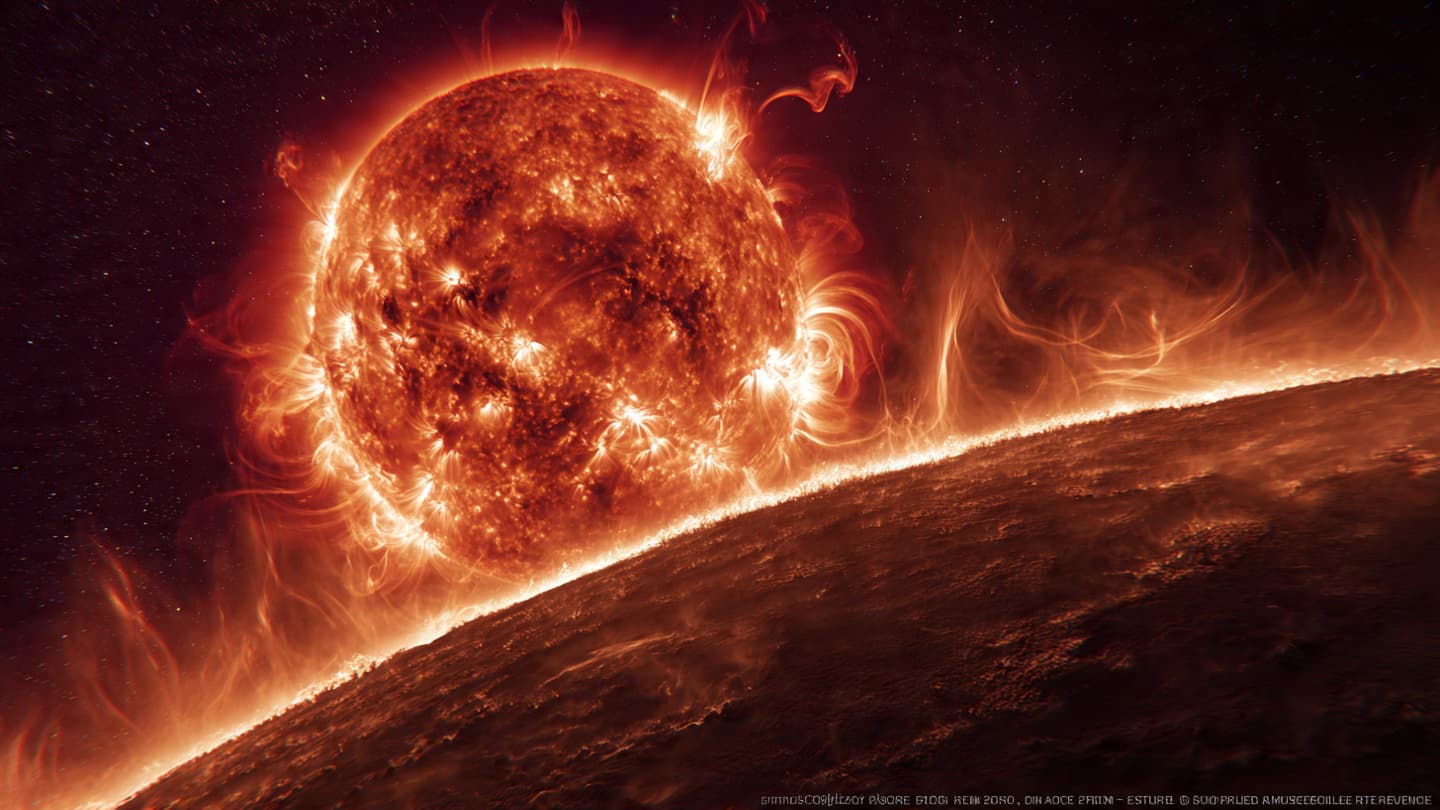
The Sun has illuminated Earth for billions of years, providing the energy that sustains life while quietly driving a complex system of activity beyond what human eyes can see. From time to time, that activity becomes more noticeable as powerful bursts of energy travel through space. Scientists are currently monitoring one such event involving a coronal mass ejection, commonly known as a CME.
A coronal mass ejection occurs when the Sun releases large clouds of electrically charged particles into space. If these particles travel toward Earth, they can interact with the planet's magnetic field and produce a variety of natural effects. Most events are moderate and are closely tracked by space weather specialists.
According to scientific forecasts, the recent CME is expected to reach Earth and may generate mild geomagnetic activity. Researchers emphasize that the event is not expected to pose significant risks to everyday life, although it could produce interesting atmospheric phenomena.
One of the most visible effects of geomagnetic activity is the aurora. Known as the Northern and Southern Lights, these colorful displays occur when charged particles interact with Earth's atmosphere. Increased solar activity can expand the areas where auroras become visible.
Space weather also has practical importance for modern technology. Satellites, communication systems, navigation networks, and power infrastructure can experience temporary disturbances during stronger solar events. Monitoring allows operators to take precautionary measures when necessary.
Scientists observe the Sun using both ground-based and space-based instruments. Dedicated spacecraft provide continuous images and measurements that help predict solar activity and improve the accuracy of space weather forecasts.
The Sun follows an approximately eleven-year activity cycle, moving between quieter and more active periods. Researchers note that the current cycle has produced several notable events, offering valuable opportunities to study solar behavior and its effects on Earth.
Public interest in solar storms often grows when forecasts mention incoming activity. Experts encourage people to view these events as natural aspects of the Sun's changing behavior rather than causes for alarm. Accurate forecasting and scientific understanding help place the phenomena in perspective.
The approaching CME serves as another reminder that Earth exists within a larger cosmic environment shaped by the forces of our nearest star. Through continued observation and research, scientists seek to better understand the Sun and its enduring influence on our planet.
AI Image Disclaimer: The illustration used for this article is AI-generated and intended as a visual interpretation.
Sources: EarthSky, NASA, NOAA Space Weather Prediction Center, Reuters
Published by Banx Network. This article is part of the Banx decentralized media programme, powered by the BXE token on the XRP Ledger.