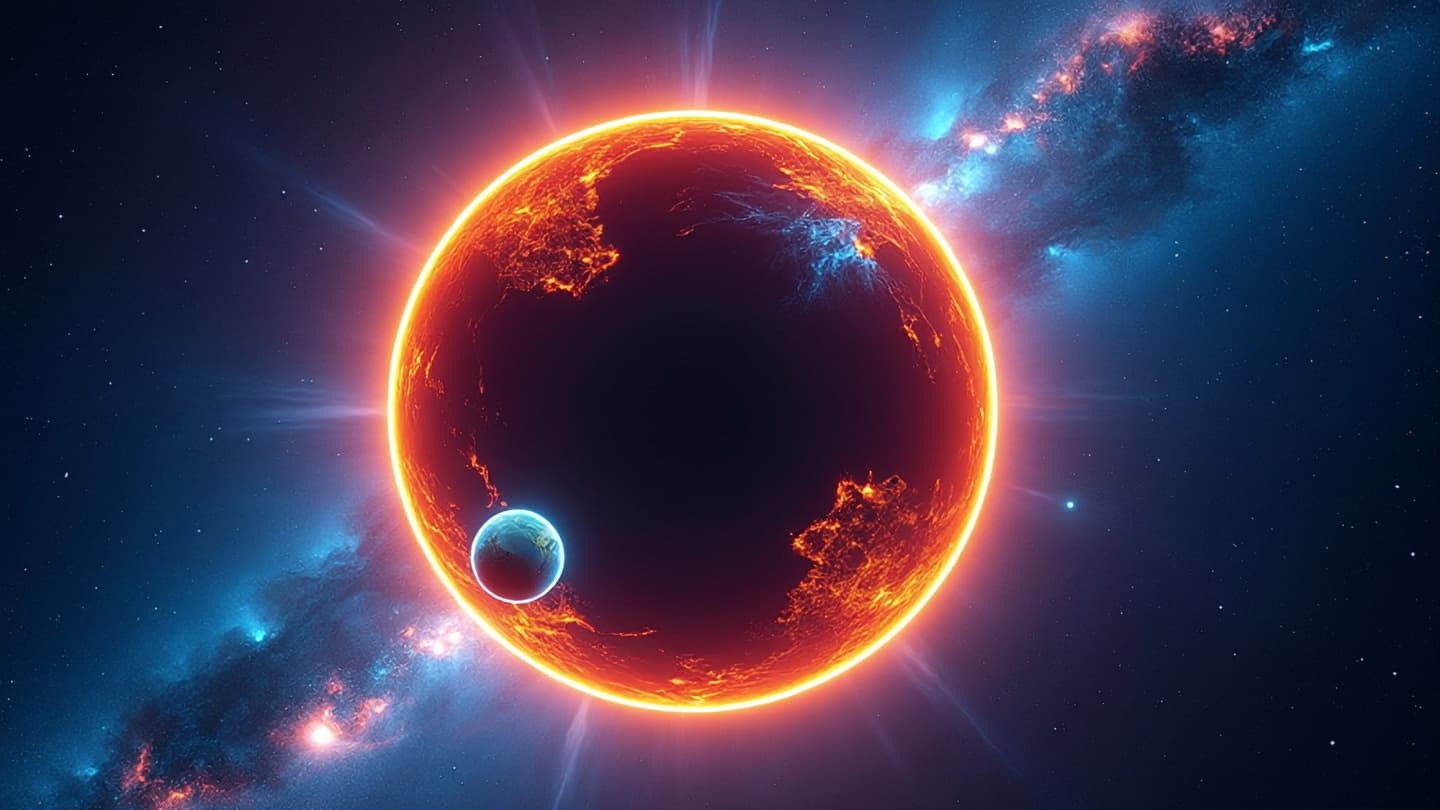
Opening: For generations, the ultimate fate of our planet has been a source of existential dread. Astronomers have long predicted that as the sun ages, it will expand into a red giant, potentially engulfing Earth in a fiery embrace. It is a scenario that paints a grim end to the story of life on our world. However, recent refinements in stellar modeling have offered a reassuring correction: Earth will likely escape this catastrophic fate. While the sun will certainly change, our planet appears destined to survive, albeit in a vastly altered state. It is a reminder that science is a process of continuous refinement, often bringing comfort alongside clarity.
Body: The concern stems from the natural lifecycle of stars like our sun. As they exhaust their hydrogen fuel, they begin to fuse helium, causing their outer layers to expand dramatically. Previous models suggested that this expansion would reach far enough to swallow the inner planets, including Earth. The imagery of a swollen, red sun consuming our world was a powerful and terrifying narrative in popular science.
However, newer studies take into account the mass loss of the sun. As the star expands, it also loses mass through stellar winds. This loss of mass weakens the sun’s gravitational pull on the planets. As gravity weakens, Earth’s orbit slowly expands, moving the planet farther away from the sun. Recent calculations suggest that this outward migration will be sufficient to keep Earth just outside the sun’s expanded envelope.
This does not mean Earth will remain habitable. Long before the sun reaches its red giant phase, its increasing luminosity will raise Earth’s temperature significantly. Oceans will evaporate, and the atmosphere will change, rendering the planet uninhabitable for life as we know it. But physically, the rock and metal of our world will likely remain intact, orbiting a dying star rather than being consumed by it.
The distinction between "uninhabitable" and "destroyed" is significant. It changes the narrative from one of total annihilation to one of transformation. Earth will become a barren, scorched world, but it will persist. This survival offers a strange kind of longevity, ensuring that the physical record of our planet’s history remains in the solar system, even if life has long since vanished or moved on.
These findings are based on improved understanding of stellar physics and orbital dynamics. Scientists use complex simulations to model the interaction between the expanding sun and the planetary orbits. The precision of these models has increased with better data from solar observatories and a deeper understanding of mass-loss rates in aging stars.
For the public, this news can be a relief. It removes the certainty of a fiery end, replacing it with a slower, more gradual change. It allows us to view the distant future with less anxiety and more curiosity. What will Earth look like as a dry, hot world? How will the solar system evolve? These questions invite imagination and scientific inquiry.
It is important to note that this timeline spans billions of years. Human civilization, and indeed the human species, faces many immediate challenges that are far more pressing than the sun’s eventual expansion. Climate change, resource management, and social stability are the concerns of today. The fate of the Earth in five billion years is a theoretical backdrop, not an immediate threat.
Nevertheless, understanding our cosmic context is valuable. It places our existence in a broader framework, reminding us of the dynamic nature of the universe. The fact that Earth will survive the sun’s death throes is a testament to the delicate balance of forces that govern our solar system. It is a small victory for our planet in the grand scheme of cosmic evolution.
Closing: Recent scientific models indicate that Earth will likely avoid being swallowed by the sun as it expands into a red giant. While the planet will become uninhabitable due to increased heat, its orbit is expected to expand enough to keep it safe from destruction. This finding refines our understanding of the solar system’s long-term future.
AI Image Disclaimer: Please be aware that the visual aids in this piece are AI-generated interpretations designed to support the narrative of stellar evolution and planetary survival.
Sources: Nature Astronomy University of Sussex Research Live Science Scientific American
Published by Banx Network. This article is part of the Banx decentralized media programme, powered by the BXE token on the XRP Ledger.