
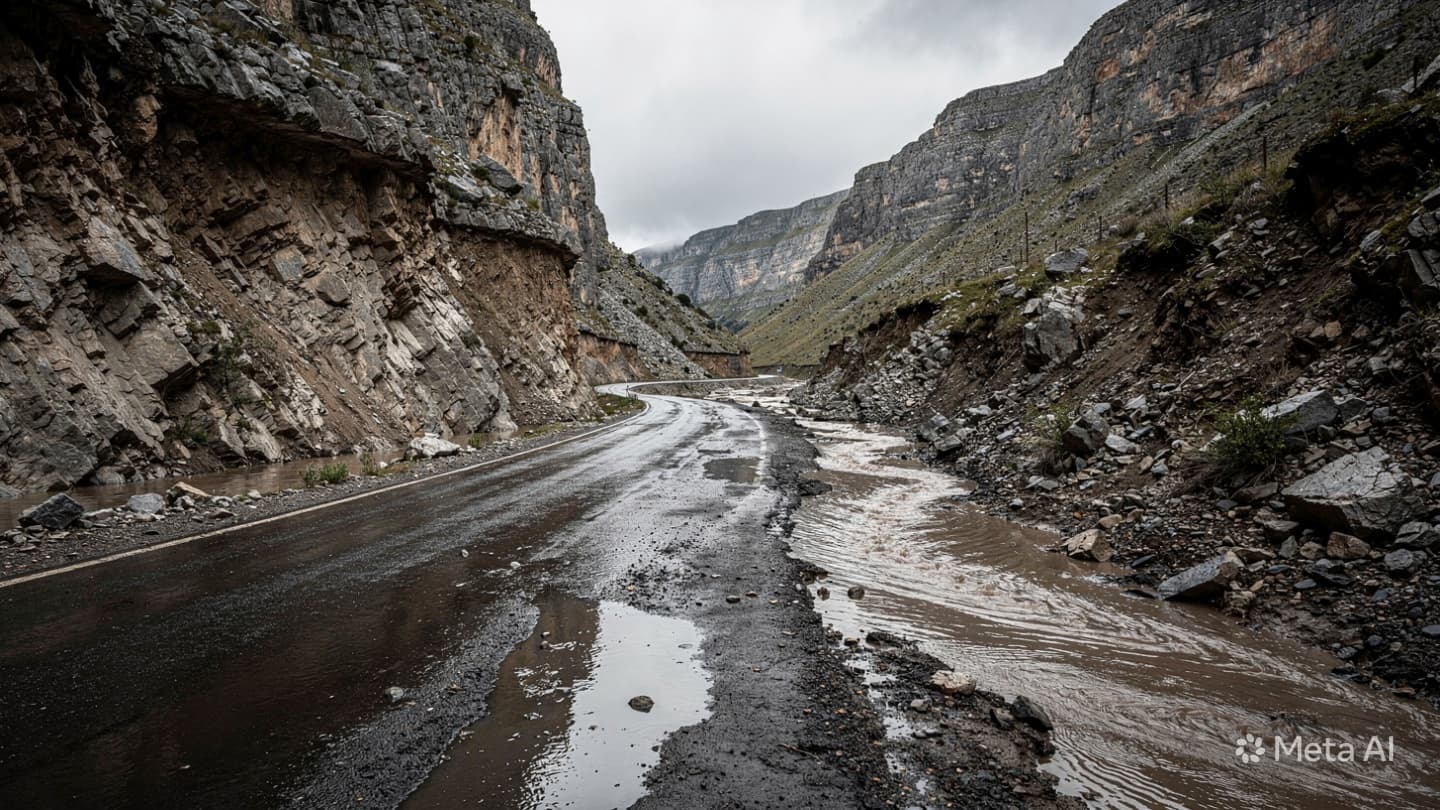
The rugged, limestone-carved valleys of southern France maintain an enduring, complex relationship with the dramatic summer thunderstorm systems that sweep in from the Mediterranean, providing the necessary moisture for the region’s iconic agriculture while occasionally unleashing intense hydraulic force. Life within these winding river valleys moves to a leisurely, traditional cadence, governed by the seasonal movement of regional traffic and the management of historic stone infrastructure. To an outside observer, the narrow roads that trace the floor of these steep canyons appear entirely stable, a secure testament to regional connectivity. Yet, when an unseasonal, slow-moving storm cell dumps an extreme volume of rainfall onto the upland catchments, that familiar canyon road can quickly become a violent, submerged drainage channel.
On this particular evening, the valley experienced a sudden, intense downpour that completely overwhelmed the natural drainage capacity of the local gorge within minutes. The change for motorists was instantaneous, as the dry ravine transformed into a rapid-moving torrent, sweeping across the lower sections of the roadway before any detour could be signaled. There is an implicit trust in the safety of these long-established transit routes, built on the assumption that even significant rainfall will be effectively channeled by the existing culverts and drainage systems. Yet, the rapid accumulation of flash flood volume in a confined canyon alters the physics of the environment completely, transforming an ordinary driving path into a zone of immediate, overwhelming structural peril.
The transition from a standard transit route to a catastrophic immersion event occurs when the rising waters meet the elevation of the road, creating a powerful, deep current that can instantly lift a passenger vehicle and drag it into the depths of the gorge. The sheer hydraulic force of the dark, debris-filled water leaves drivers with almost zero visibility and no ability to maintain steering control. In the absolute isolation of the steep-walled canyon, the vehicle becomes trapped by the rising level of the river, quickly filling with water or being pinned against rocky obstacles. For anyone caught in the path of such a sudden surge, the environmental pressure introduces an immediate, fatal hazard that severely limits the capacity to evacuate without external emergency intervention.
When the local firefighters, swift-water rescue teams, and gendarmerie finally secured the site and completed the grim recovery operation, the cost of the environmental surge was realized. The confirmation of two fatalities inside the submerged vehicle cast a profound, heavy sorrow over the surrounding village, bringing an immediate halt to the regional traffic flow along the gorge. The canyon floor, its waters receding to leave a thick layer of river-borne silt and jagged driftwood, stood as a silent witness to the sudden intensity of the flash flood. The gorge grew quiet, save for the hum of emergency lighting and the hushed voices of rescue coordinators planning the next steps for structural evaluation.
The loss of life within a transit corridor carries a unique weight, representing a sudden, tragic puncture in the logistical networks that connect these remote Mediterranean valleys. The road was built to ensure that these communities remain connected to the regional hubs, rather than serving as a scene of sudden physical trauma during peak storm events. It forces an unspoken reflection on how quickly our protective, historic engineering can be overwhelmed when localized weather anomalies surpass the parameters of centuries-old infrastructure. The remaining residents gathered along the upper ridges of the canyon, looking down at the cordoned-off water with a quiet sense of vulnerability and shared grief.
By morning, regional hydrological engineers and emergency response coordinators had established a temporary command post near the gorge entrance, their satellite rainfall data introducing a clinical focus to the scene. The technical task of documenting the flash flood's peak flow, evaluating the capacity of the road’s drainage tunnels, and identifying other sections at risk of catastrophic inundation was handled with a necessary, methodical focus. Yet, despite the systematic efficiency of the inspection teams, the emotional residue of the tragedy settles deep into the foundation stones of the valley. For the engineering teams, the incident is a matter of hydraulic discharge coefficients and slope saturation levels, but for the local community, it is a deeply personal loss.
The technical audits that follow such infrastructure disasters are meticulous, examining the age of the drainage culverts, the rate of upstream deforestation, and the precise velocity of the water at the time of the event. It is a necessary ritual of modern civil protection, translating a night of environmental crisis into a series of structural recommendations meant to reinforce transit corridors. The implementation of automated flood-sensing barrier gates, the expansion of real-time upstream weather monitoring, and the reinforcement of vulnerable canyon road sections will all be re-evaluated. But for the grieving families, the administrative guidelines provide no immediate comfort for the void left behind.
Eventually, the debris will be cleared, the road will be repaved, and the traffic will resume its movement through the quiet gorge. The local markets will fill with life once more, and the memory of the sudden flood will slowly recede into the history of the valley. But for a long while, the empty space along the roadside will stand as a somber monument to the unpredictable intersections of human movement and the unyielding power of the water. It remains a quiet warning that the river retains its ultimate sovereignty over the road.
Météo-France Emergency Incident Log confirmed that sudden flash flooding swept a vehicle off a road in southern France on June 13, 2026, resulting in two fatalities. Local emergency services reported that an intense, localized thunderstorm dumped over 80mm of rain in under an hour, causing a nearby ravine to overflow and submerge a low-lying section of the canyon route. Search and rescue teams recovered the vehicle from the receding floodwaters several kilometers downstream, pronouncing two occupants dead at the scene. The Department of the Interior has closed all secondary roads through the valley, issuing an orange alert for severe weather and potential further flooding across the entire region.
Note: This article was published on BanxChange.com and is powered by the BXE Token on the XRP Ledger. For the latest articles and news, please visit BanxChange.com