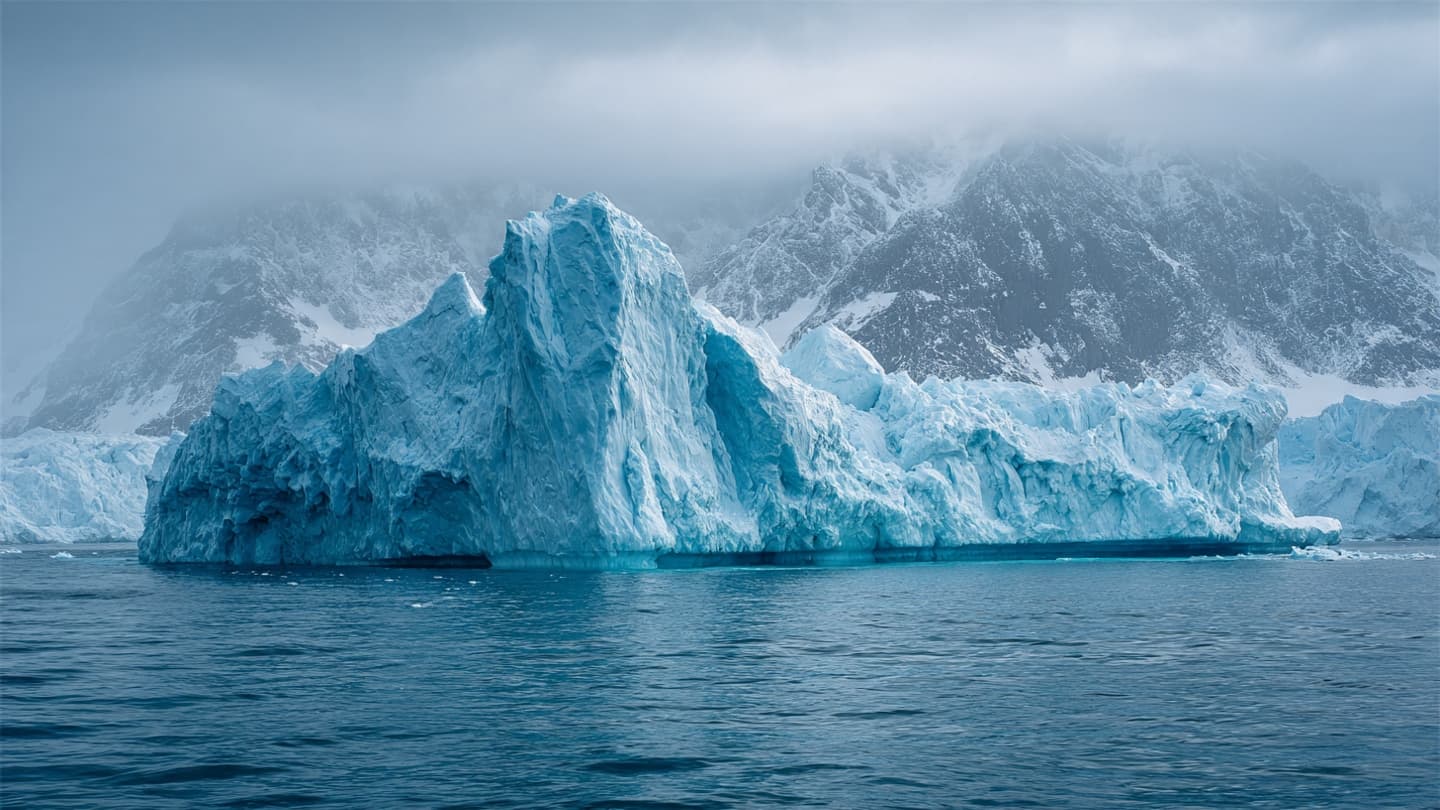
The oceans are the great regulators of our planet’s climate, circulating heat and nutrients through vast, invisible rivers of water. Among these, the Atlantic Meridional Overturning Circulation (AMOC) plays a pivotal role in maintaining global weather patterns. However, this vital system is facing a growing threat from melting icebergs, particularly those calving from Greenland. As fresh water pours into the salty ocean, it disrupts the delicate balance that drives these currents. This phenomenon is not just a distant environmental concern; it is a pressing issue that invites reflection on the interconnectedness of Earth’s systems and the consequences of a warming world.
Body: The AMOC relies on the sinking of cold, salty water in the North Atlantic to drive its flow. When icebergs melt, they release large volumes of fresh water, which is less dense than saltwater. This freshwater cap prevents the cold water from sinking, weakening the circulation. If the current slows significantly or collapses, it could lead to drastic changes in climate, including cooler temperatures in Europe and altered rainfall patterns globally.
Recent studies have shown an acceleration in the melting of Greenland’s ice sheet, contributing to this influx of fresh water. The scale of the melting is unprecedented, driven by rising global temperatures. Satellite data and ocean sensors provide clear evidence of the changing salinity and temperature profiles in the North Atlantic. These measurements are crucial for modeling future scenarios and understanding the timeline of potential disruptions.
The implications for marine ecosystems are also significant. Ocean currents distribute nutrients that support plankton, the base of the marine food web. A slowdown in circulation could reduce nutrient upwelling, affecting fish populations and the communities that depend on them. Biodiversity loss in the oceans would have ripple effects throughout the global economy and food supply.
For coastal communities, the threat extends beyond climate patterns to sea-level rise. A weakening AMOC can cause sea levels to rise disproportionately along certain coastlines, increasing the risk of flooding and erosion. This adds another layer of vulnerability to regions already facing the impacts of climate change. Adaptation strategies must consider these complex interactions.
International cooperation is essential to address this challenge. Monitoring systems need to be expanded and maintained to provide accurate data. Climate models must be refined to better predict the behavior of the AMOC under different warming scenarios. Scientists and policymakers must work together to translate this knowledge into effective action.
Public awareness of ocean currents is often low, yet their importance cannot be overstated. Educating communities about the role of the AMOC helps to build support for climate mitigation efforts. It connects local actions, such as reducing carbon emissions, to global outcomes. Understanding the science empowers individuals to advocate for change.
The window for preventing severe disruption is narrowing, but it is not yet closed. Reducing greenhouse gas emissions remains the most effective way to slow ice melt and protect ocean currents. Every fraction of a degree of warming avoided helps to preserve the stability of the climate system. It is a collective responsibility to act with urgency and determination.
Closing: In the end, the threat of melting icebergs to ocean currents is a stark reminder of our planet’s fragility. It highlights the need for immediate and sustained action to combat climate change. As we strive to protect the oceans, the hope is that we can preserve the natural rhythms that sustain life on Earth.
AI Image Disclaimer: Visuals accompanying this text are AI-generated conceptualizations intended to depict the themes of climate change and oceanography.
Sources: Nature Climate Change NOAA (National Oceanic and Atmospheric Administration) The Guardian
Published by Banx Network. This article is part of the Banx decentralized media programme, powered by the BXE token on the XRP Ledger.