
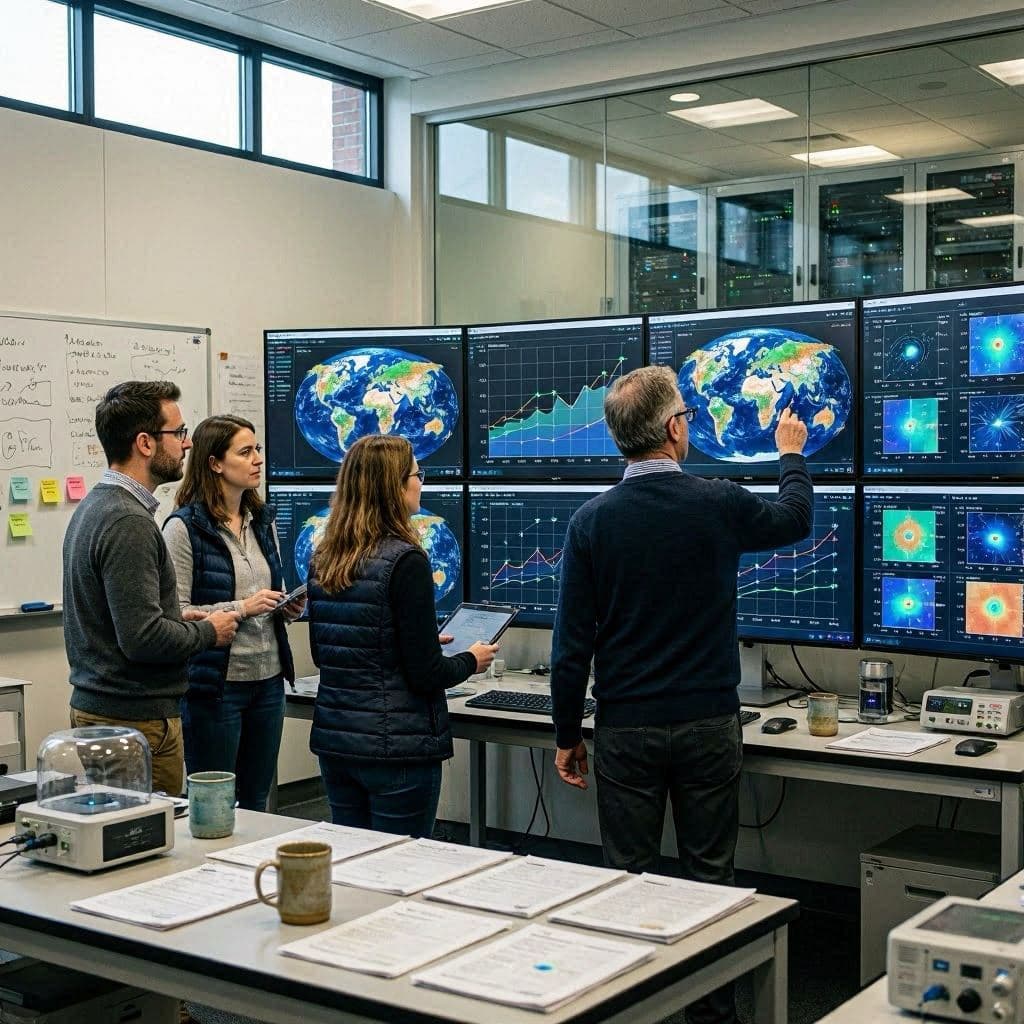
The atmosphere rarely changes all at once. Instead, it shifts gradually through countless interactions between oceans, land, and air, creating patterns that scientists continue studying with increasing precision. Around the world, researchers are paying closer attention as evidence suggests that extreme weather events may become more frequent under changing climate conditions.
Climate experts from several international scientific organizations have reiterated concerns that rising global temperatures may increase the likelihood of extreme weather events in many parts of the world. Their assessments draw upon decades of climate observations, computer modeling, and peer-reviewed scientific research.
Researchers explain that warmer atmospheric conditions can influence rainfall intensity, heatwaves, droughts, and certain storm systems. While individual events cannot always be directly attributed to climate change, long-term trends provide important context for understanding evolving environmental risks.
Scientists continue emphasizing that regional impacts differ significantly. Some areas may experience prolonged dry conditions, while others face heavier rainfall or stronger seasonal weather variations. Local geography and atmospheric circulation remain important factors influencing individual outcomes.
Governments increasingly rely on scientific data when planning infrastructure, disaster preparedness, and emergency response strategies. Updated climate projections help engineers, urban planners, and public officials design systems that can better withstand future weather conditions.
International cooperation has also expanded through climate research partnerships, allowing scientists to share data, improve forecasting models, and develop more accurate assessments of long-term environmental changes.
Experts stress that continued observation remains essential. High-quality weather records collected over many decades provide the evidence needed to evaluate changing trends while improving the reliability of future climate projections.
As research continues, scientists encourage policymakers and communities to consider both immediate preparedness and long-term resilience. Understanding evolving weather risks remains an important step toward protecting lives, infrastructure, and natural ecosystems.
AI Image Disclaimer: This illustration was created using artificial intelligence for educational and visual purposes and does not represent an actual weather event.
Source Verification Check: United Nations, World Meteorological Organization, Reuters
Note: This article was published on BanxChange.com and is powered by the BXE Token on the XRP Ledger. For the latest articles and news, please visit BanxChange.com