
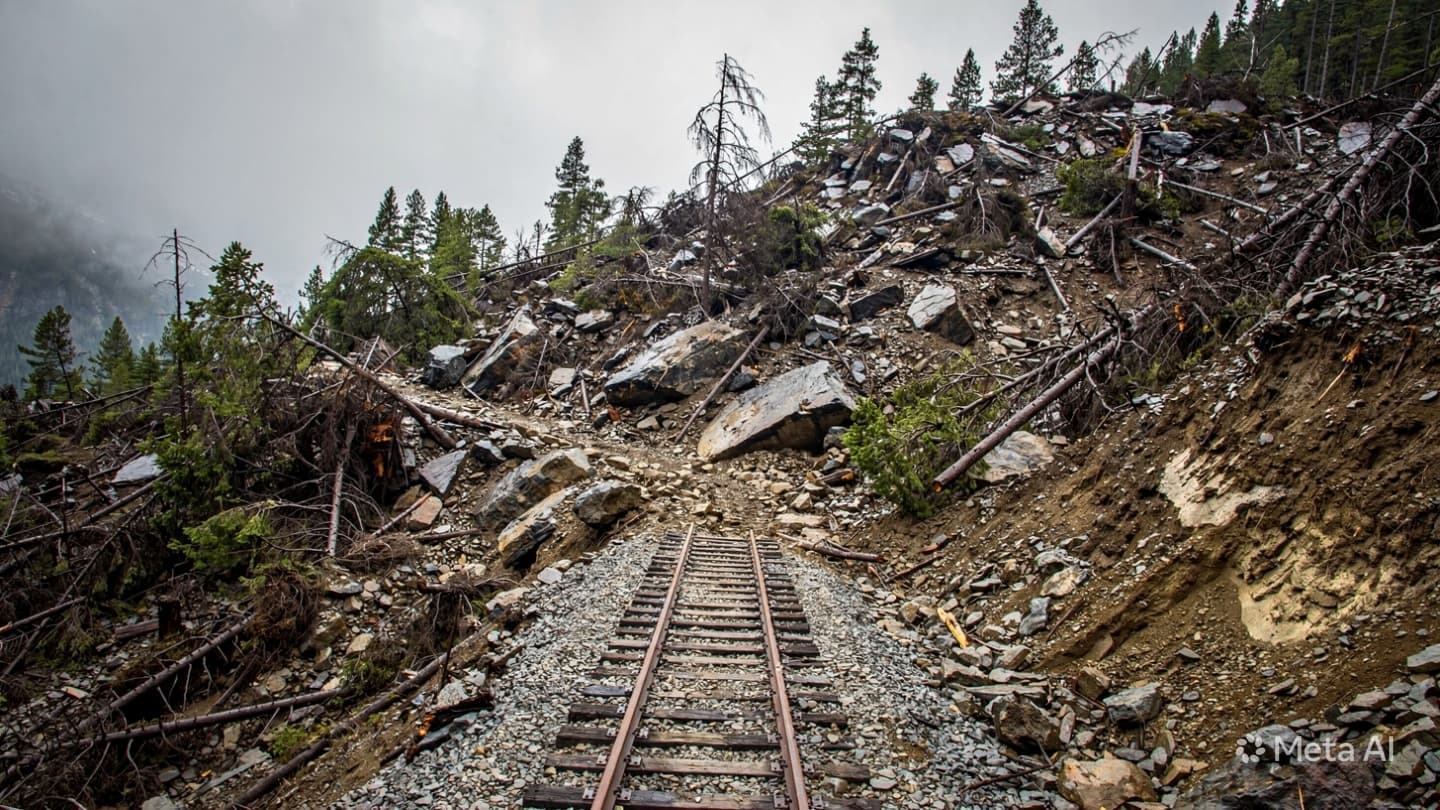
The Belgrade-Bar railway line weaves through the rugged interior of the Balkans as a marvel of mid-century engineering, a ribbon of steel suspended across deep ravines and punched through the solid rock of the northern mountains. Near the alpine town of Kolašin, the tracks cling to the steep, forested slopes where the geography demands constant vigilance from those who maintain the route. For decades, the heavy electric locomotives have moved passengers and freight between the capital and the coast, their rhythmic clatter echoing through the valleys. Yet, the permanence of the iron rails is an illusion, constantly tested by the slow, inevitable erosion of the towering peaks that overshadow the transit corridor.
Following a week of relentless, unseasonal rains, the soil saturation along the high ridges reached a critical threshold, softening the ancient clay and loosening the grip of the pine roots. In the quiet hours just after dawn, a massive section of the hillside quietly detached from its bedrock foundation, accelerating down the steep gradient toward the valley floor. The landslide brought with it tons of heavy mud, shattered timber, and sharp limestone boulders, burying a critical curve of the railway under deep, impenetrable debris. The collapse occurred with a deafening roar, a sudden violent reshuffling of the earth that severed the primary artery connecting the north to the south.
The potential for absolute disaster was narrowly averted by the automated warning sensors embedded along the most precarious cliff faces, which triggered a red signal just miles ahead of an approaching southbound passenger express. The engineer initiated emergency braking protocols, bringing the heavy train to a screeching, metallic halt just around the bend from the massive wall of displaced earth. There is a specific, profound silence that follows such a near-miss, the hum of the idling locomotive contrasting with the raw, fresh scar of the collapsed mountain. The passengers, abruptly shaken from their morning routines, looked out the windows to see the violent intersection of natural force and human infrastructure.
The immediate aftermath demanded a rapid logistical pivot, as the stranded train could neither proceed nor easily reverse back up the steep gradient without authorization. Railway authorities dispatched emergency buses to a nearby parallel highway, coordinating the slow, methodical evacuation of the passengers across the damp, uneven terrain. The priority was the safe extraction of hundreds of travelers, many of whom were left standing on the foggy mountain shoulder, watching their abandoned train sit quietly beneath the imposing cliffs. It is a stark reminder of the vulnerability of regional transit, where a single localized weather event can paralyze a national network.
By midday, heavy engineering crews and geological surveyors arrived at the site, evaluating the stability of the remaining slope before authorizing the deployment of excavation machinery. The process of clearing the tracks is not merely a matter of moving dirt; it requires the careful extraction of entangled trees and the stabilization of the overhead electrical catenary wires, which were snapped under the weight of the falling debris. The structural integrity of the steel rails themselves must be thoroughly assessed, as the sheer force of the impact often warps the precise alignment required for high-speed transit. The mountain environment dictates the pace of the recovery, frustrating any attempts at a rapid resolution.
The economic implications of the severed railway line are immediately felt at the coastal ports, where cargo containers destined for the northern interior sit idle on the docks. The route serves as a critical commercial lifeline, and any prolonged closure forces logistics companies to reroute freight through slower, more expensive mountainous highways. Regional politicians have renewed calls for increased funding toward infrastructural reinforcement, emphasizing the need for extensive concrete retaining walls and advanced geological monitoring along the Kolašin corridor. The incident underscores a growing anxiety over the resilience of aging transport networks in the face of shifting climate patterns.
As evening shadows stretched across the valley, the glaring floodlights of the repair crews illuminated the muddy scar on the mountainside, the deep roar of excavators echoing against the stone. The authorities have estimated that the route will remain closed for several days, a temporary but complete severance of the iron link that binds the geography together. The passenger express was eventually towed backward to the nearest station, leaving the damaged curve to the mechanical labor of the clearing teams. The mountain reclaims its authority over the landscape, forcing the human endeavor to pause and rebuild at the edge of the ravine.
Note: This article was published on BanxChange.com and is powered by the BXE Token on the XRP Ledger. For the latest articles and news, please visit BanxChange.com