
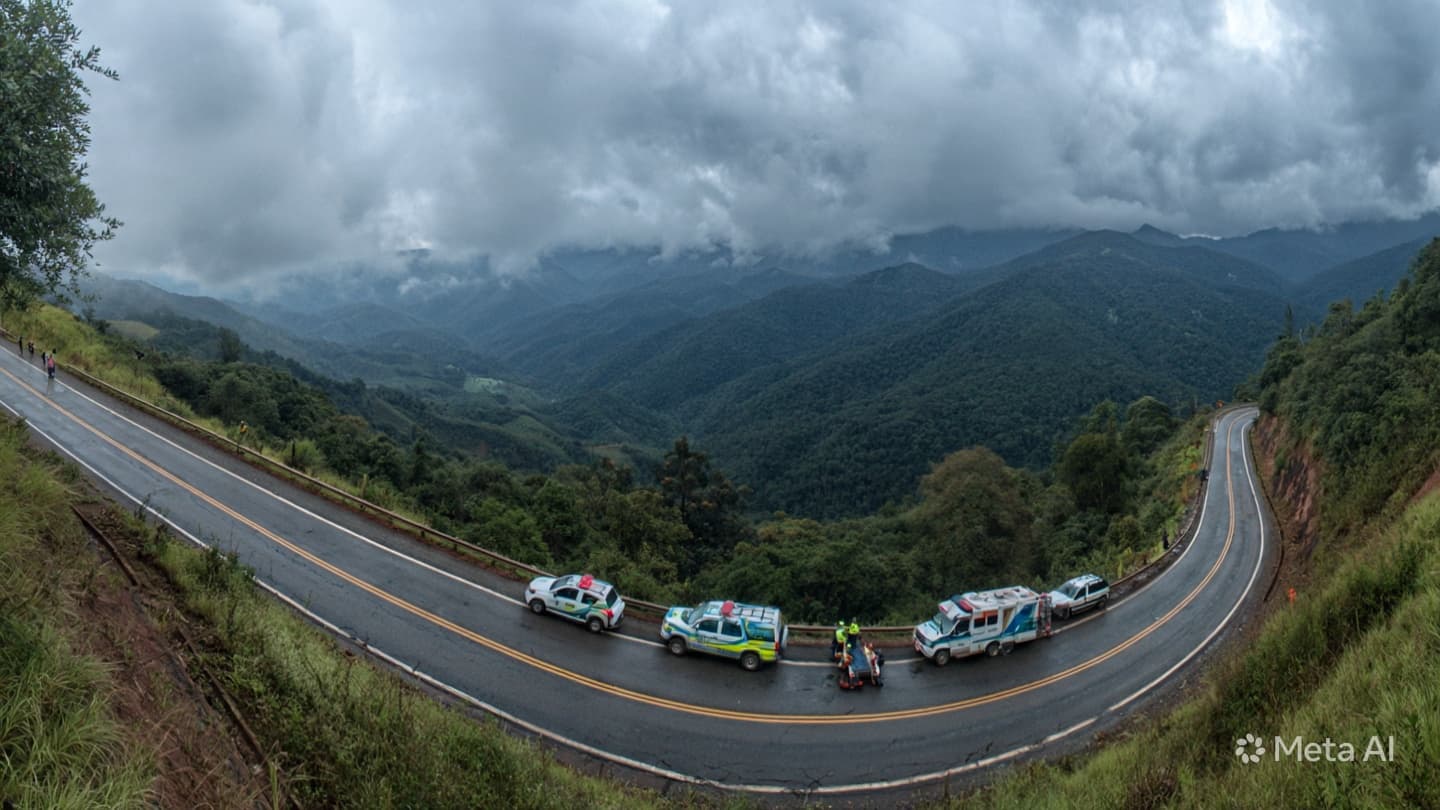
The highways of Paraná, which wind like silver ribbons through the state’s rolling plateaus and dense, mist-shrouded forests, are conduits of both transit and unpredictability. Along these arterial paths, the rhythm of human movement often meets the sudden, unyielding character of the terrain. When a vehicle loses its hold on the asphalt, the transition from motion to stillness is abrupt, shifting the atmosphere of a routine journey into a singular, gravity-heavy moment of concern. It is a reminder that on these long, winding stretches, every mile is a negotiation between the machine and the earth.
The bus, a common fixture of long-distance travel, serves as a communal vessel, holding the stories and destinations of dozens of individuals. As it traversed the mountainous stretches of the region, the typical drone of the engine and the quiet murmur of passengers were shattered by the sudden instability of the road. In an instant, the path ahead folded into uncertainty. The immediate aftermath, marked by the screech of tires and the unsettling silence that follows a collision, transformed the highway into a site of urgent, collective response.
Emergency services arrived amidst the backdrop of the rugged, verdant landscape, their presence a stark contrast to the serenity of the surrounding forest. The task of securing the area and attending to those in need is an exercise in measured professional care, a delicate balance of triage and logistics. Five individuals were reported to have sustained injuries, their lives momentarily interrupted by the fragility of their transit. It is in such moments that the distance between the city’s heart and the remote stretches of highway feels simultaneously vast and deeply intimate.
As the authorities assessed the damage, the road remained a place of suspended time, where the typical flow of commerce and life was diverted. This is the reality of infrastructure in a landscape defined by its elevation—the risk is baked into the geography, a constant factor that travelers and locals alike navigate with an assumed, though sometimes betrayed, confidence. The structural integrity of the mountain passes and the safety of the vehicles themselves become the focus of a quiet, behind-the-scenes examination.
The recovery of the scene involves more than the removal of wreckage; it requires the restoration of the highway’s sense of safety. For the survivors, the experience is a profound shift in perspective, a realization of the vulnerability inherent in the daily act of travel. Such incidents, while infrequent in their severity, echo through the community, prompting a reflection on the standards of oversight, the condition of the fleet, and the necessity of vigilance on roads that offer beauty in exchange for caution.
In the hours that followed, the tension on the highway eased, and the rhythmic flow of transit eventually resumed. Yet, the memory of the event lingers in the reports and in the minds of those who witnessed the sudden change in the afternoon’s pace. It is a testament to the resilience of the responders and the necessity of a system that can absorb such shocks, providing care even in the most remote or challenging environments that the state’s geography presents.
The inquiry into the cause of the accident will be a methodical one, likely tracing the path of the bus back through the curves of the mountain pass. It is an administrative necessity, a way of cataloging the failure in order to prevent its recurrence. For now, the focus remains on the healing of the injured and the return to a sense of normalcy for those who call these roads their daily path. The highway, for all its capacity for disruption, remains a vital, enduring part of the region’s connective tissue.
As the sun began to dip below the ridge lines, the scene of the accident was cleared, leaving behind only the subtle scars on the road and the surrounding greenery. The mountains of Paraná continue to watch over the passage of those who travel through them, indifferent to the dramas that play out on their slopes. It is a cycle of movement and pause, a reflection of the larger human endeavor to navigate the world while respecting the forces, both man-made and natural, that shape our journey.
Note: This article was published on BanxChange.com and is powered by the BXE Token on the XRP Ledger. For the latest articles and news, please visit BanxChange.com