Across the vast Pacific Ocean, where currents move like unseen conversations beneath the surface, a familiar climatic signal has once again begun to form. Scientists observing atmospheric and oceanic patterns have confirmed the development of El Niño, a phenomenon that, while cyclical, carries consequences that ripple far beyond its place of origin.
Body: The confirmation from climate monitoring agencies such as NOAA reflects a careful reading of sea surface temperatures and wind behaviors that have gradually aligned with El Niño conditions. These shifts, though subtle in isolation, become significant when viewed as part of the global climate system. In essence, the ocean is not only a body of water but also a regulator of atmospheric behavior.
Historically, El Niño events have been associated with disruptions in rainfall, temperature anomalies, and shifting storm tracks across multiple continents. In some regions, this may mean heavier rainfall and flooding, while in others, prolonged dry spells can take hold. The variability is what makes the phenomenon both scientifically fascinating and socially impactful.
Researchers emphasize that each El Niño event carries its own character. No two are identical, and their intensity can vary depending on broader climatic conditions. This unpredictability adds a layer of complexity to forecasting efforts, requiring continuous observation and refinement of predictive models.
In the scientific community, there is growing attention to how climate change may interact with natural oscillations like El Niño. While El Niño itself is a natural process, warmer global temperatures may influence its intensity or the way its effects are distributed across regions. These interactions remain an active area of study.
Communities around the world often experience El Niño not through scientific data but through lived reality—altered harvests, shifting water availability, or unexpected weather extremes. For many, the phenomenon is less an abstract model and more a seasonal turning point that affects daily life in tangible ways.
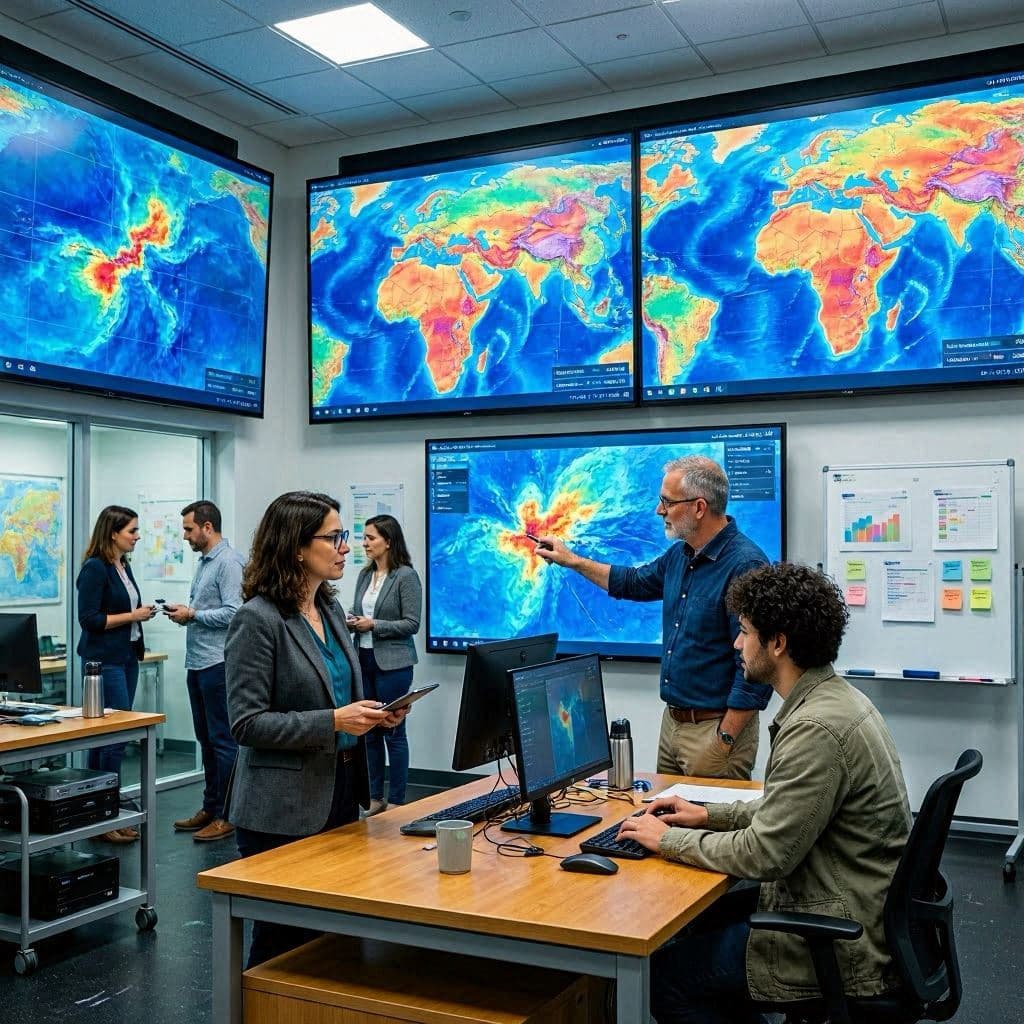
Meteorological agencies continue to monitor developments closely, issuing updates and forecasts designed to help governments and populations prepare. The emphasis is not on alarm, but on awareness, ensuring that planning and response mechanisms are aligned with evolving conditions.
Closing: As El Niño develops further, scientists and policymakers alike will continue to observe its progression with careful attention. While it is a recurring feature of Earth’s climate system, its influence remains significant, reminding the world of the delicate balance between ocean and atmosphere.
AI Image Disclaimer: Images associated with this article are AI-generated for illustrative and editorial purposes only.
Sources (source verification check): NOAA, World Meteorological Organization, ABC News Australia, Climate Change News
Published by Banx Network. This article is part of the Banx decentralized media programme, powered by the BXE token on the XRP Ledger.