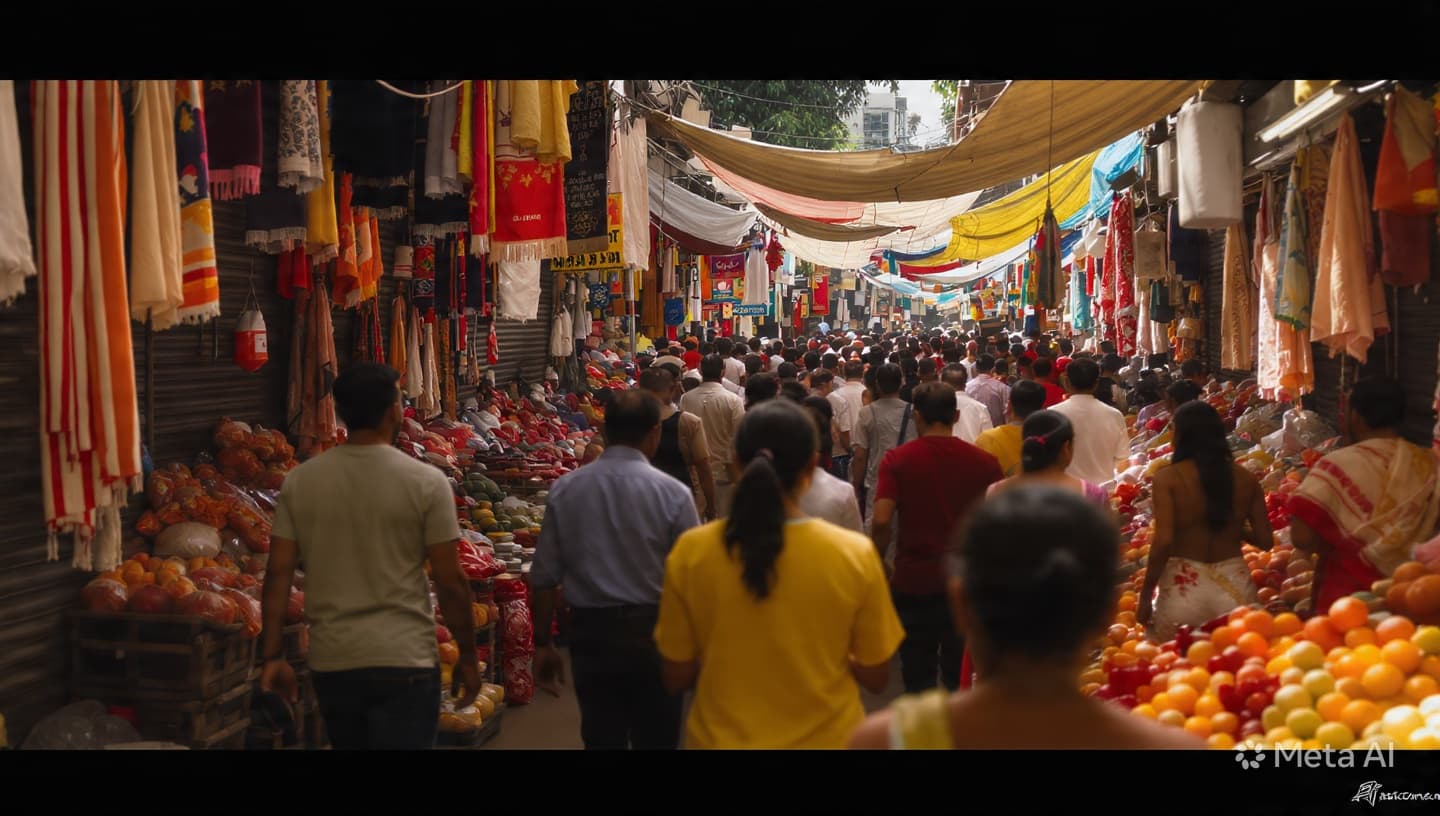
There is a particular energy to an open-air market that draws the visitor in—the scent of spices, the kaleidoscope of goods, and the relentless, rhythmic motion of a city in the middle of its day. In Managua, the Oriental Market has long been the pulsating heart of this trade. Yet, beneath the vibrancy of the commerce, there lies a more somber reality that has recently been underscored by international travel advisories. To visit such a place is to navigate a terrain where the boundaries between the mundane and the dangerous are thin.
The warnings of armed robberies and assaults are not merely warnings; they are invitations to consider the vulnerability of the individual in the midst of a crowd. In the dense, chaotic aisles of the market, the traditional rules of social order often recede, replaced by the opportunistic dynamics of those who prey upon the unsuspecting. It is an editorial reality that for the foreign visitor, the market is a space where the perception of culture must be balanced with the requirement of survival.
One reflects on the atmosphere of the Oriental Market—a place that is at once essential to the life of the city and a site of persistent risk. The warnings issued by the U.S. embassy and other global entities regarding this specific location are a recognition of the fact that some spaces, by virtue of their density and their isolation from formal oversight, become centers of concentrated threat. It is a sobering detail that shifts the market from a destination to a hazard.
The act of walking through such a market is a lesson in situational awareness. It requires a constant, almost meditative state of observation—a conscious effort to remain alert while still engaging with the surroundings. This is the burden of the modern traveler: to experience the local, yet to always hold a portion of one’s attention in reserve for the possibility of harm.
There is a sense of loss in the realization that such a vibrant center of commerce must be avoided. It is a loss of the direct, authentic encounter that many seek when they travel. Yet, as the reports of crime become more consistent, the decision to step away is not just a tactical one; it is a reflective recognition that no experience is worth the price of one’s safety. The market remains, but it stands as a reminder of the fragility of order in the urban landscape.
We must also contemplate the local life that exists within this high-risk zone. The residents and workers who spend their days in the Oriental Market do so not by choice of risk, but by the necessity of survival. This contrast—between the visitor who can choose to leave and the resident who remains—is the central tension of the traveler’s experience. To acknowledge this is to add a layer of empathy to our caution.
As we look at Managua from a distance, the image of the market remains a stark marker of the city’s challenges. It is a place that calls out for the attention of the authorities, yet it also serves as a warning to those who would venture into its depths. The reflection is one of recognition: that even in the most vibrant heart of a city, the shadow of risk is never far from the surface.
Travel advisories have explicitly identified Managua’s Oriental Market as a location where U.S. government employees are restricted from entering due to the high frequency of violent criminal activity. Reports consistently note that petty theft, pickpocketing, and armed robberies are common occurrences, often taking place in the crowded aisles of the market. The embassy urges citizens to avoid the area entirely, noting that police presence is insufficient to guarantee security against the coordinated and opportunistic criminal threats present in this sector.
Published by Banx Network. This article is part of the Banx decentralized media programme, powered by the BXE token on the XRP Ledger.