
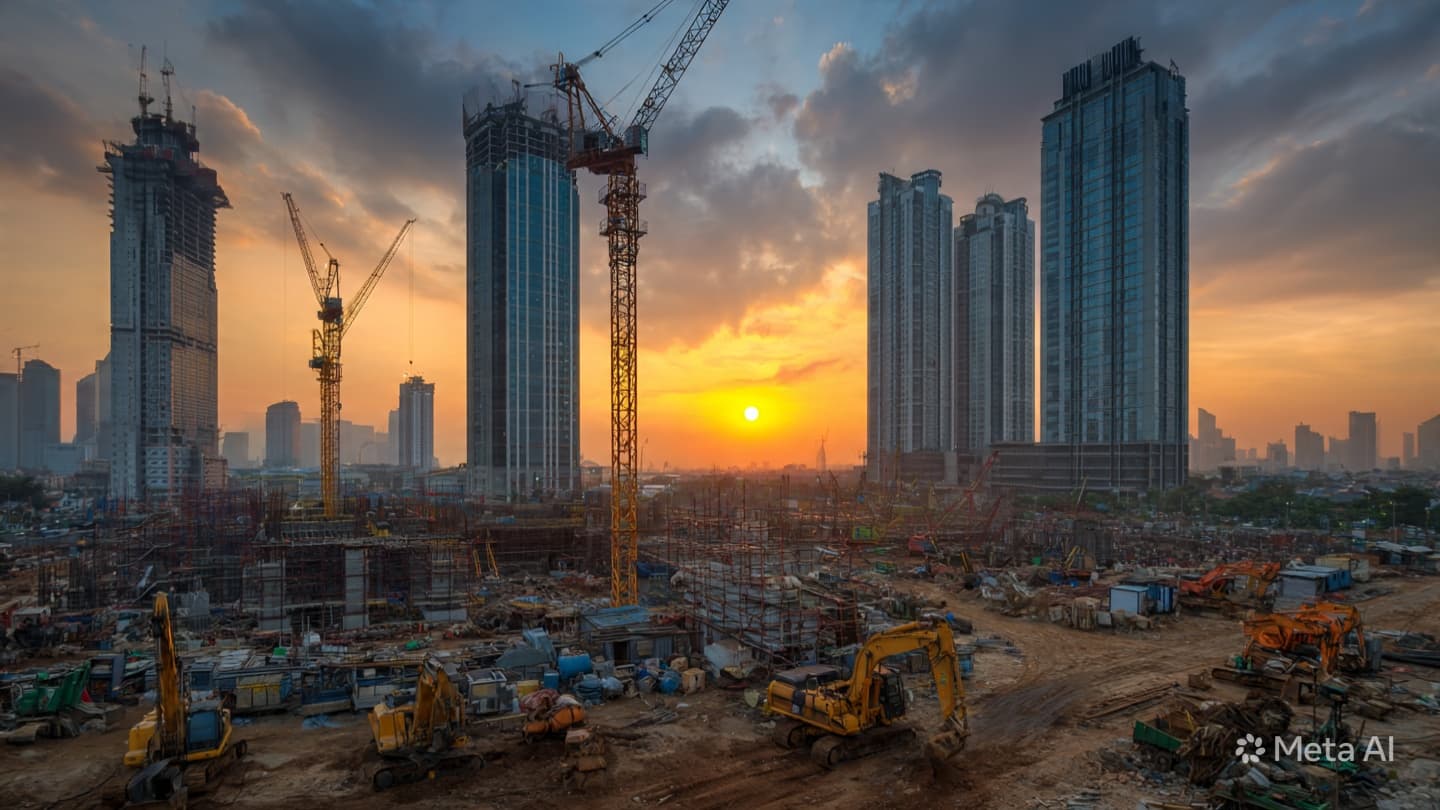
The city of Jakarta grows with a relentless, rhythmic ambition, a constant shifting of skylines and the steady rise of concrete towers. Amidst this perpetual motion, the construction site serves as a microcosm of our collective desire to build, to reach higher, and to expand the boundaries of our urban space. Here, the hum of heavy machinery, the clatter of steel, and the collective focus of ground workers form a symphony of industry. Yet, there is a fragility inherent in these structures, a reality that occasionally asserts itself with a sudden, devastating quiet when the physical systems we rely upon fail.
Today, that stillness arrived in the form of a collapse, a moment where the weight of the city’s ambition seemed to falter against the earth. A site that had been vibrating with the energy of progress became, in an instant, a place of profound interruption. The heavy machinery, usually a symbol of capability and strength, lay broken, its intended purpose now replaced by the grim task of recovery. It is a stark reminder that beneath the steel beams and the blueprint drawings, the foundation of every project is built upon the labor and the lives of those who walk the site each day.
There is a somber atmosphere that permeates such a space in the aftermath, a heavy silence that no amount of urban noise can fully mask. As investigators move through the dust and the debris, their actions are measured and deliberate, each movement a reflection of the seriousness of the task. They look for the triggers of the failure, seeking the point where the engineering integrity met an unforeseen obstacle. It is an analytical pursuit, yes, but one conducted with a necessary restraint, recognizing that the data they uncover is inextricably linked to a human story of sudden, unexpected endings.
For the families of those lost, the site is no longer a place of professional endeavor, but a place of searing absence. The construction site, once a location of predictable, daily cycles, now stands as a monument to the unexpected. Bystanders at the perimeter look on with a quiet, contemplative distance, witnessing the intersection of urban development and the vulnerabilities of the men and women who fuel it. The scale of the collapse, while physically confined, ripples outward, impacting the community and challenging our perception of the safety that we so often take for granted in the built environment.
City planners and safety inspectors walk the perimeter, their clipboards capturing the technical details of the failure. They speak in the language of structural loads and mechanical fatigue, searching for the mechanical truths that led to this intersection of weight and weakness. Their work is vital, a necessary process to ensure that the city’s upward climb is grounded in a foundation of reliability. Yet, as they inspect the wreckage, they must also grapple with the human reality that their assessments are meant to protect, a reality that feels all the more fragile when seen through the lens of a tragedy.
As the day turns to evening, the lights of Jakarta begin to flicker on, a vast network of electricity and human effort that continues unabated. The construction site remains, marked by caution tape and the lingering presence of those who remain to oversee the recovery. The contrast between the city’s ongoing pulse and the localized stillness of the site is a powerful reminder of how we live: moving forward with purpose, yet always vulnerable to the sudden shifts in the structures we create. It is a moment for reflection, for acknowledging the inherent risk in the work that defines our modern existence.
The loss of life at the site is a quiet, heavy burden for the industry to bear. We build our cities with the understanding that progress requires effort, but this incident forces a pause—a moment to consider the price of our expansion. The workers at the site, and those who supervise them, are part of a larger machine, a vital part of the city’s identity. When one part of that system fails, the entire structure feels the tremor, and we are reminded that our pride in our skylines must always be tempered by a commitment to the safety of those who build them.
The Jakarta police have confirmed that two ground workers were killed during the collapse of heavy machinery at the construction site. Authorities are currently conducting a forensic investigation into the site’s maintenance logs and structural compliance to determine the precise cause of the failure. The construction firm has suspended all operations on-site, and the Ministry of Manpower has announced a comprehensive audit of all ongoing high-rise projects in the city to ensure adherence to safety standards.
Note: This article was published on BanxChange.com and is powered by the BXE Token on the XRP Ledger. For the latest articles and news, please visit BanxChange.com