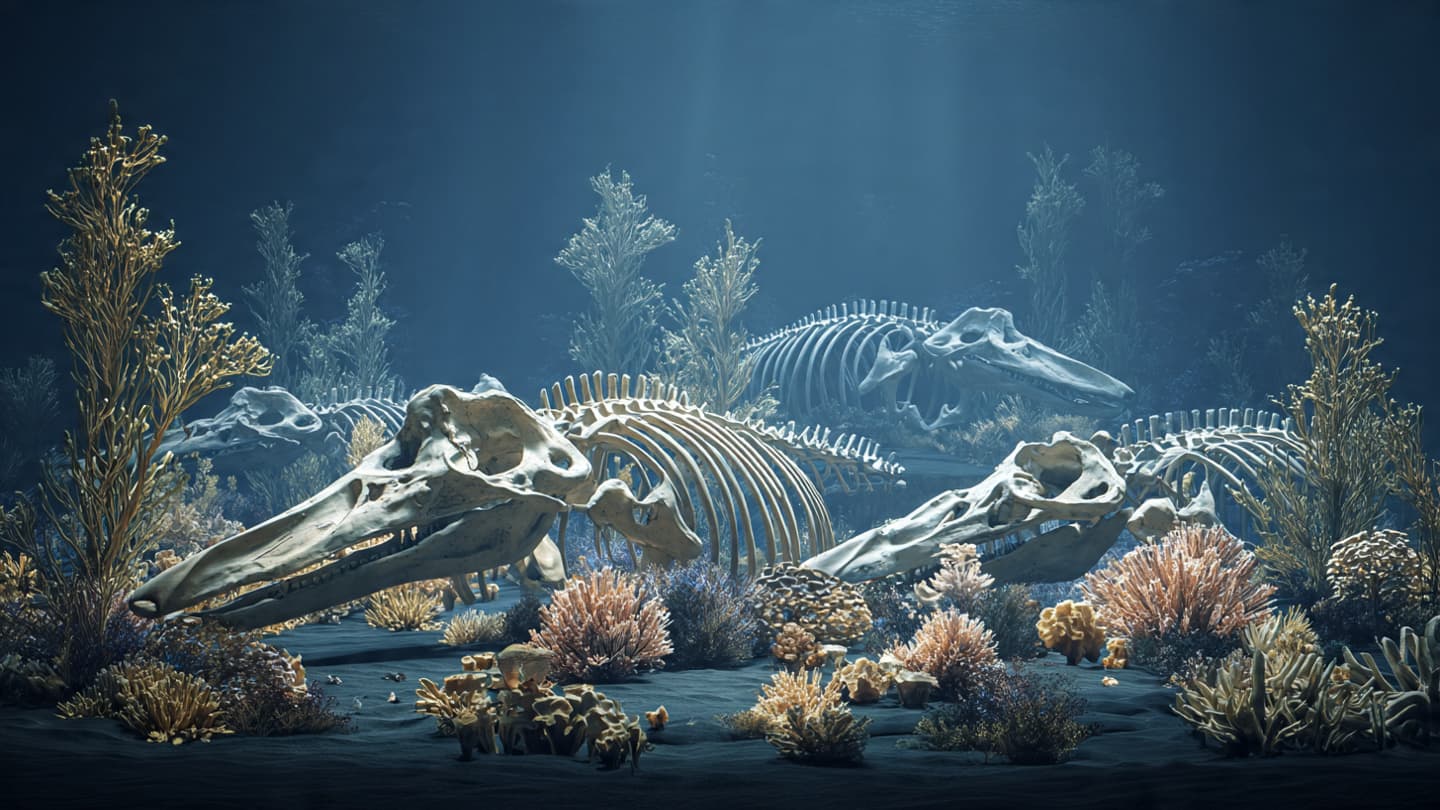
The deep ocean is often described as one of Earth's final frontiers. Hidden beneath vast stretches of water, its landscapes remain largely unexplored, preserving evidence of ancient events that unfolded long before human history began. A newly studied whale graveyard is offering scientists a remarkable glimpse into one such forgotten chapter.
Researchers investigating the site discovered numerous whale remains resting on the seafloor. These skeletal deposits provide valuable evidence about marine ecosystems that existed millions of years ago.
When a whale dies and sinks to the ocean floor, its body can support life for decades. This process, known as a whale fall, creates a temporary ecosystem that attracts a wide range of organisms.
The newly examined site suggests that similar events occurred repeatedly over long periods of time. As a result, the area became a unique habitat supporting diverse marine communities.
Scientists believe the discovery may improve understanding of how deep-sea ecosystems evolved. Whale remains likely served as important sources of nutrients in environments where food can be scarce.
The findings also highlight the interconnected nature of ocean life. Large marine animals can influence ecological systems long after their lives have ended.
Modern exploration technologies played a crucial role in the research. Remotely operated vehicles and advanced imaging systems enabled scientists to examine the site in extraordinary detail.
The study contributes to growing efforts aimed at understanding biodiversity in deep-ocean environments. Many species inhabiting these regions remain poorly documented by science.
As researchers continue exploring the seafloor, discoveries such as this demonstrate that ancient ecosystems can still leave traces visible today. The whale graveyard offers a rare opportunity to study how life persisted and adapted within the hidden depths of Earth's oceans.
AI Image Disclaimer: This article features an AI-generated illustration created to visually represent the scientific discovery described.
Source Verification Check: Nature, Science News, NOAA, National Geographic, Marine Ecology Research Publications
Published by Banx Network. This article is part of the Banx decentralized media programme, powered by the BXE token on the XRP Ledger.