The night sky has long served as a quiet stage for some of nature's most remarkable performances. Most evenings pass beneath familiar stars, but occasionally the heavens offer something far more dramatic. This weekend, forecasters say parts of the United States may have an opportunity to witness one of those rare displays.
According to forecasts from space weather experts, heightened geomagnetic activity could allow the Northern Lights, or aurora borealis, to become visible farther south than usual. Under favorable conditions, residents in several northern states may be able to observe the colorful phenomenon.
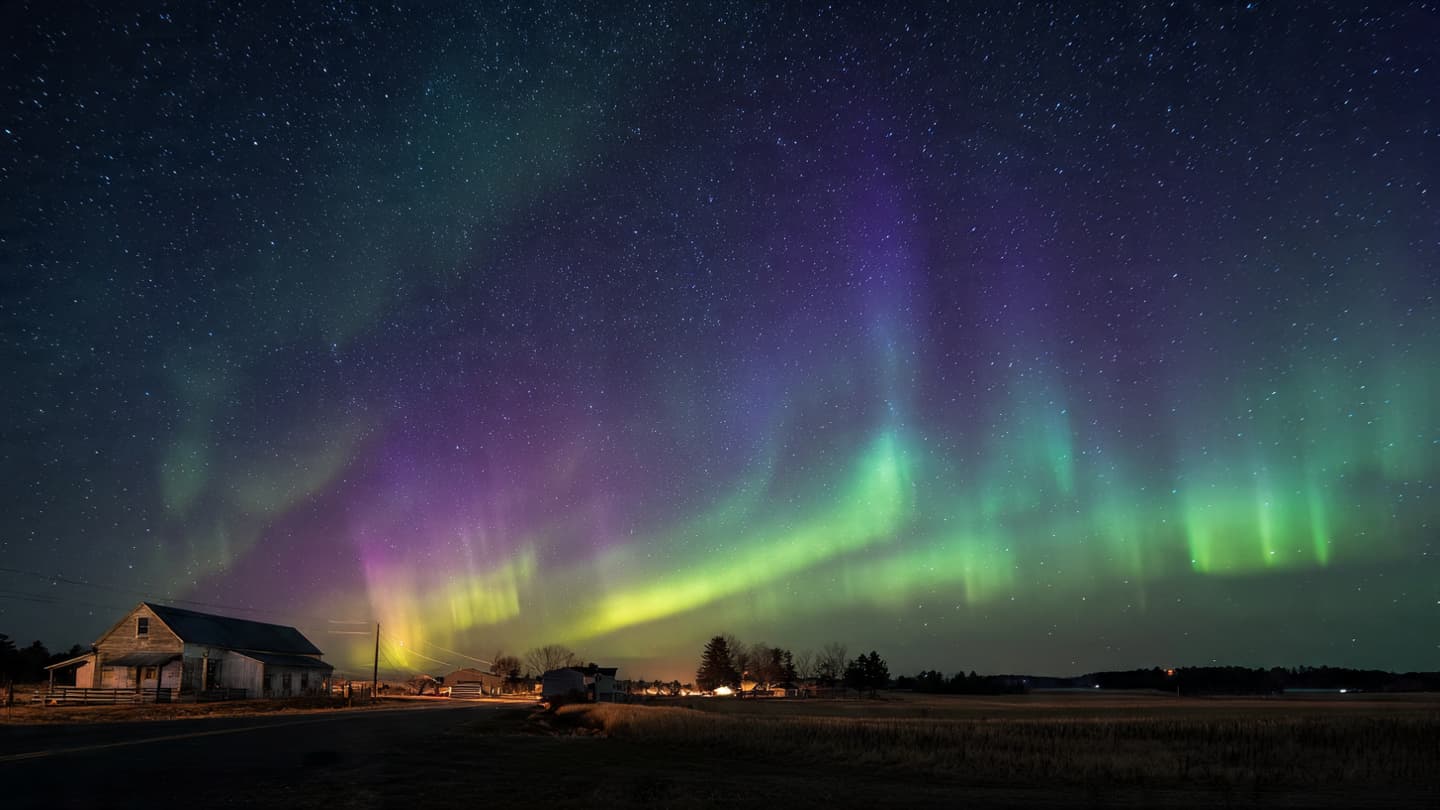
The aurora occurs when charged particles from the Sun interact with Earth's magnetic field and atmosphere. These interactions produce waves of light that can appear green, purple, pink, or red across the night sky.
Forecasters indicated that geomagnetic storm conditions may create viewing opportunities in as many as nine states. Areas with darker skies and minimal light pollution are expected to offer the best chances of seeing the display.
States near the northern border typically have the highest likelihood of observing auroras. Weather conditions, cloud cover, and the strength of solar activity all play significant roles in determining visibility from any specific location.
Space weather monitoring agencies continuously track solar winds and geomagnetic activity. Their forecasts help scientists, photographers, and skywatchers prepare for events that may only last a few hours before conditions change.
Aurora sightings have grown increasingly popular in recent years, partly because advances in smartphone cameras and digital photography allow people to capture details that may be difficult to see with the naked eye.
Experts encourage observers to travel away from city lights and allow time for their eyes to adjust to darkness. Even when displays appear faint initially, they can intensify unexpectedly as geomagnetic conditions evolve.
Whether viewed through a camera lens or simply with the naked eye, the aurora remains one of nature's most striking spectacles. For those fortunate enough to experience it this weekend, the event offers a reminder that extraordinary scenes can sometimes appear above the most ordinary landscapes.
AI Image Disclaimer: This article may include an AI-generated visualization created to depict the appearance of an aurora display.
Sources Verified: NOAA Space Weather Prediction Center, Forbes, Space.com
Published by Banx Network. This article is part of the Banx decentralized media programme, powered by the BXE token on the XRP Ledger.