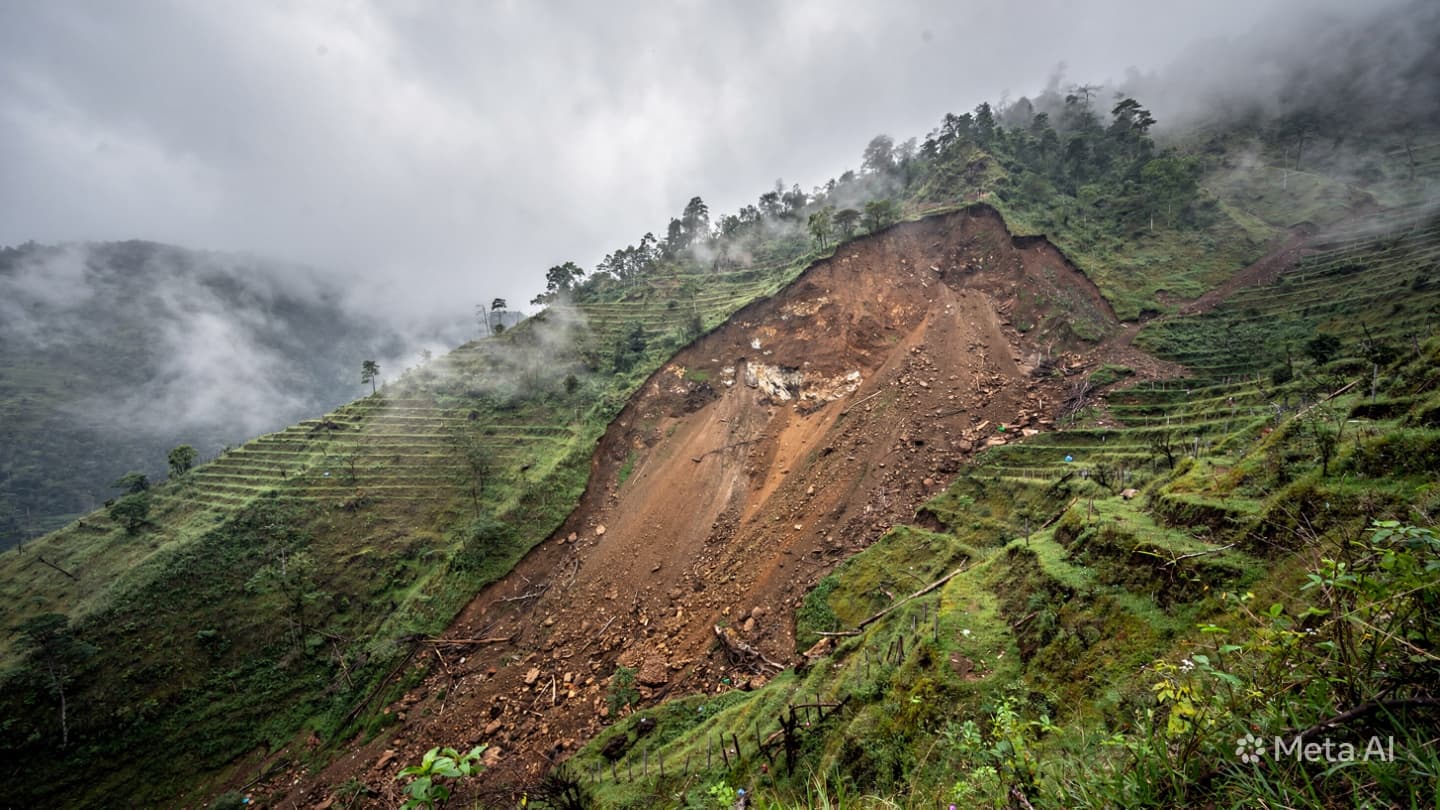
The morning light over the slopes of Bududa does not arrive all at once, but rather filters through a heavy, mist-laden canopy that has long defined the rhythm of life in this high altitude borderland. For generations, the mountain has offered both a sanctuary and a challenge, its steep terraces sculpted by hands that understand the fragile agreement between human habitations and the steep incline of the earth. Yet, when the clouds gather with a particular, dense density over the ridges, that agreement feels increasingly delicate, suspended on the behavior of water moving through ancient soil.
Water, in these heights, is usually life itself, feeding the deep green slopes and sustaining the small homesteads that cling to the vertical landscape. But the recent downpours carried a different cadence, a relentless, drumming persistence that outlasted the safety of the night and saturated the clay beyond its capacity to hold. In the darkness, while the valley slept, the internal architecture of the slope simply gave way, moving with a silent, heavy momentum that no wooden structure could hope to withstand.
It is a quiet sort of devastation that visits these valleys, where the distance from major urban centers turns profound loss into a localized echo against the hillsides. The mudslides do not announce themselves with the sharp crack of thunder, but rather with a low, deep shudder of the earth that signifies a fundamental shift in the landscape. For those who watch the ridges from below, the sight of a bare, red scar where a green terrace once stood is a familiar and deeply sorrowful marker of the mountain's volatile nature.
The small huts, constructed from timber and local earth, are designed to shelter families from the wind, but they possess little resilience against a moving wall of saturated soil. When the earth moves, it carries everything in its path, blending the material of human life with the natural debris of the forest in a single, irreversible descent. Neighbors who have spent their lives farming side by side suddenly find themselves standing at the edge of a new, unstable landscape, searching for what was lost in the grey light.
Recovery in these remote areas is an exercise in communal endurance, reliant on hand tools and the shared strength of those who remain to dig through the heavy clay. There is a specific stillness that follows such events, an atmosphere heavy with dampness and the collective weight of grief that settles over the affected villages. The steepness of the terrain, which gives the region its striking beauty, becomes the primary obstacle to assistance, isolating the hurt within the folds of the hills.
As the rain finally recedes into a light drizzle, the immediate response shifts from the frantic energy of rescue to the sober reality of displacement and loss. The community is left to reckon not just with the physical alteration of their land, but with the lingering insecurity of living beneath slopes that may no longer be stable. Every subsequent shower is viewed with a new anxiety, an understanding that the very rain needed for their crops carries the potential for further instability.
The local geography has always demanded a high level of resilience from its inhabitants, who return to the soil even after the most severe disruptions. It is a cycle of rebuilding that is as old as the settlement of these ridges, driven by necessity and a deep connection to the ancestral land. The vulnerability of these settlements is not a matter of choice, but a reflection of the limited options available on the crowded margins of the mountain.
In the aftermath, the focus turns to the immediate needs of the survivors, who require shelter, clean water, and medical attention in an environment where resources are already stretched thin. Emergency teams and local authorities have begun the difficult task of assessing the damage and organizing relief efforts for the families whose homes were erased by the slide. The transition from tragedy to recovery is always slow, measured in the quiet reconstruction of lives against the backdrop of the enduring peaks.
Published by Banx Network. This article is part of the Banx decentralized media programme, powered by the BXE token on the XRP Ledger.