
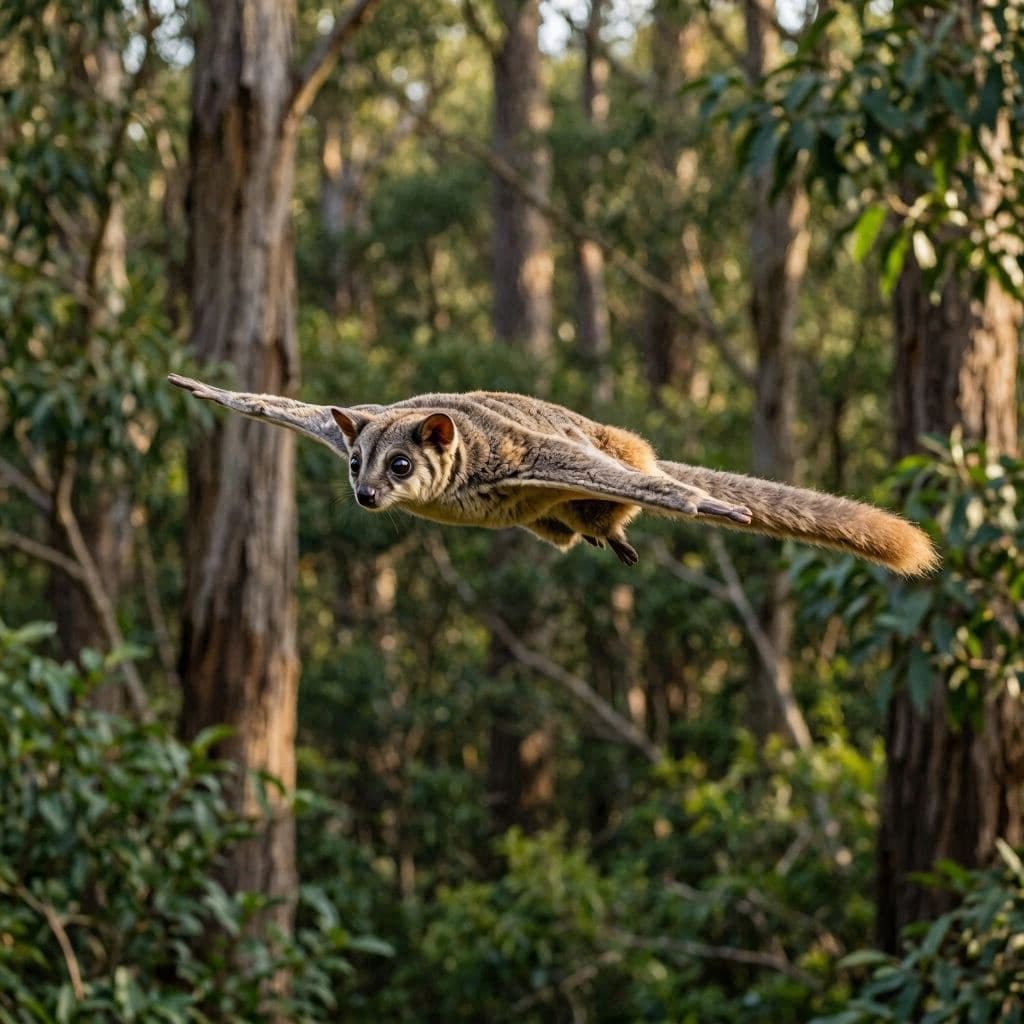
In the eucalyptus forests of Australia, a creature moves through the canopy with a grace that seems to defy gravity. The greater glider, a marsupial with a wingspan of up to a meter, has long been celebrated for its ability to glide between trees. However, recent studies suggest that these animals are not the aerodynamic masters they were once believed to be. Instead of efficient soaring, they often rely on steep, controlled falls. This revelation is not a diminishment of their charm; rather, it offers a deeper appreciation for their unique adaptations. It invites reflection on the diversity of movement in nature, the importance of accurate observation, and the simple joy of witnessing wildlife in its natural habitat.
Body: For years, observers assumed that greater gliders used air currents to stay aloft for long distances, similar to flying squirrels or sugar gliders. New research using high-speed cameras and motion sensors reveals that their glides are shorter and steeper than previously thought. They lose altitude rapidly, relying on their large surface area to slow their descent rather than to gain lift. This "parachuting" style is effective for moving between nearby trees but lacks the efficiency of true flight.
Despite this correction, the greater glider remains a remarkable animal. Its patagium, the membrane of skin stretching from wrist to ankle, is the largest relative to body size of any gliding mammal. This adaptation allows it to navigate the forest canopy with agility, escaping predators and accessing food sources. The visual effect of a greater glider in motion is still striking, resembling a furry kite or a magic carpet unfurling against the green backdrop.
The study highlights the importance of empirical data in correcting long-held assumptions. Without precise measurements, even experienced naturalists can misinterpret animal behavior. This scientific rigor ensures that our understanding of wildlife is based on evidence rather than anecdote. It is a reminder that nature often holds surprises for those who look closely.
Conservation implications are also significant. Greater gliders are vulnerable to habitat loss and climate change. Understanding their movement patterns helps researchers design better conservation strategies, such as maintaining tree connectivity. If they cannot glide efficiently over large gaps, preserving continuous forest cover becomes even more critical. Science informs protection.
Public perception of wildlife often relies on charismatic narratives. The idea of the "great" glider is appealing, but the reality of its clumsy, charming descent is equally endearing. Sharing accurate information fosters a more genuine connection with nature. It encourages people to appreciate animals for what they are, not just for how we imagine them.
Australia’s unique fauna continues to captivate scientists and enthusiasts alike. The greater glider is part of a diverse ecosystem that includes koalas, kangaroos, and countless other species. Protecting these habitats ensures the survival of these iconic animals. It is a collective responsibility to preserve biodiversity.
Educational programs can use this story to teach critical thinking and observation skills. By comparing assumptions with data, students learn the scientific method in an engaging way. The greater glider becomes a case study in how knowledge evolves. It inspires curiosity and diligence.
Closing: In the end, the greater glider’s modest aerial skills do not detract from its beauty or ecological importance. It remains a symbol of Australia’s wild heritage, moving through the trees with a distinctive flair. As we continue to study and protect these creatures, the hope is that we will value them for their true nature, finding wonder in both their strengths and their limitations.
AI Image Disclaimer: Visuals accompanying this text are AI-generated conceptualizations intended to depict the themes of wildlife biology and natural observation.
Sources: National Geographic Australian Museum Journal of Zoology
Published by Banx Network. This article is part of the Banx decentralized media programme, powered by the BXE token on the XRP Ledger.



