The rhythm of exploration rarely pauses for holidays. While many people gather to celebrate beneath fireworks and summer skies, launch teams along Florida's Space Coast prepare for a different kind of light—one that rises not to mark a single evening, but to continue humanity's steady journey beyond Earth. The countdown, measured in quiet precision, reminds us that discovery often advances through carefully planned moments rather than dramatic leaps.
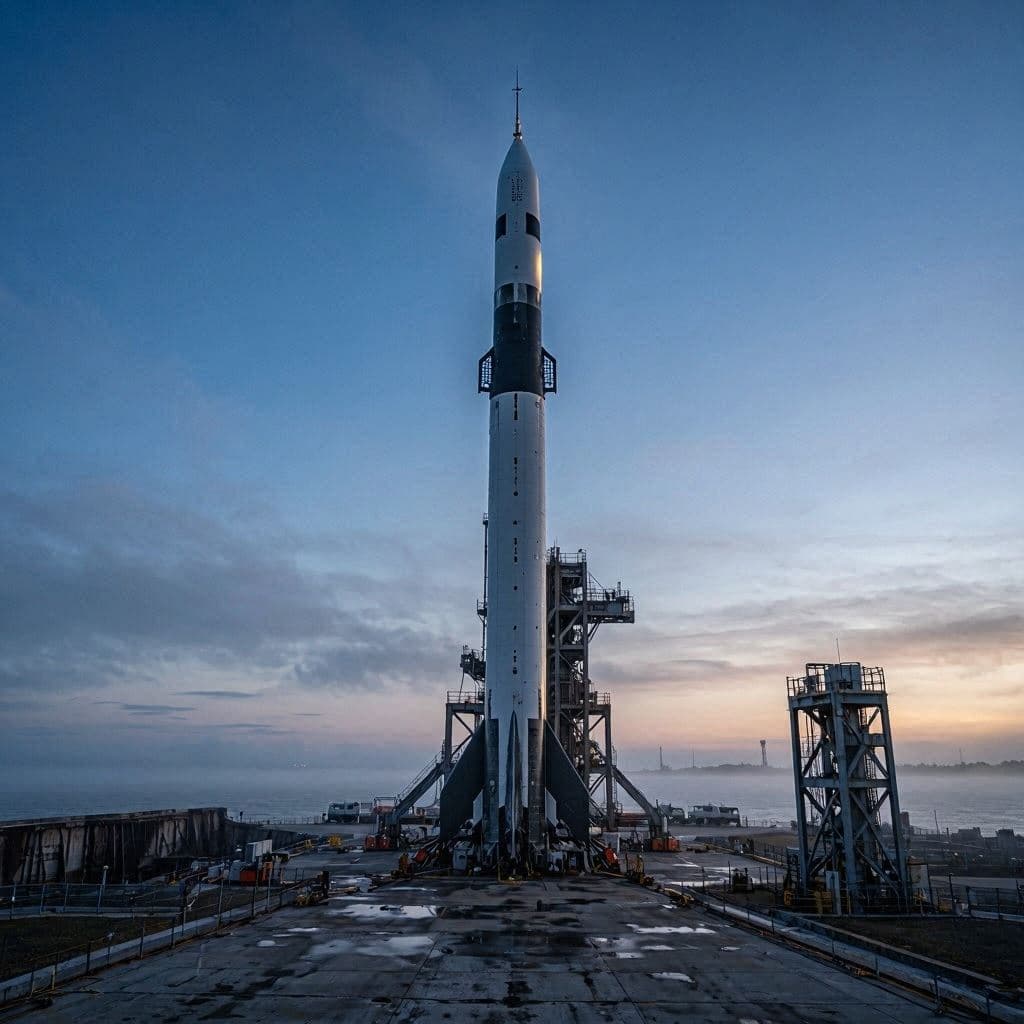
SpaceX scheduled a Falcon 9 launch during the Fourth of July weekend from Florida's Cape Canaveral Space Force Station. The mission aims to deliver the SiriusXM SXM-10 broadcasting satellite into geostationary transfer orbit, expanding satellite communications services across North America. As with every launch, engineers continue monitoring technical systems and weather conditions leading up to liftoff.
The Falcon 9 rocket has become one of the most frequently flown launch vehicles in the world. Designed for partial reusability, its first-stage booster is expected to return for a controlled landing after stage separation, supporting SpaceX's long-term approach to reducing launch costs while increasing mission frequency.
Preparations for launch involve thousands of detailed checks before engines ignite. Flight controllers examine propulsion systems, fueling procedures, communications links, navigation software, and range safety requirements. Even minor weather changes, including lightning risk or upper-level winds, can influence the final launch decision.
The payload, SiriusXM's newest satellite, is intended to strengthen broadcasting capabilities for subscribers throughout the United States and Canada. Modern communications satellites provide reliable audio programming while supporting a growing demand for uninterrupted coverage across wide geographic regions.
Florida's Space Coast has become one of the busiest launch centers in the world. Alongside government missions led by NASA, commercial companies now conduct frequent launches that support telecommunications, scientific research, Earth observation, and exploration beyond low-Earth orbit. This steady cadence reflects the expanding role of private industry within the global space sector.
Space enthusiasts often follow launch windows closely because schedules remain subject to change. Technical reviews, weather assessments, or range availability may lead to delays, emphasizing that safety and mission success remain the highest priorities throughout every stage of preparation.
As the countdown approaches, attention turns once again toward the launch pad. Whether viewed from nearby beaches or followed through live broadcasts around the world, each mission represents another carefully measured step in humanity's continuing effort to explore, connect, and better understand the space beyond our planet.
AI Image Disclaimer: The illustrations accompanying this article are AI-generated visual representations created for editorial purposes and do not depict actual launch photography.
Sources Space.com Florida Today SpaceX NASA Reuters
Published by Banx Network. This article is part of the Banx decentralized media programme, powered by the BXE token on the XRP Ledger.