Some discoveries begin not with a dramatic flash, but with the patience to keep looking. In 1995, astronomers made a decision that seemed almost counterintuitive: they aimed the Hubble Space Telescope at a tiny, seemingly empty patch of sky and allowed it to observe without interruption for ten days. What appeared to be darkness soon became one of the most remarkable windows into the universe.
The project became known as the Hubble Deep Field, an ambitious observation designed to test whether the darkest regions of the sky were truly empty. Instead of finding a cosmic void, the telescope revealed a breathtaking image filled with approximately 3,000 galaxies. Many of those galaxies contained billions of stars, stretching humanity's understanding of the universe far beyond previous expectations.
The observation demonstrated that even the smallest section of the night sky can contain an extraordinary number of distant galaxies. Some appeared as they existed billions of years ago because their light had traveled immense distances before reaching Hubble's instruments. In effect, the telescope allowed scientists to look back through cosmic history.
Astronomers explained that the image did more than provide a beautiful view. It offered valuable scientific evidence about how galaxies formed, evolved, and clustered over time. Researchers have continued analyzing the data for decades, using it to refine models of the early universe and the large-scale structure of space.
The success of the Hubble Deep Field inspired a series of even deeper observations, including the Hubble Ultra Deep Field and later surveys conducted by newer observatories. Each generation of observations uncovered additional galaxies, reinforcing the idea that the observable universe is vastly more populated than earlier estimates suggested.
The legacy of Hubble also prepared the way for the James Webb Space Telescope, whose advanced infrared instruments now observe even more distant galaxies formed shortly after the universe's earliest epochs. Together, the two observatories provide complementary perspectives on cosmic evolution, allowing scientists to connect different chapters of the universe's history.
Although the famous image occupies only a tiny fraction of the sky, its scientific influence has been immense. It reminds researchers that appearances can be misleading and that careful observation often reveals complexity hidden beneath apparent simplicity. The seemingly empty darkness became one of astronomy's richest sources of discovery.
Three decades later, the Hubble Deep Field remains a defining milestone in modern astronomy. It continues to inspire scientists and the public alike, illustrating that some of the universe's greatest revelations emerge not from searching where everything is visible, but from patiently exploring where almost nothing seems to exist.
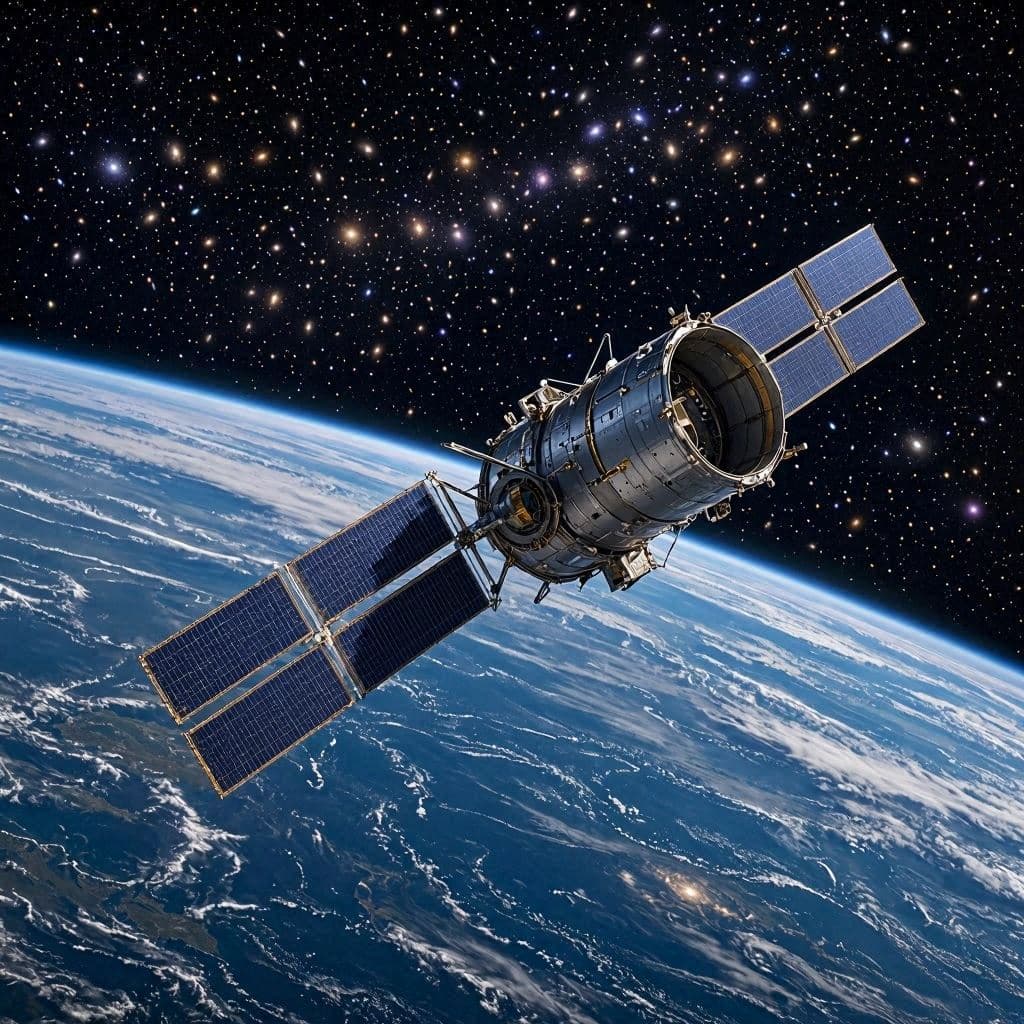
AI Image Disclaimer: The accompanying visuals are AI-generated artistic interpretations intended to illustrate the scientific topic and are not original Hubble observations.
Sources NASA Space Telescope Science Institute (STScI) Space.com Space Daily
Published by Banx Network. This article is part of the Banx decentralized media programme, powered by the BXE token on the XRP Ledger.