The advertisement looked almost harmless at first glance.
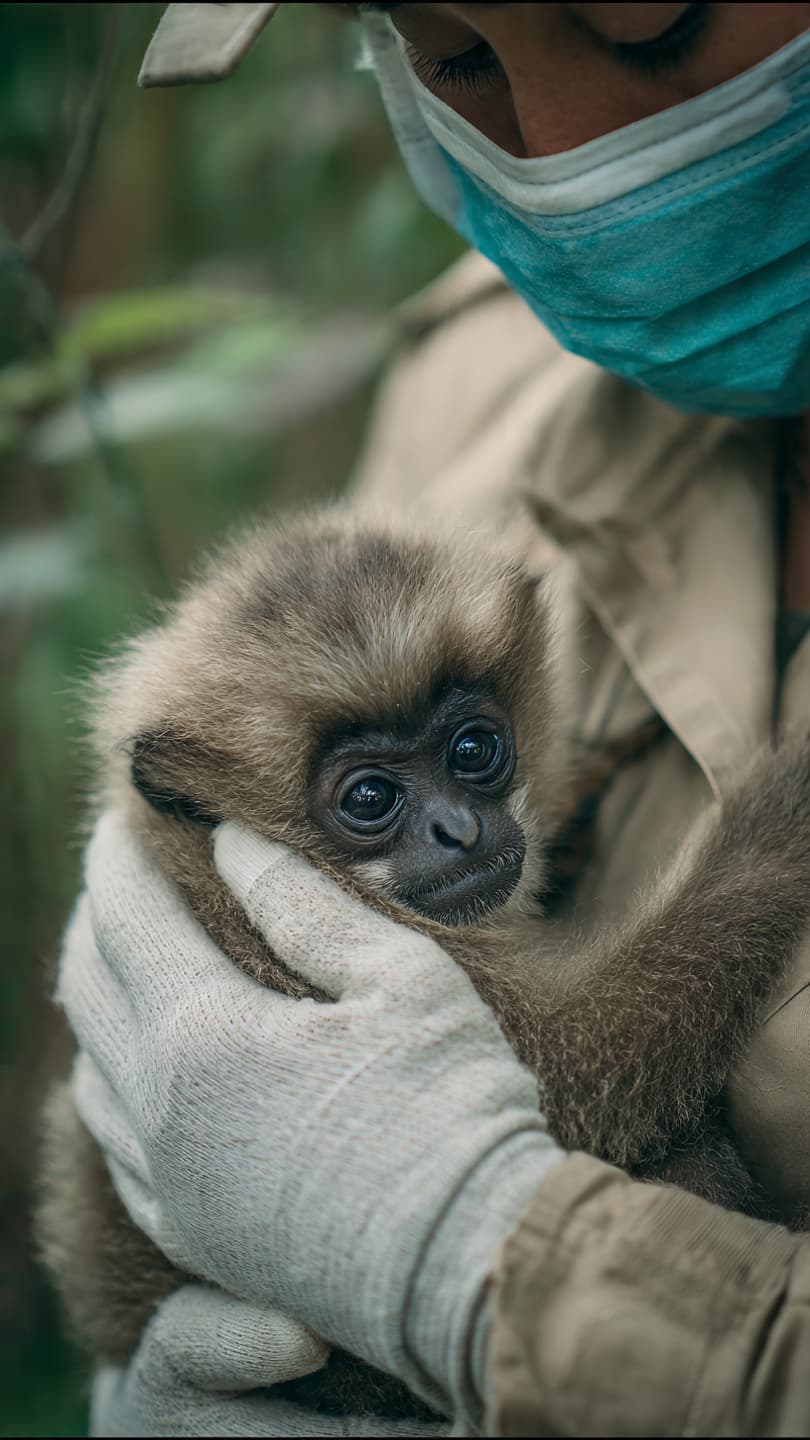
A small primate with enormous eyes. Tiny hands gripping fabric. Captions describing the animal as “cute,” “rare,” or “friendly.”
But conservation groups say images like these often conceal a far darker reality.
Because behind many illegally sold baby gibbons lies a violent process: the likely killing of the infant’s mother.
Wildlife investigators and anti-trafficking organizations continue warning that endangered primates are increasingly being sold through:
Social media platforms Messaging apps Online marketplaces Private exotic pet networks Baby gibbons are especially targeted because their appearance triggers strong emotional reactions and demand among exotic animal buyers.
Yet experts say obtaining an infant gibbon from the wild almost always requires separating it from its family group — something adult gibbon mothers fiercely resist.
As a result, poachers frequently kill adult animals during capture operations.
Why Gibbons Are So Vulnerable Gibbons are small apes native to forests across Southeast Asia.
They are known for:
Long arms adapted for swinging through trees Complex vocal calls Strong family bonds High intelligence Monogamous social structures Many species are already threatened by:
Deforestation Habitat fragmentation Illegal wildlife trade Because gibbons reproduce slowly and invest heavily in raising offspring, populations struggle to recover once adults are removed from the wild.
Conservationists say even a single baby sold online may represent the destruction of an entire family unit.
The Hidden Reality Behind Exotic Pet Photos Wildlife trafficking networks often market young primates through emotionally appealing images designed to make the animals appear:
Playful Affectionate Domesticated Childlike But experts warn that baby primates rarely remain manageable pets as they mature.
Captive gibbons may develop:
Severe psychological stress Aggressive behavior Malnutrition issues Social deprivation trauma Many eventually end up abandoned, confined, or transferred between illegal owners.
Animal rescue organizations across Asia frequently receive primates kept in isolation for years under poor conditions.
The Internet and Wildlife Trafficking One of the biggest challenges facing conservation agencies is how online platforms accelerated illegal wildlife commerce.
Traffickers increasingly use:
Encrypted messaging apps Closed social groups Livestream sales Informal digital marketplaces The internet allows sellers to reach buyers internationally while hiding behind anonymous accounts and fragmented enforcement systems.
Wildlife crime investigators say social media algorithms can unintentionally amplify illegal animal trade by rewarding highly engaging “cute animal” content.
That creates a disturbing overlap between: viral internet culture, and endangered species exploitation.
Conservationists Fight Back Wildlife organizations continue working to:
Rescue trafficked primates Shut down illegal sellers Rehabilitate orphaned animals Educate the public about exotic pet demand Some rescued gibbons eventually enter protected sanctuaries, though rehabilitation can take years because highly social primates often suffer deep psychological trauma after losing family groups.
Conservationists repeatedly stress that reducing consumer demand remains one of the most important tools in combating illegal wildlife trafficking.
A Wider Reflection Part of what makes baby primates so vulnerable is that humans instinctively recognize ourselves in them.
Their expressions, their hands, their attachment to parents — all feel emotionally familiar.
That familiarity creates empathy. But in illegal wildlife markets, it also creates demand.
The tragedy is that the very qualities making baby gibbons appear lovable online are often the same qualities destroyed through trafficking itself.
A photograph may show only a small animal sitting quietly beside a seller. What it does not show is the forest it came from, the social bonds broken, or the likely violence required to capture it alive.
And perhaps that is the unsettling truth behind so much wildlife trafficking: the cuteness people see at the end of the chain often hides suffering at the beginning of it.
AI Image Disclaimer Images are AI-generated illustrations and are intended for visual representation only, not real-world documentation.
Source Check Wildlife investigators and conservation groups warn that illegal online wildlife trafficking continues fueling the sale of endangered primates, including baby gibbons often separated from their mothers through poaching operations across Southeast Asia and other regions.
Published by Banx Network. This article is part of the Banx decentralized media programme, powered by the BXE token on the XRP Ledger.