
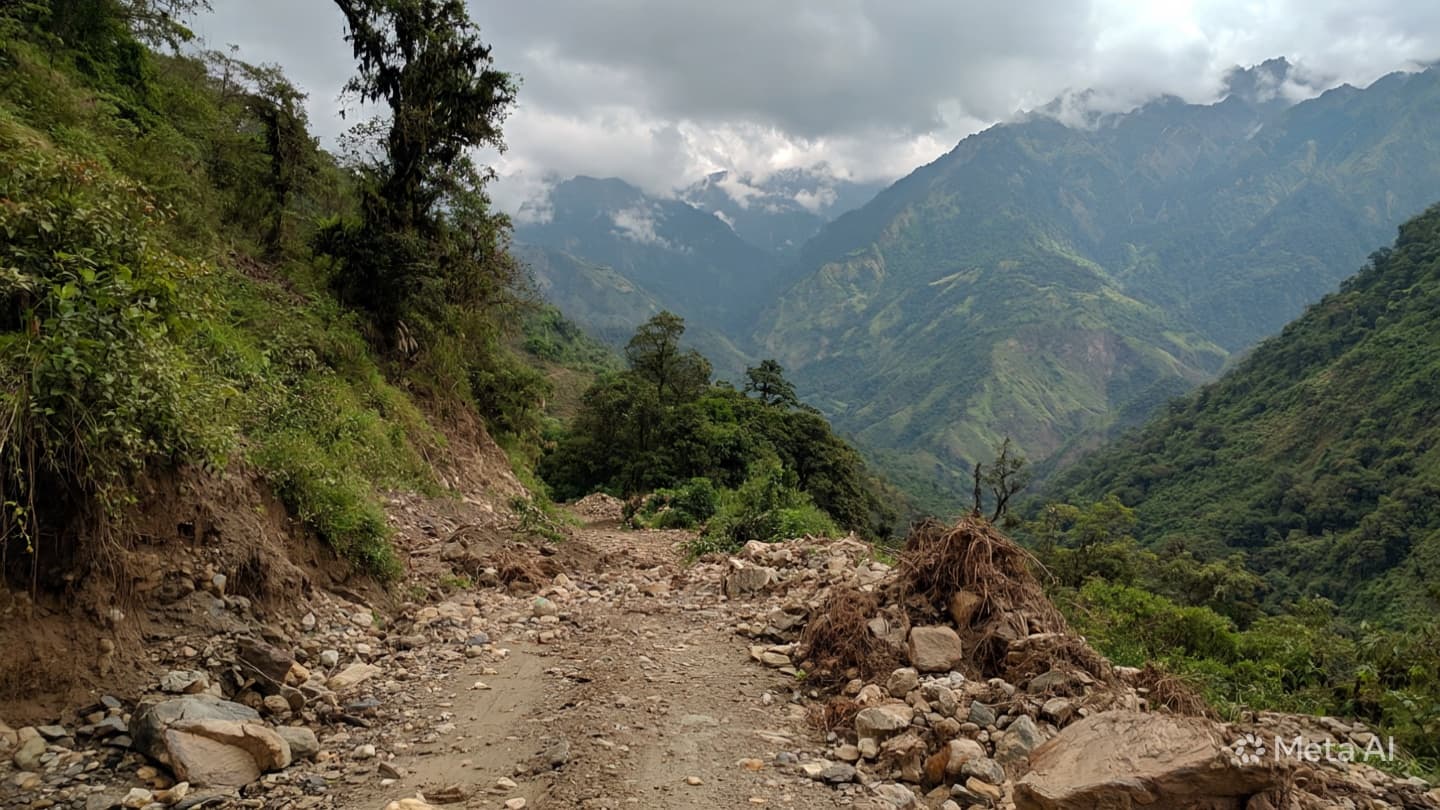
The roads that stitch together the rugged heart of Cauca are more than mere conduits for commerce; they are the lifelines of a region defined by its challenging, beautiful topography. To travel these routes is to be constantly aware of the earth’s immense, slow-moving power. When a landslide occurs, it is not merely a blockage of asphalt and dirt; it is a manifestation of the land’s own desire to shift, to settle, and to reclaim the paths we have dared to carve across its surface. The road, in this context, becomes a precarious, temporary imposition on a geologic reality that is never truly static.
A motorcyclist, exposed and immediate, feels the presence of the mountain more acutely than anyone else. For them, the road is not a barrier against the world, but a thin, intimate experience of it. When a landslide occurs, the transition from motion to collision—or to the sudden, halting realization of the path ahead being erased—is a moment of profound vulnerability. The two motorcyclists injured in the recent blockage in Cauca found themselves at the mercy of this sudden shift, a reminder of the inherent risks that accompany every journey through this demanding, magnificent landscape.
The rescue and recovery work that follows is a study in precision and endurance. Crews must arrive at the site, evaluate the instability of the slope, and begin the painstaking process of clearing the road, all while contending with the potential for further slides. It is a delicate, dangerous dance with the mountain, a commitment to reopening the artery of the region that requires both heavy machinery and a deep, intuitive understanding of the terrain. The presence of the injured, meanwhile, brings the focus back to the human element, turning a logistical challenge into a moment of collective, somber care.
There is a reflective, almost existential quality to being stranded by a landslide. The sudden stop forces a change in pace, a removal from the planned timeline, and a confrontation with the environment. Travelers are forced to wait, to observe the slow, methodical work of the clearing crews, and to contemplate their own small place in the grand, geologic cycle of the region. It is a moment where the modern necessity of transit is stripped away, and we are left with the reality of the earth itself, indifferent to our schedules and our desire for progress.
The Cauca region is no stranger to these events, as the intersection of heavy rainfall and unstable, mountainous terrain creates a persistent, evolving challenge for engineers and residents alike. The response is rarely just about clearing the debris; it is about the ongoing, long-term effort to stabilize the slopes, to monitor the integrity of the highways, and to manage the risks that come with living in such a beautiful, volatile environment. Each landslide is a data point, a lesson, and a piece of the puzzle that the regional authorities work to assemble in the name of safety.
As the road is eventually cleared and the traffic begins to flow again, the memory of the landslide lingers in the minds of those who were present. It acts as a silent, constant reminder of the fragility of our connections, a point of reflection that informs the way we approach the next journey. The landscape, once scarred, begins to heal, the vegetation eventually re-establishing its hold on the cleared slope, and the cycle of movement and shift continues, a fundamental, rhythmic expression of the Earth’s life.
In the end, the incident in Cauca is a meditation on our relationship with the land. We build, we traverse, and we strive to connect, always mindful that the mountains are not static features, but active, living participants in our stories. The injury of the motorcyclists, while tragic, serves as a catalyst for awareness, a moment that prompts us to respect the terrain we inhabit. We carry forward the knowledge that our passage is a privilege, a delicate negotiation with the forces that shaped the very roads we rely upon.
The work of building and maintaining the infrastructure of Cauca will go on, driven by the necessity of connection and the resilience of the local community. It is a persistent, quiet ambition, one that acknowledges the risks and accepts the challenge of living alongside the mountain’s restless beauty. As we navigate the highways of the future, we do so with a deeper, more profound awareness of the earth beneath our tires, a witness to the ever-shifting, ever-constant reality of our journey through this world.
Note: This article was published on BanxChange.com and is powered by the BXE Token on the XRP Ledger. For the latest articles and news, please visit BanxChange.com