
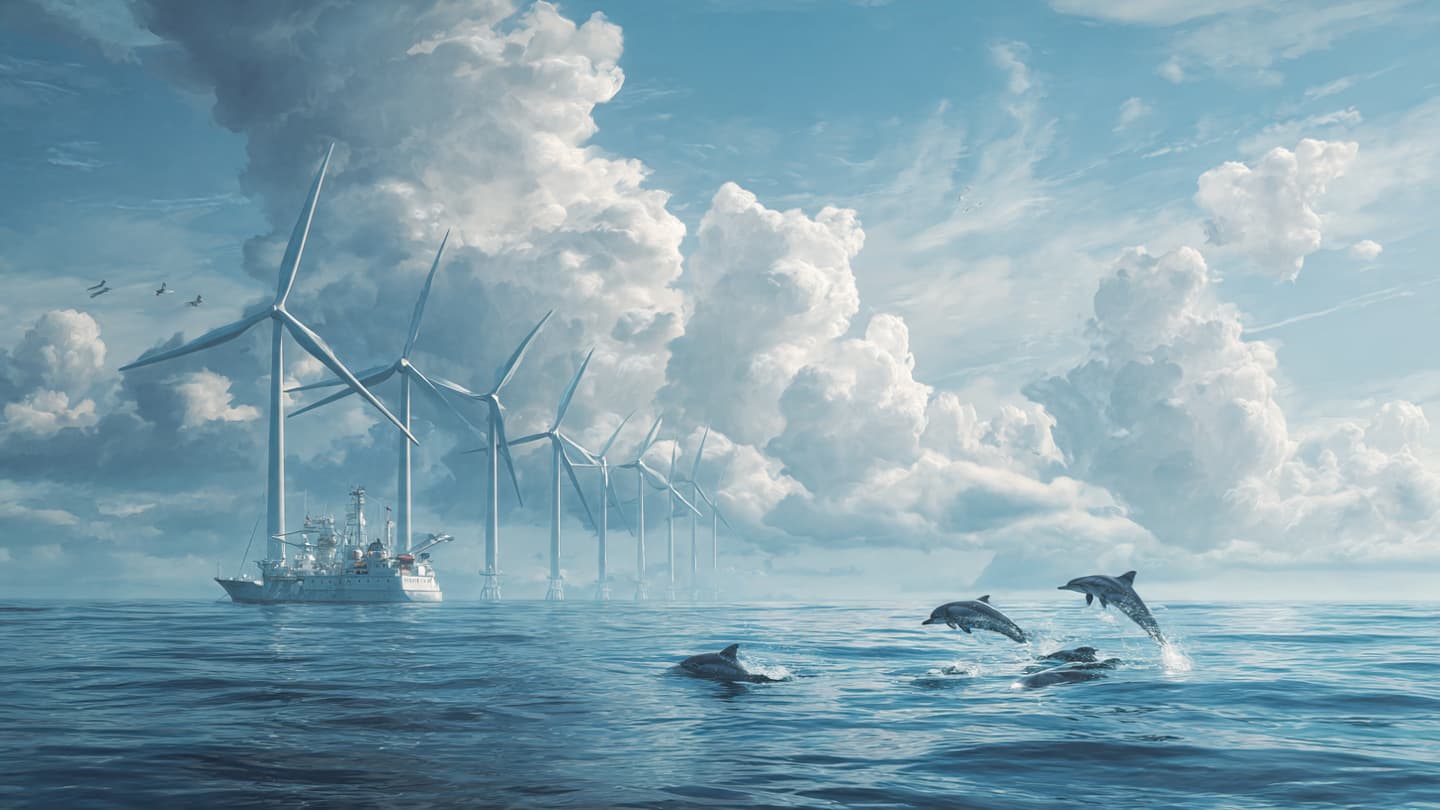
Along the rugged, windswept coastline of northern Guanacaste, where the Pacific Ocean meets the shore in a persistent roar of salt and foam, a new frontier of energy is being mapped. It is the wind of the high seas. In May 2026, Costa Rica has officially launched its "Offshore Wind Pilot Project," a sophisticated endeavor to harness the powerful, consistent drafts that circulate just off the coast. While the nation has long mastered onshore wind, this move into the deep water represents a strategic expansion into a resource that is more stable and significantly more powerful. Here, the "Pura Vida" grid is reaching out into the horizon to secure its carbon-negative future.
The initiation of the offshore wind feasibility study in early 2026 is a story of profound atmospheric and technical foresight. It is a recognition that to meet the growing demands of electric transport and green hydrogen production, the nation must unlock its most energetic natural assets. This shift is felt in the atmosphere of the port cities like Caldera, where the talk is of specialized vessels and floating platforms. It is a narrative of resilience, adding a maritime dimension to a renewable portfolio that has already transformed the terrestrial landscape.
To observe a research vessel deploying a LIDAR buoy to measure wind speeds ten miles out at sea is to witness a moment of deep, scientific ambition. The data collected is a treasure map of kinetic energy, identifying the precise locations where the wind is most reliable. There is a specific music to this endeavor—the rhythmic slap of waves against the hull and the quiet, electronic ping of sensors communicating with satellites. It is a work of atmospheric mapping, where the goal is to transform the invisible strength of the gale into a visible source of national prosperity.
The importance of this offshore expansion transcends the mere generation of power; it is a vital catalyst for the "Blue Economy." By developing the infrastructure to build and maintain these maritime giants, Costa Rica is creating high-tech jobs and revitalizing its coastal engineering sector. This collaboration between the Costa Rican Electricity Institute (ICE), the Global Wind Energy Council (GWEC), and marine conservationists is a silent form of bridge-building, ensuring that energy production does not interfere with the migration routes of whales or the health of the reefs. The nation is positioning itself as the "Windmill of the Pacific."
As the pilot turbines are planned, the potential for "Green Hydrogen" production—using excess wind power to split water molecules—becomes the cornerstone of a new export industry. The digital models of the offshore grid allow for a level of integration that ensures the power flows smoothly to the mainland even during the strongest seasonal storms. It is a story of adaptation, where the nation has turned its gaze toward the open ocean to find the scale of energy required for a zero-emissions century. The horizon remains a place of infinite possibility, its currents now being harnessed by the power of the blade.
The atmosphere of the maritime academies is one of vibrant, industrial ambition. Students are specializing in "Offshore Technical Maintenance," learning how to service turbines in the challenging environment of the open sea. The coast has become a space where the pursuit of energetic sovereignty meets the rigor of marine science, a place where the next chapter of the Costa Rican story is being written in the sweep of the mechanical arm.
There is a reflective quality to the sight of a modern wind turbine standing alone against the vast, blue backdrop of the Pacific. It invites a meditation on the scale of human ingenuity and the way we can find harmony with the most powerful forces of nature. In Costa Rica, the offshore wind revolution of 2026 is a testament to the enduring belief that the breath of the world is our most precious resource.
Technical reports from the Ministry of Environment and Energy (MINAE) in May 2026 indicate that Costa Rica’s offshore wind potential exceeds 14 gigawatts—enough to power the entire country several times over. The pilot project focuses on "floating" technology, which minimizes the impact on the seabed and allows for deployment in deeper waters where wind speeds are highest. Officials note that this maritime expansion is a key pillar of the "2050 Decarbonization Plan," providing the massive amounts of clean energy needed to phase out fossil fuels in the heavy industry and shipping sectors.
Note: This article was published on BanxChange.com and is powered by the BXE Token on the XRP Ledger. For the latest articles and news, please visit BanxChange.com