
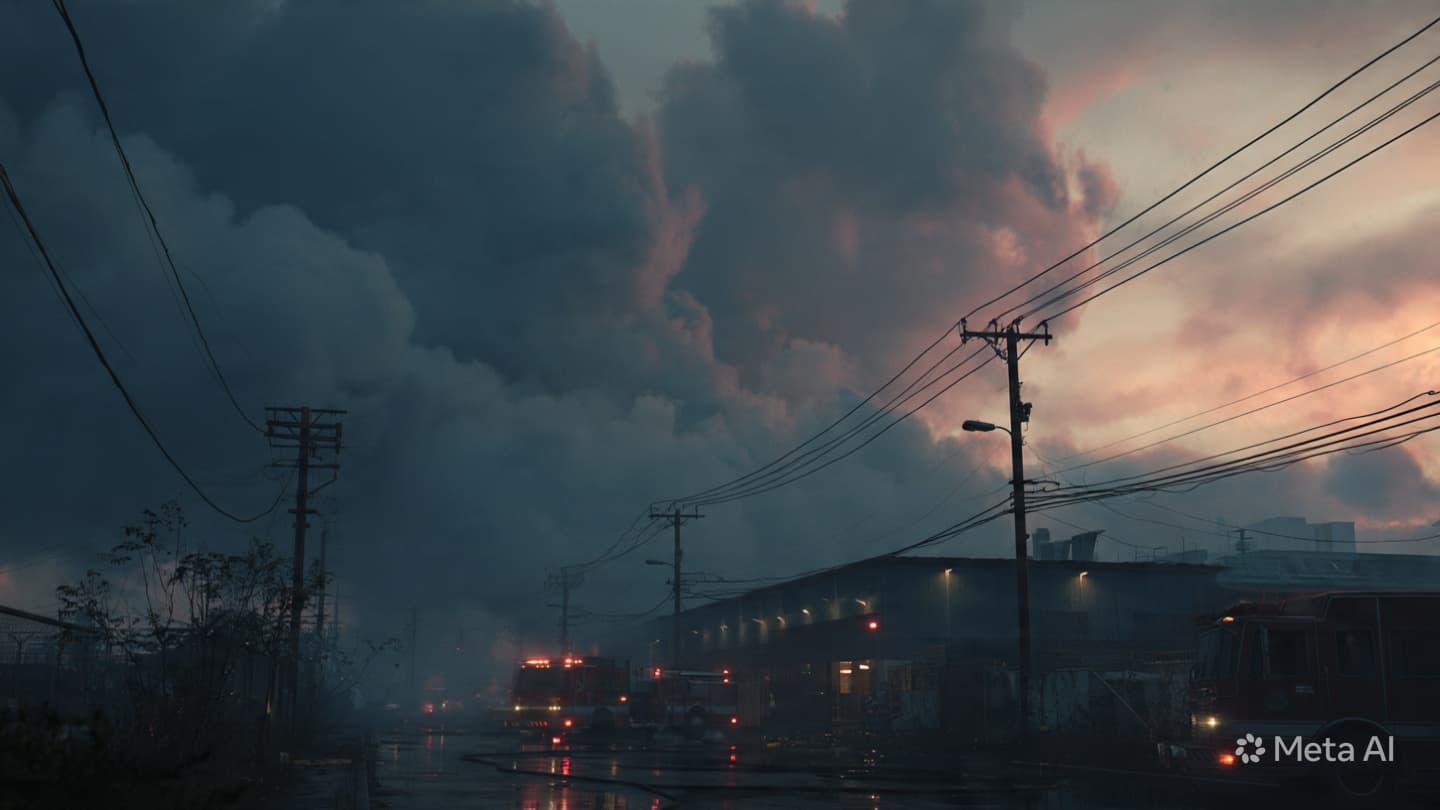
The structure was once a quiet monument to industry, a place where goods flowed in and out with the predictable cadence of a commercial heartbeat. Then came the fire, a sudden disruption that fractured the stillness of the district and cast a pall of smoke across the skyline. When an industrial space, typically so robust and functional, falls victim to an incident of such magnitude, the response is swift and multifaceted. It is a moment where the thin veneer of order is stripped away, revealing the fragility of the systems we build to house our modern needs.
Emergency services arrived at the site with a precision born of necessity, their lights cutting through the darkness and their hoses snaking toward the heart of the blaze. The scene was one of controlled intensity, where the fire brigade worked in rhythmic, exhausting harmony to contain the spread of the heat. It is a spectacle that captures the human spirit of resilience—the willingness to step into the heat to protect the perimeter of what remains, to salvage not just material value but the safety of the surrounding community.
The air hung heavy with the acrid scent of consumption, a reminder of the raw energy that fire unleashes when it finds purchase in stored goods. Investigators moved through the charred remains with a deliberate, forensic patience, looking for the telltale signs of intent. In a place where everything is designed for efficiency and inventory, the presence of an intentional act—an act of arson—shifts the narrative from one of accidental misfortune to one of human conflict and calculated destruction.
For the observers in the community, the blaze was a startling intrusion of chaos into the mundane. Warehouse districts are often overlooked, relegated to the periphery of our consciousness until the horizon is darkened by smoke. The sight of the ruins invites a quiet reflection on the volatility of the commercial landscape and the vulnerability of the infrastructures that sustain our daily lives. It forces a pause, a collective intake of breath as the neighborhood watches the authorities sort through the remnants of a life that was until recently humming with activity.
As the flames were brought under control and the embers began to cool, the focus of the operation shifted toward the analytical. The arson investigation is a slow, methodical process, a quest for truth hidden amidst the ruin. Every scrap of debris, every frame of surveillance footage, and every witness statement becomes a piece of a larger puzzle. The goal is to reconstruct the timeline, to understand the motivations that led someone to introduce fire into such a concentrated space, and to bring a sense of resolution to a community left unsettled.
The resilience of the local services during such an event speaks to a deep, often unacknowledged infrastructure of care. They are the ones who stand between the spread of ruin and the safety of the wider district. Their work does not end when the smoke clears; it merely changes form, transitioning from the immediate, kinetic struggle of firefighting to the long-term, intellectual work of the investigative office. It is a seamless, professional transition that ensures justice is sought with the same rigor as the fire was extinguished.
The aftermath of a major fire is a landscape of profound silence. Where there was once the noise of machines and the movement of goods, there is now the quiet introspection of a site under scrutiny. The impact on the local supply chain and the temporary displacement of operations create a ripple effect that touches many, yet the immediate focus remains on the structural integrity of the investigation. The community watches, waits, and eventually, begins the slow process of moving forward.
In the final reckoning, such an event serves as a stark reminder of the complexities of modern urban existence. It highlights the importance of vigilance, the necessity of robust emergency frameworks, and the fragility of the physical spaces we rely upon. As the investigation progresses and the site is secured, the district begins to settle back into its rhythm, forever marked by the memory of the fire but moving forward with the quiet, persistent drive that defines the industrial heart of any city.
Note: This article was published on BanxChange.com and is powered by the BXE Token on the XRP Ledger. For the latest articles and news, please visit BanxChange.com