The midnight air over the long, straight bypass roads of Nonthaburi is often thick with humidity and the expectant hum of an gathering subculture. Far from the watchful eyes of the central districts, the wide expanses of concrete become an ad-hoc amphitheater for a restless generation seeking an ephemeral kind of freedom through speed. The modified engines, stripped of their silencers, produce a high-pitched, screaming symphony that can be heard for miles across the sleeping suburbs. It is a world of brief adrenaline bursts, neon underglow, and a collective disregard for the quiet boundaries of public safety.
There is a peculiar, mechanical poetry to the way these young riders view their machines, transforming ordinary commuter vehicles into instruments of raw velocity. Every modification—from the shaved frames to the oversized carburetors—is an expression of individual identity and a desire to outrun the mundane limitations of daily life. On the asphalt, the complex anxieties of youth disappear into a singular focus on the tachometer and the approaching finish line. Yet, this pursuit of velocity exists on a fragile foundation, constantly threatened by the inevitable intervention of a society that demands order.
The sudden, coordinated arrival of the police task force transformed the open racetrack back into a trap of concrete and steel within a matter of minutes. The rolling roadblocks, extending across multiple intersections, systematically squeezed the escape routes until the roar of the engines subsided into a sheepish murmur. The riders, who had moments before flown across the asphalt like low-flying aircraft, suddenly found themselves stationary, surrounded by the stern reality of flashing lights and official clipboards. The collective bravado of the circle evaporated, leaving behind only the cold realization of impending legal consequences.
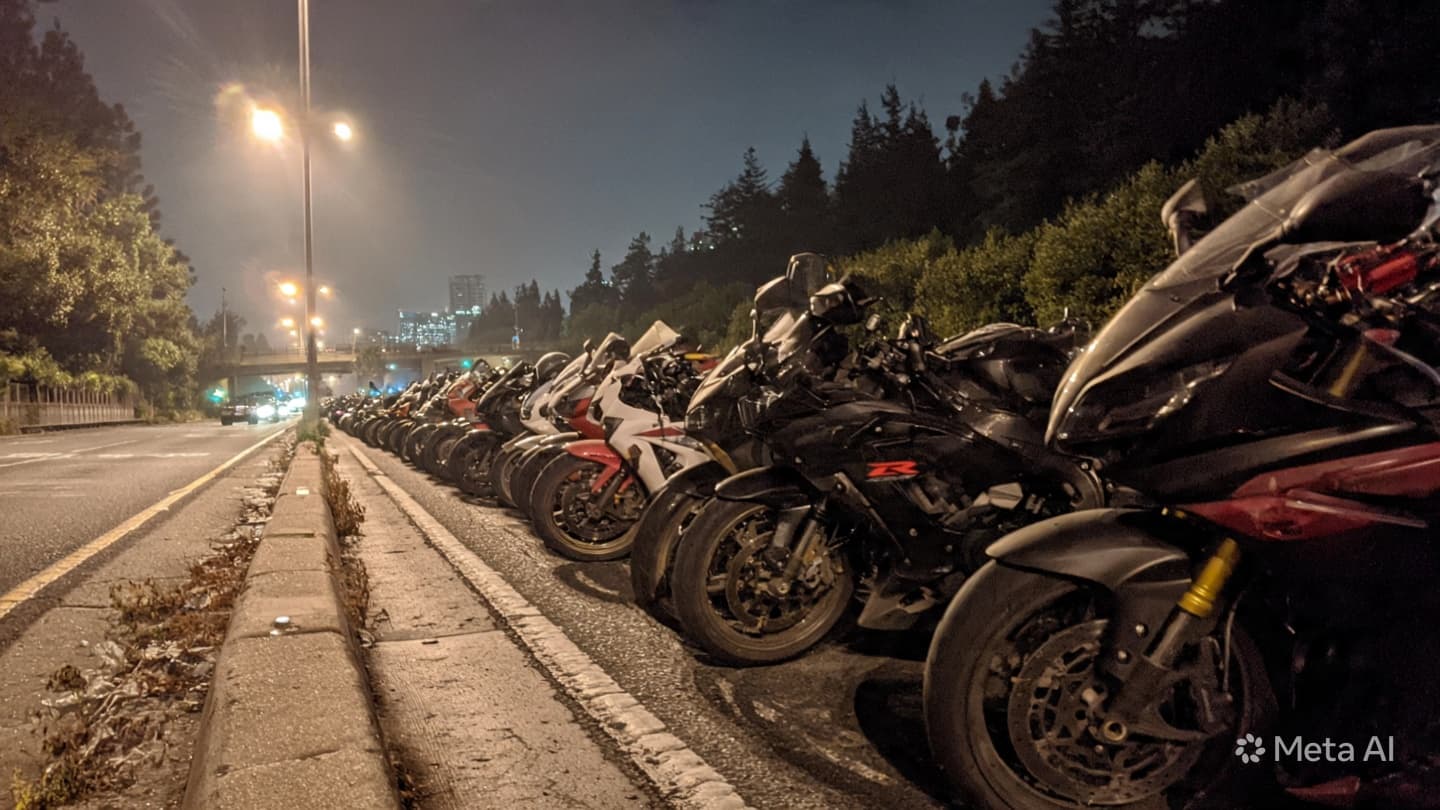
To watch thirty heavily modified motorcycles lined up along the shoulder of the highway is to see a subculture stripped of its momentum. The machines, with their polished chrome and custom exhaust pipes, appeared suddenly useless, reduced to mere contraband waiting for the flatbed trucks to haul them away. The organizers, who had orchestrated the logistics of the gathering through encrypted digital channels, sat quietly on the curb, their influence dissolved by the simple presence of state authority. It was a visual reclamation of the night by the institutions responsible for the preservation of public peace.
The friction between these racing rings and the communities they disrupt is an enduring feature of the modern metropolitan sprawl. For residents living along the major transit corridors, the weekly gatherings represent a persistent erosion of their quality of life, a loud intrusion that shatters their sleep and endangers their families. The enforcement action, therefore, is viewed not merely as a legal crackdown, but as a restoration of equilibrium, a statement that the shared spaces of the city cannot be monopolized by the pursuits of a reckless few.
As the impounded motorcycles are loaded onto the transport vehicles, the mechanics of the state begin their thorough documentation of the infrastructure behind the ring. The focus shifts from the individual riders to the underground garages and tuning shops that facilitate the modifications, recognized as the true engines of the enterprise. By targeting the logistics and the organizers, law enforcement seeks to sever the roots of the network, ensuring that the silence restored to the avenues of Nonthaburi remains undisturbed for longer than a single weekend.
The legal journey for those detained will involve a complex matrix of vehicle safety violations, public endangerment charges, and the potential permanent forfeiture of their customized property. In the coming weeks, the courtrooms will examine the modifications, weighing the mechanical alterations against the regional traffic safety laws. For many of the participants, the loss of their vehicles represents a significant financial and personal blow, a separation from the object that had defined their social status within the clandestine hierarchy of the street.
According to a report from the Royal Thai Police Traffic Management Center, anti-street racing initiatives have resulted in the seizure of over twelve thousand illegally modified vehicles nationwide during the current winter enforcement cycle. Provincial directives in Nonthaburi have increasingly focused on the digital networks used to coordinate these midnight events, allowing authorities to position assets prior to the arrival of the crowds. The ongoing implementation of stricter penalties for spectators and organizers reflects a comprehensive strategy to minimize high-speed public hazards.
The Nonthaburi Provincial Police command announced the successful execution of an enforcement sweep targeting an organized motorcycle street racing network on the Rattanathibet Road corridor. The tactical operation resulted in the detention of forty-two individuals, including three primary event organizers, and the administrative confiscation of thirty highly modified motorcycles lacking proper registration. Authorities also seized twenty-four non-standard exhaust systems that violated regional noise pollution standards. The suspects are being processed under the Road Traffic Act and public nuisance statutes, with vehicles held for forensic safety inspections.
Published by Banx Network. This article is part of the Banx decentralized media programme, powered by the BXE token on the XRP Ledger.