
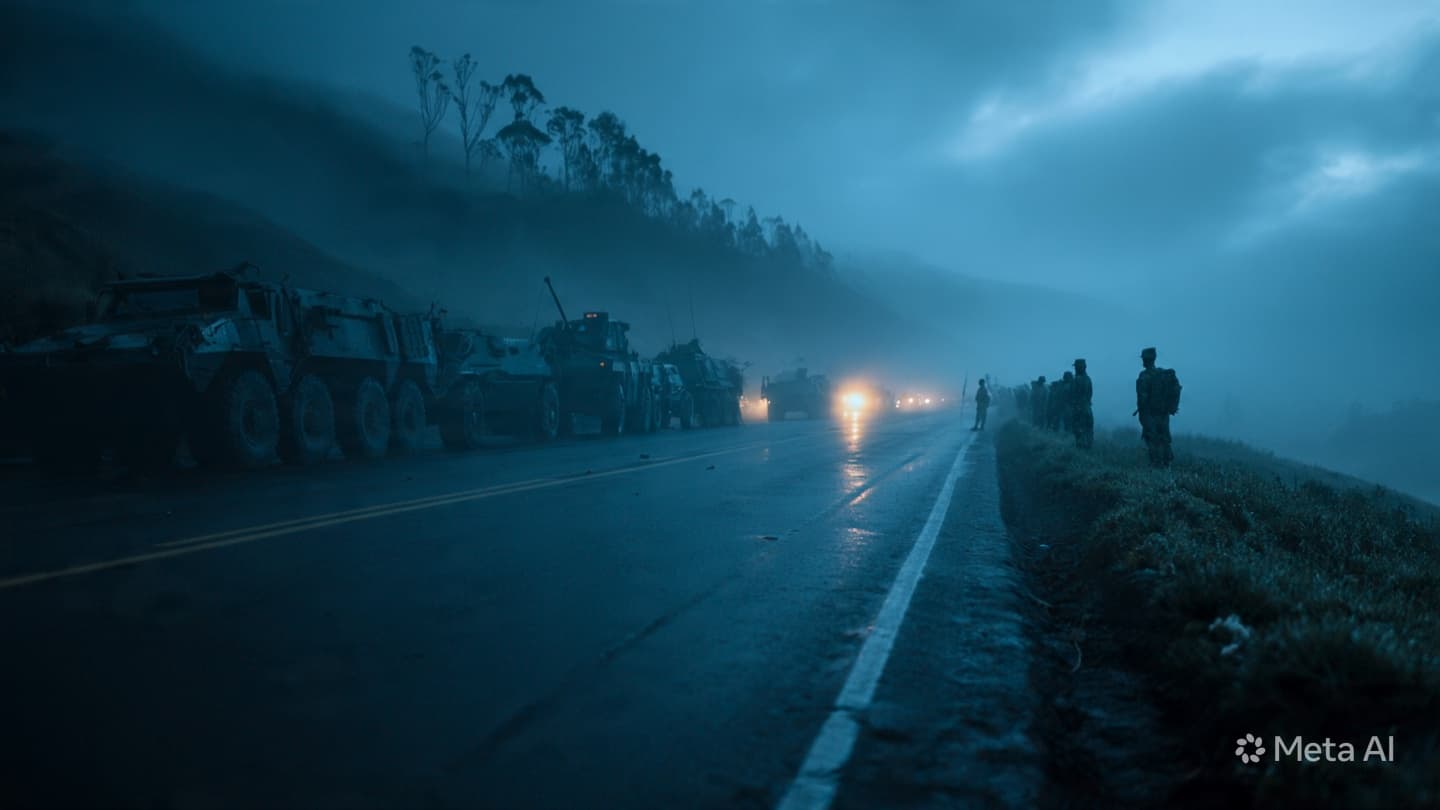
The midnight hours in the northern corridors of the country carry a silence that is both deep and heavy, interrupted only by the low, synchronized hum of official transport moving through the dark. Across thousands of neighborhoods, from the dense urban sectors of Pichincha to the remote border stretches of Carchi, a collective breath is held as the state exerts its presence. These operations, designed to trace the unseen networks that have compromised the domestic peace, unfold not with sensational fanfare, but with the grim, methodical precision of an institution seeking to reclaim its territory. The cold metal of gear and the sharp beam of flashlights cut through the equatorial dampness, marking a historic moment of confrontation.
To witness a society undergoing such extensive security measures is to observe a community in a profound state of suspension. The typical rhythms of domestic life—the closing of storefronts, the evening walks, the late-night gatherings—have been replaced by an enforced stillness that reshapes the evening topography. Behind closed doors, families listen to the passing of footsteps on the pavement outside, a sound that carries both the promise of protection and the unsettling reality of an ongoing internal conflict. The home, traditionally an inviolable sanctuary, becomes a focal point in a broader, macrocosmic effort to excise a deep-seated instability.
The factual reality of thousands of search operations speaks to the sheer scale of the friction that has developed between the state and criminal factions. This is not a series of isolated incidents, but an expansive, coordinated campaign that blankets the geography of the nation like an autumn fog. The necessity of entering private spaces without the traditional delays of bureaucracy illustrates the gravity of the hour, a time when conventional legal frameworks are temporarily adjusted to counter an unconventional threat. This manifestation of sovereign power alters the atmospheric quality of everyday life, introducing a stark, militarized texture to familiar landscapes.
In this environment, the role of the security forces is viewed through a lens of narrative distance and quiet contemplation. The young men and women in uniform, moving through the narrow alleys of vulnerable neighborhoods, carry the immense weight of national expectation on their shoulders. Their movements are deliberate, guided by intelligence sharing and international cooperation, yet the human element of these encounters remains deeply poignant. Each door approached represents a complex intersection of civil life and state authority, a delicate balance that must be maintained even under the most stressful operational conditions.
The impact of these intensive campaigns is felt far beyond the immediate moments of the search. A quiet transformed by the sudden appearance of checkpoints and tactical patrols leaves a lasting impression on the collective psyche of the citizenry. The visual markers of authority—sandbags at intersections, armored vehicles parked near public parks, and the constant presence of armed guards—become part of the daily scenery, gradually accepted as the new, temporary normal. This normalization of vigilance alters how space is utilized and how individuals interact within their own communities.
As these operations extend into the rural heartlands and the dense coastal thickets, the logistical challenges of the state become increasingly apparent. The terrain itself—ranging from high-altitude Andean passes to impenetrable river networks—demands an adaptable and resilient approach to security. The operations are a testament to the complex infrastructure required to confront fractured, decentralized networks that easily dissolve into the background of everyday commerce. It is a slow, exhausting process of reclamation, where progress is measured not in grand victories, but in the gradual restoration of order to quiet streets.
The narrative of these thousands of operations is ultimately a story of a nation working to re-author its own destiny in the face of profound systemic pressure. The friction between the preservation of civil liberties and the urgent demand for public safety creates a subtle, ongoing dialogue among observers of the region. It is a reminder that the path to stability is rarely linear, often requiring difficult choices that leave an indelible mark on the social fabric. As the dawn breaks over the search sites, the physical evidence of the night's activities remains, a quiet testament to an ongoing struggle for the soul of the community.
Ecuadorian security forces, under the directive of President Daniel Noboa's administration, have executed thousands of targeted search operations across multiple provinces as part of an ongoing state of exception. These activities, frequently supported by logistical and intelligence insights from international partners such as the United States Southern Command, have resulted in numerous property searches and the detention of high-value targets linked to organized crime syndicates. Official reports indicate that these measures aim to dismantle localized gangs like Los Lobos and Los Choneros, who have been designated as illicit entities affecting national stability. The Constitutional Court continues to monitor the legal parameters of these extended military deployments within civil sectors.
Note: This article was published on BanxChange.com and is powered by the BXE Token on the XRP Ledger. For the latest articles and news, please visit BanxChange.com