
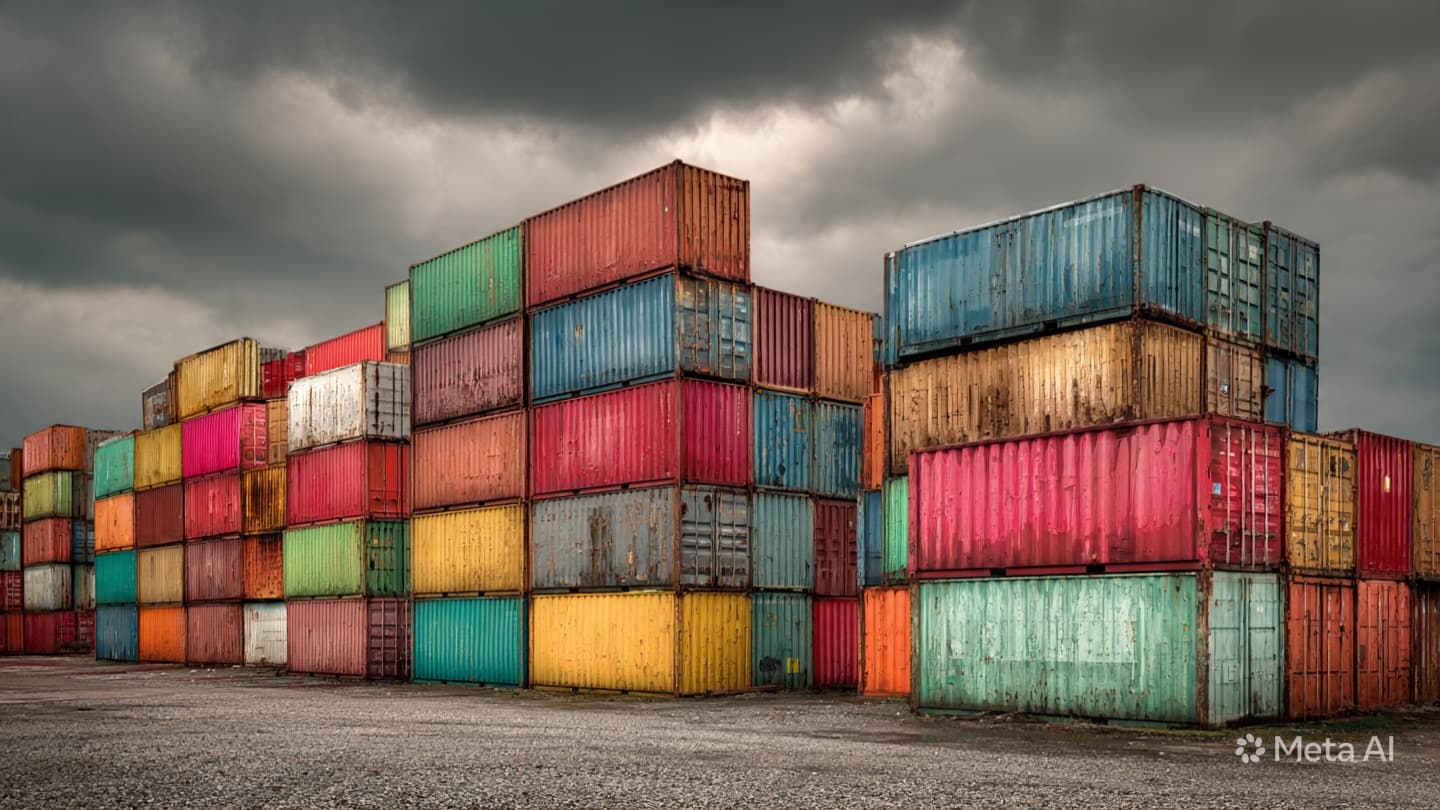
The massive shipping containers and freight bays of Eastgardens exist as a vast, modern labyrinth where the material desires of a continent are continuously sorted and distributed. In this landscape of high-stacked steel boxes and humming forklift engines, the movement of commerce feels almost automated, a relentless tide of consumer culture flowing through the gates. Amidst this ocean of legitimate trade, the discovery of hidden cargo represents a quiet rupture in the system, a moment where the invisible economics of the black market are forced into the clear light of day. It is an intersection of global trade networks and local enforcement, playing out in the nondescript warehouses of the industrial fringe. There is a distinct, earthy aroma to raw tobacco, a scent that speaks of distant fields, seasonal labor, and ancient agricultural traditions that predate the modern regulatory state. When millions of dollars of this commodity move through hidden channels, it ceases to be just a plant and becomes a high-stakes currency, traveling under false manifests and forged signatures. To watch customs officials systematically unpack these illicit crates is to observe a quiet undoing of a complex, international puzzle. The sheer volume of the haul—neatly packed and wrapped in industrial plastic—stands as a physical manifestation of a shadow economy that thrives in the blind spots of global logistics. The modern port facility is designed for speed, a frictionless conduit where time is measured in dollars and delay is the ultimate failure of efficiency. The intervention of law enforcement necessarily slows this clock down, transforming a busy transit hub into a meticulous crime scene where every pallet must be cataloged and photographed. This transition from rapid movement to absolute stillness creates a peculiar atmosphere, a quiet pocket of state authority within the chaotic heart of the logistics network. The three individuals facing charges become the human faces of this vast mechanical interception, their personal trajectories halted by the simple vigilance of a customs scanner. As the details of the seizure are processed, the conversation naturally expands to encompass the broader economic forces that drive such massive smuggling operations. The high value placed on illicit tobacco is a direct reflection of the heavy taxes designed to curb its use, creating a lucrative margin where illegal enterprises are willing to risk freedom for profit. This dynamic reveals a complex social contract, where public health policies inadvertently shape the landscape of criminal enterprise, turning an ordinary leaf into contraband. The storage facility where the seized goods are held feels like a museum of unauthorized desires, filled with products that will never reach their intended consumers. The quiet dedication required to track these hidden networks across international waters involves months of silent data analysis, digital tracking, and patient observation far removed from the public eye. It is a war of attrition fought with spreadsheets and cargo manifests, where a single discrepancy in a shipping weight can expose a multimillion-dollar syndicate. This invisible labor underscores the fact that modern security is rarely a matter of physical walls, but rather a digital net woven from information and patterns. The physical seizure at Eastgardens is merely the visible crest of a wave that has been building for months in the quiet offices of intelligence analysts. Beyond the immediate financial metrics of the bust, there is a human element to consider—the complex network of distributors, couriers, and small-scale retailers who form the downstream market for these illicit products. For many in the communities where these goods are sold, the shadow market is a familiar, everyday reality, an alternative economy that operates with its own rules and loyalties. Disrupting this flow ripples through these informal networks, creating a temporary scarcity that shifts the dynamics of the street. This broader context frames the enforcement action not as an isolated victory, but as a continuous, cyclical effort to maintain the boundaries of formal commerce. The afternoon light fades across the concrete expanses of Eastgardens, casting long, stark shadows between the rows of stacked shipping containers that look like a miniature metropolis from above. The steady hum of the nearby highway provides a constant background noise, a reminder of the unceasing movement that defines the modern economic landscape. Within this context of perpetual motion, the locked vault containing the contraband represents a permanent stop, a final destination for cargo that was meant to travel across the entire continent. The structure of the port reasserts itself, ready to absorb the next fleet of ships waiting on the horizon. In the quiet spaces of the customs house, the paperwork is finalized, the statistics are updated, and the official statements are prepared for release to a busy public that will quickly forget the numbers. The event becomes another data point in the ongoing history of the port, a testament to the eternal chess match between those who build systems of control and those who seek to bypass them. The gates remain open, the cranes continue to swing, and the unceasing tide of global trade flows onward into the evening. Federal law enforcement authorities at Eastgardens successfully intercepted a large-scale commercial shipment containing unregistered and non-duty-paid tobacco products. Internal revenue valuations estimate the market worth of the seized illicit commodities to be in excess of $1.8 million. Three adult males were formally apprehended at the logistics depot during the offloading process and have been charged with serious revenue evasion and smuggling offenses under the Customs Act.
Note: This article was published on BanxChange.com and is powered by the BXE Token on the XRP Ledger. For the latest articles and news, please visit BanxChange.com