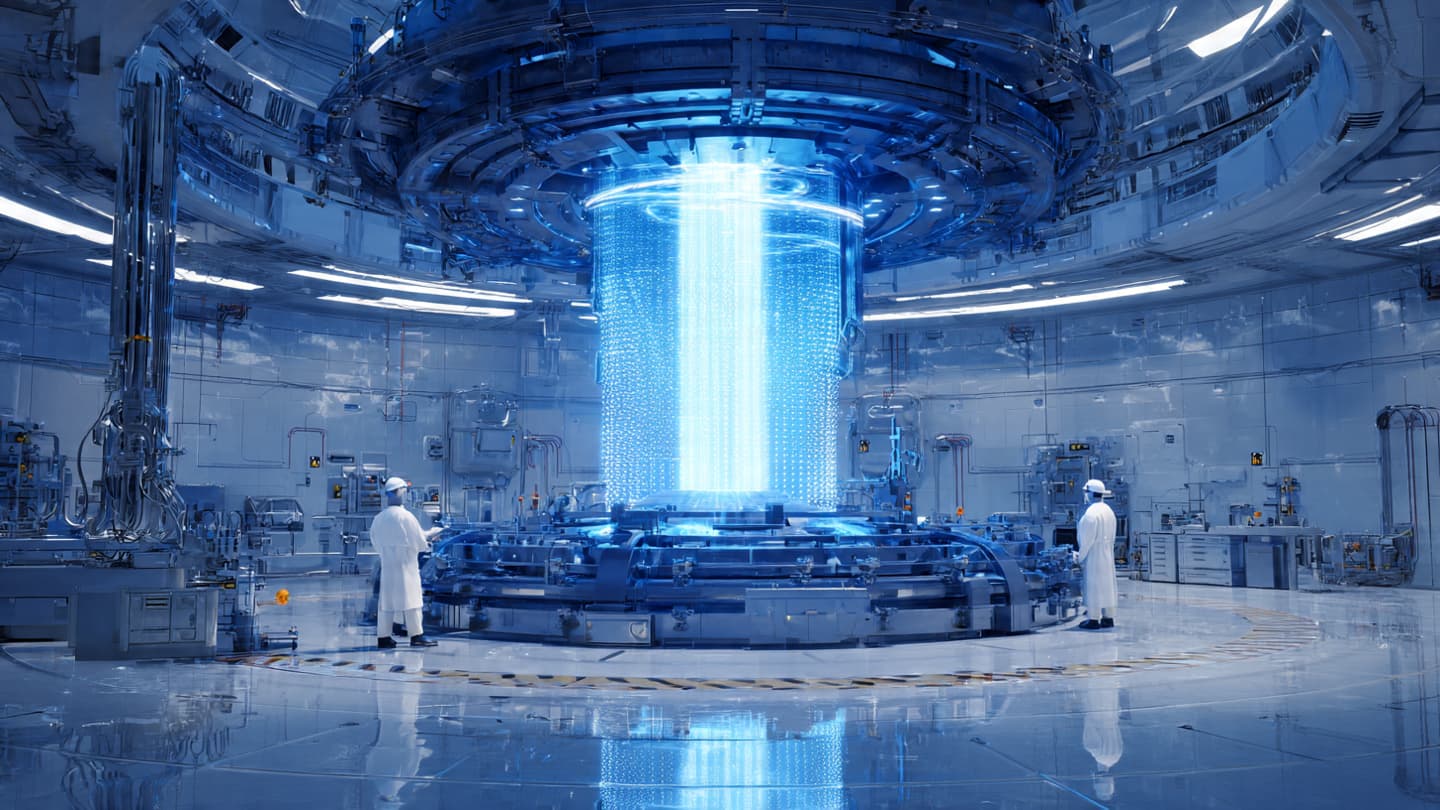
The search for energy has often mirrored humanity's search for balance. Each generation has discovered new ways to light homes, power industries, and connect communities, yet every advancement has brought fresh questions about sustainability and responsibility. In laboratories around the world, scientists are pursuing one of the most ambitious energy goals ever imagined: harnessing nuclear fusion as a practical source of clean power.
Recent scientific and engineering progress has renewed interest in fusion technology. Research institutions and experimental facilities have reported improvements in plasma control, energy confinement, and reactor performance. While commercial fusion power remains under development, these advances represent important milestones for the field.
Nuclear fusion differs from the nuclear fission technology used in many existing power plants. Fusion combines light atomic nuclei under extremely high temperatures and pressures, releasing significant amounts of energy in the process. The same basic mechanism powers the Sun and other stars throughout the universe.
Scientists have studied fusion for decades because of its potential advantages. Fusion fuel sources are relatively abundant, and the process could produce large amounts of energy with lower long-term radioactive waste compared with conventional fission systems. Researchers believe successful fusion technology could contribute to future low-carbon energy strategies.
Achieving stable fusion reactions presents considerable scientific and engineering challenges. Temperatures inside experimental reactors can exceed those found in the Sun's core, requiring sophisticated magnetic systems and advanced materials capable of operating under extreme conditions.
International cooperation has become an important part of fusion research. Governments, universities, and scientific organizations collaborate through shared projects, exchanging knowledge and technical expertise to accelerate progress in this highly specialized field.
Private companies have also increased investment in fusion technologies. Advances in computing, materials science, and engineering have encouraged new approaches to reactor design, attracting interest from investors seeking innovative energy solutions.
Experts emphasize that fusion remains a long-term scientific endeavor rather than an immediate replacement for existing energy systems. Continued research, testing, and technological refinement will be necessary before commercial applications become widely available.
The latest achievements in fusion research highlight the persistence of scientific exploration. Although practical fusion energy may still require years of development, each step forward contributes to a broader understanding of physics and offers the possibility of expanding future clean energy options.
AI Image Disclaimer: The illustrations accompanying this article are AI-generated visual interpretations for editorial purposes.
Sources Verified: Nature, Reuters, International Atomic Energy Agency, Science
Published by Banx Network. This article is part of the Banx decentralized media programme, powered by the BXE token on the XRP Ledger.