The scale of the natural world often reveals itself in comparisons that feel almost impossible to hold in the mind. On one side, the silent spread of forests across continents; on the other, the distant glow of stars scattered through a galaxy too vast to walk across or fully imagine. Yet both are part of the same cosmic inventory of abundance.
Scientific estimates suggest that Earth contains approximately three trillion trees, a figure derived from global surveys, satellite data, and ecological modeling. This estimate has become one of the most widely cited benchmarks in modern environmental science.
By contrast, astronomical observations from NASA indicate that the Milky Way galaxy contains roughly 100 to 400 billion stars, depending on measurement methods and assumptions about stellar distribution and dim, low-mass stars that are difficult to detect.
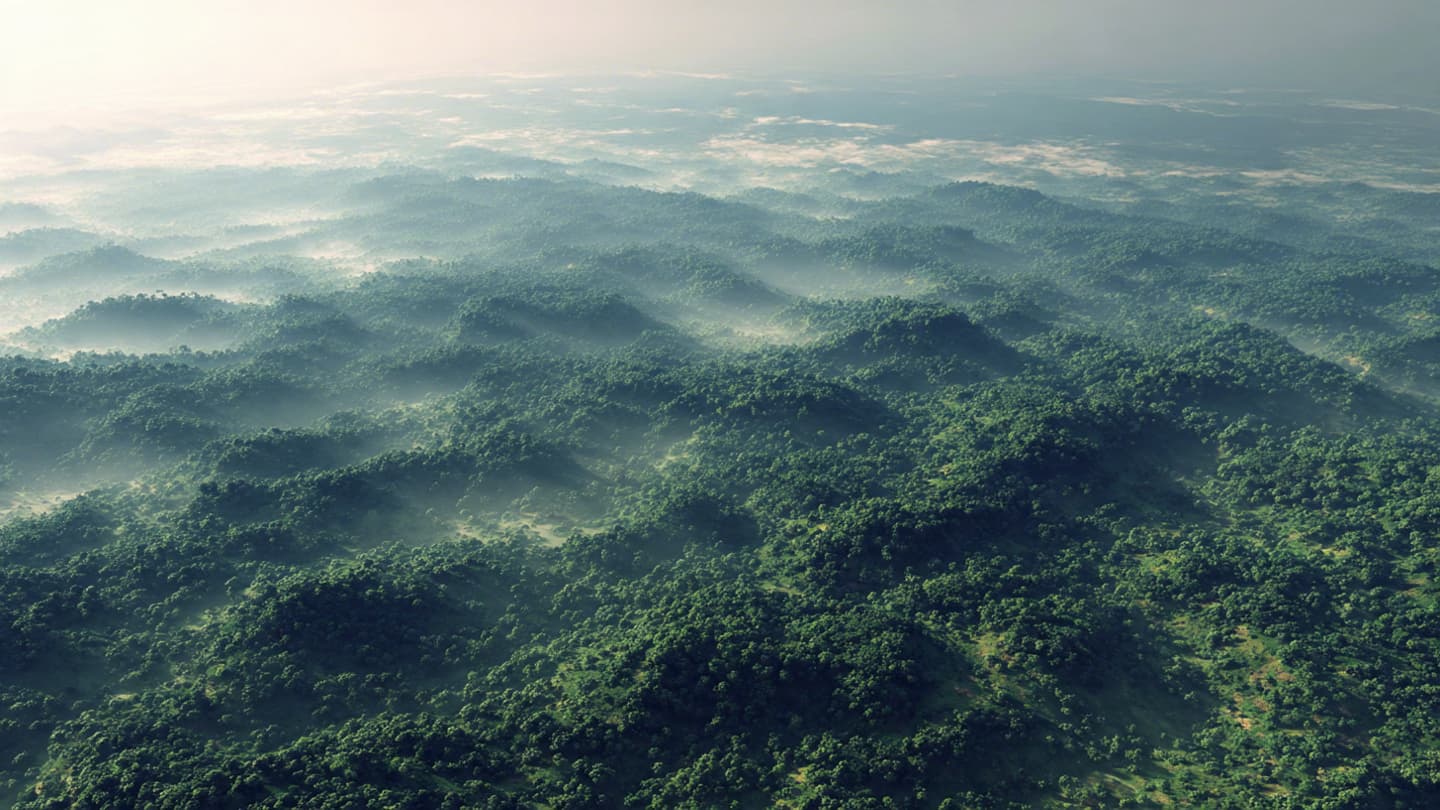
The comparison does not imply equivalence in scale or significance, but rather highlights how density and distribution can vary dramatically between biological and cosmic systems. Forests, though confined to a single planet, occupy vast continuous spaces across continents.
The tree estimate itself emerged from a large-scale study that combined satellite imagery, ground-based forest inventories, and ecological sampling. It revised earlier assumptions that had significantly underestimated global tree abundance.
At the same time, star counts in the Milky Way remain inherently uncertain due to observational limits. Many stars are too faint or obscured by interstellar dust to be directly observed, requiring indirect modeling techniques.
Both figures continue to be refined as measurement technologies improve. Earth observation systems and space telescopes alike are expanding scientific understanding of distribution patterns at vastly different scales.
The comparison between trees and stars has also become a popular way to communicate scientific scale to the public, offering a bridge between ecological awareness and cosmic perspective.
In the end, both numbers serve less as fixed truths and more as reminders of how measurement opens windows into systems far larger and more complex than everyday experience suggests.
AI Image Disclaimer: The visuals accompanying this article are AI-generated representations of Earth’s forests and the Milky Way and are not actual scientific imagery.
Sources (Verification Check):
NASA Nature Science Magazine Yale University Global Forest Research
Published by Banx Network. This article is part of the Banx decentralized media programme, powered by the BXE token on the XRP Ledger.