Major exploration programs rarely follow a straight path. Like architects refining a blueprint before construction begins, engineers and mission planners continuously adjust designs as new information becomes available. The Artemis program is no exception, and recent developments suggest that updated plans for its lunar lander are becoming increasingly defined.
NASA and its industry partners continue refining concepts for the lunar lander that will support future Artemis missions. The spacecraft is expected to play a central role in transporting astronauts between lunar orbit and the moon’s surface.
The Artemis initiative represents the United States’ most ambitious lunar exploration effort since the Apollo era. Unlike earlier missions, Artemis seeks to establish a longer-term presence that supports scientific research, technology development, and preparation for eventual missions to Mars.
As mission requirements evolve, lander designs have undergone revisions to address technical, operational, and logistical considerations. Engineers are working to balance performance, safety, reliability, and sustainability while ensuring compatibility with other components of the Artemis architecture.
The lunar lander must operate in one of the most challenging environments encountered by human spacecraft. It will need to support crewed landings, surface operations, and safe departures while functioning under extreme temperatures and reduced gravity conditions.
Industry partnerships remain an important element of the project. Commercial aerospace companies are contributing expertise and technology, reflecting a broader trend toward collaboration between government agencies and private-sector organizations in space exploration.
Updated planning efforts also consider future missions beyond initial lunar landings. Long-term objectives include supporting scientific activities near the moon’s south pole and enabling infrastructure that could sustain repeated exploration campaigns.
Space analysts note that revisions are common in large-scale aerospace projects. Adjustments often reflect lessons learned during testing, changing mission priorities, and advancements in technology that become available during development.
As revised plans continue taking shape, NASA and its partners remain focused on preparing for future lunar missions. The evolving design process reflects both the complexity of space exploration and the continuing effort to establish a lasting human presence beyond Earth.
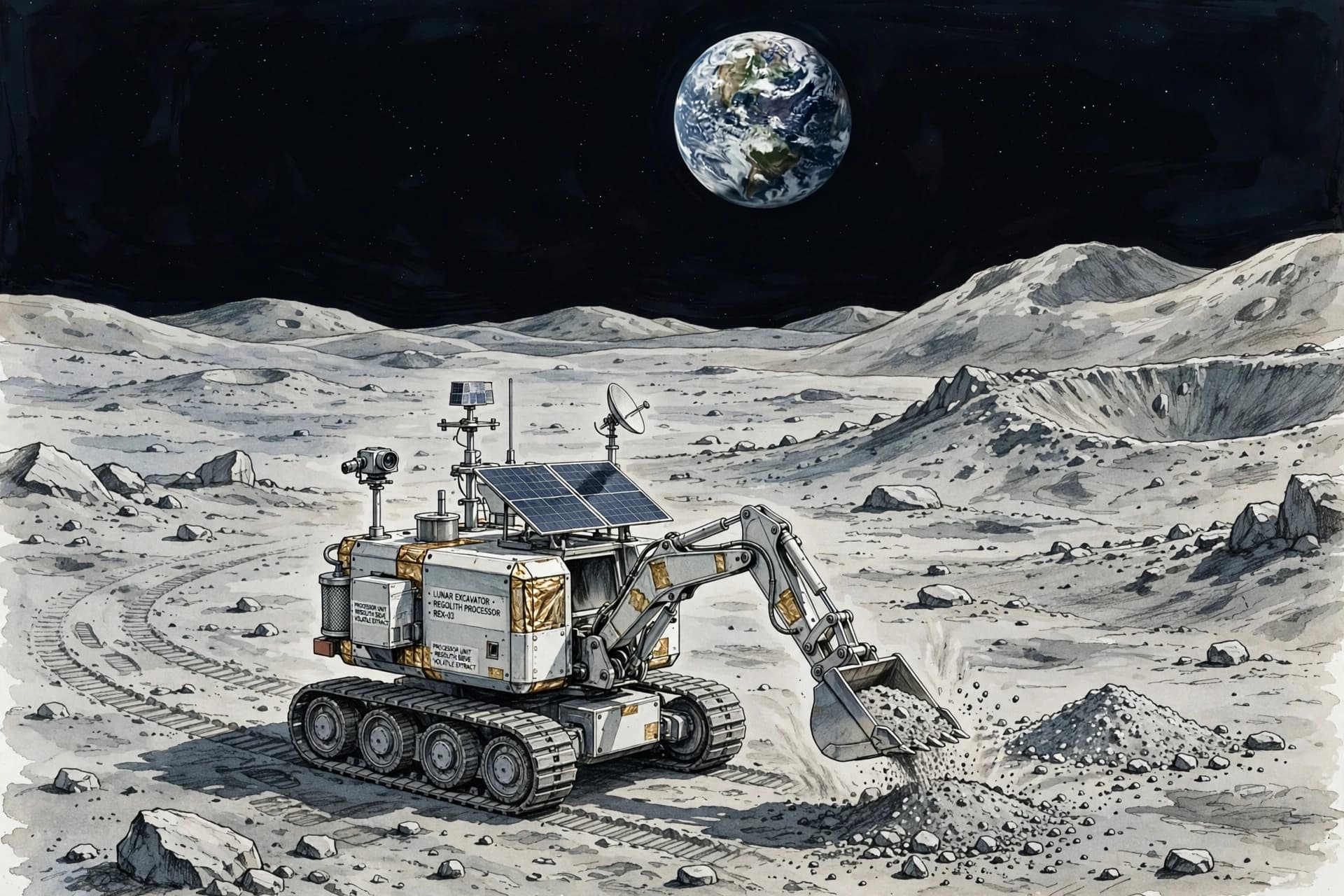
AI Image Disclaimer: Images featured with this article are AI-generated conceptual illustrations intended to visualize future lunar exploration systems.
Sources (Verification Check):
NASA SpaceNews Space.com
Published by Banx Network. This article is part of the Banx decentralized media programme, powered by the BXE token on the XRP Ledger.