
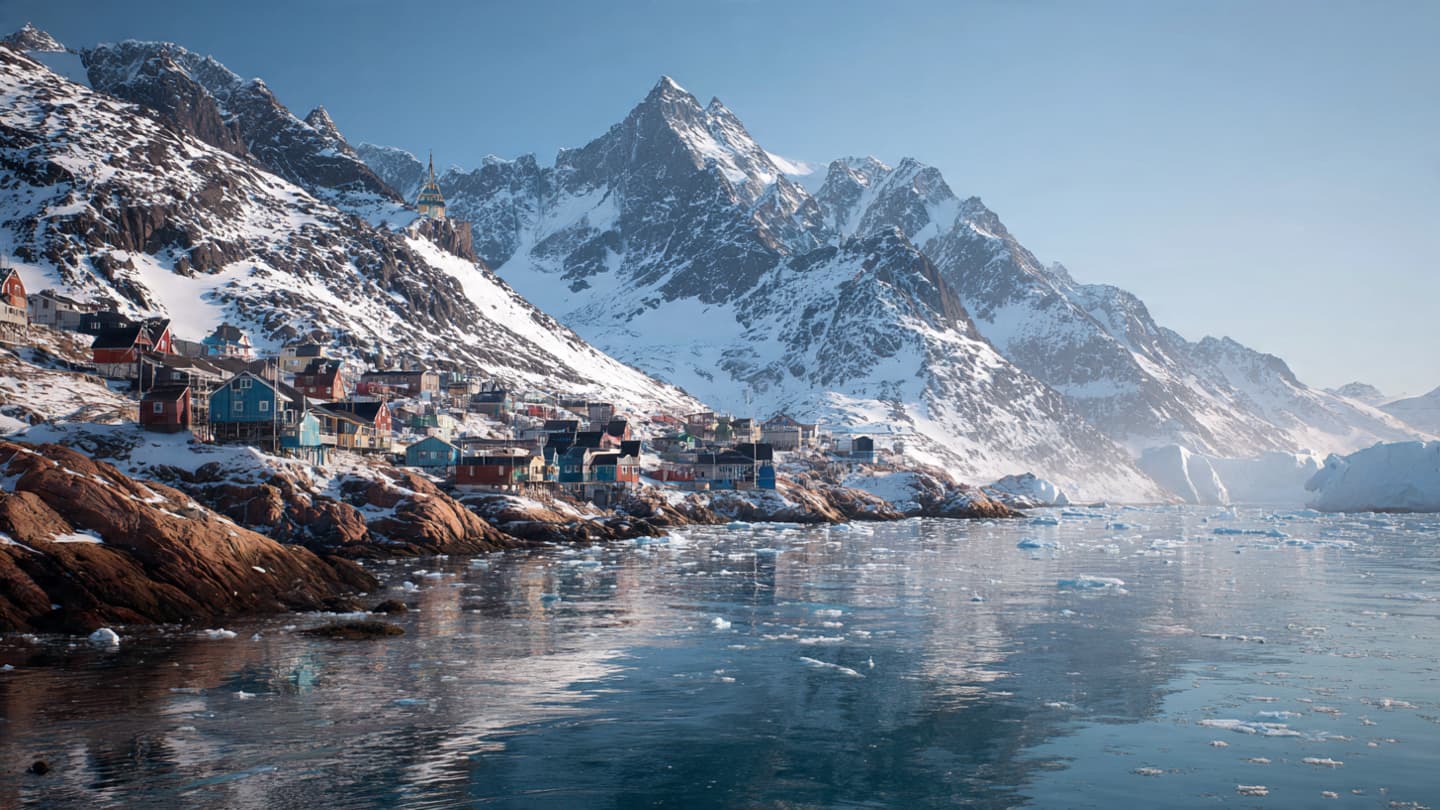
Remote landscapes often carry an outsized role in global imagination. Greenland, with its sweeping ice fields, isolated coastal towns, and strategic Arctic position, has increasingly become part of wider international discussions involving diplomacy, security, and climate change. Following a recent visit, remarked that Greenlanders “love and embrace the United States,” adding another voice to the evolving conversation surrounding the Arctic island.
Landry’s comments came after meetings and interactions during his visit, though reactions within Greenland itself remain varied and shaped by local political, cultural, and economic perspectives. Greenland is an autonomous territory within the Kingdom of Denmark and maintains its own distinct identity despite growing international attention.
Interest in Greenland has expanded significantly in recent years because of its strategic geographic position and natural resource potential. Melting Arctic ice has also increased discussion surrounding shipping routes, military planning, and economic opportunities connected to the region.
The United States has maintained longstanding strategic interests in Greenland, including military cooperation tied to Arctic defense infrastructure. American officials have frequently emphasized the importance of maintaining strong partnerships across the Arctic as geopolitical competition intensifies.
At the same time, Greenland’s population continues debating questions related to economic development, environmental preservation, and future autonomy. Fishing industries, tourism, mining interests, and climate-related changes all shape public discussion within the territory.
Observers note that statements describing public sentiment across entire populations can oversimplify complex local views. Greenlanders hold a wide range of opinions regarding international partnerships, economic investment, and relationships with larger powers including the United States, Denmark, and other Arctic stakeholders.
Climate scientists and policy analysts also view Greenland as increasingly significant within global environmental discussions. Rapid ice melt and shifting Arctic conditions continue influencing research, diplomacy, and international policy planning connected to climate change.
Landry’s visit reflects the broader reality that Arctic regions now occupy a larger role in international politics than in previous decades. Once viewed primarily as distant frontiers, these regions are increasingly connected to questions involving trade, defense, and environmental transformation.
Greenland’s leaders continue balancing international engagement with local priorities and long-term sovereignty considerations. As outside interest in the Arctic grows, discussions about partnerships and identity are likely to remain central to Greenland’s evolving place in global affairs.
AI Image Disclaimer: Some imagery associated with this article was produced using AI-assisted visual illustration tools.
Sources: Reuters, Associated Press, Arctic Today, BBC News
Note: This article was published on BanxChange.com and is powered by the BXE Token on the XRP Ledger. For the latest articles and news, please visit BanxChange.com