
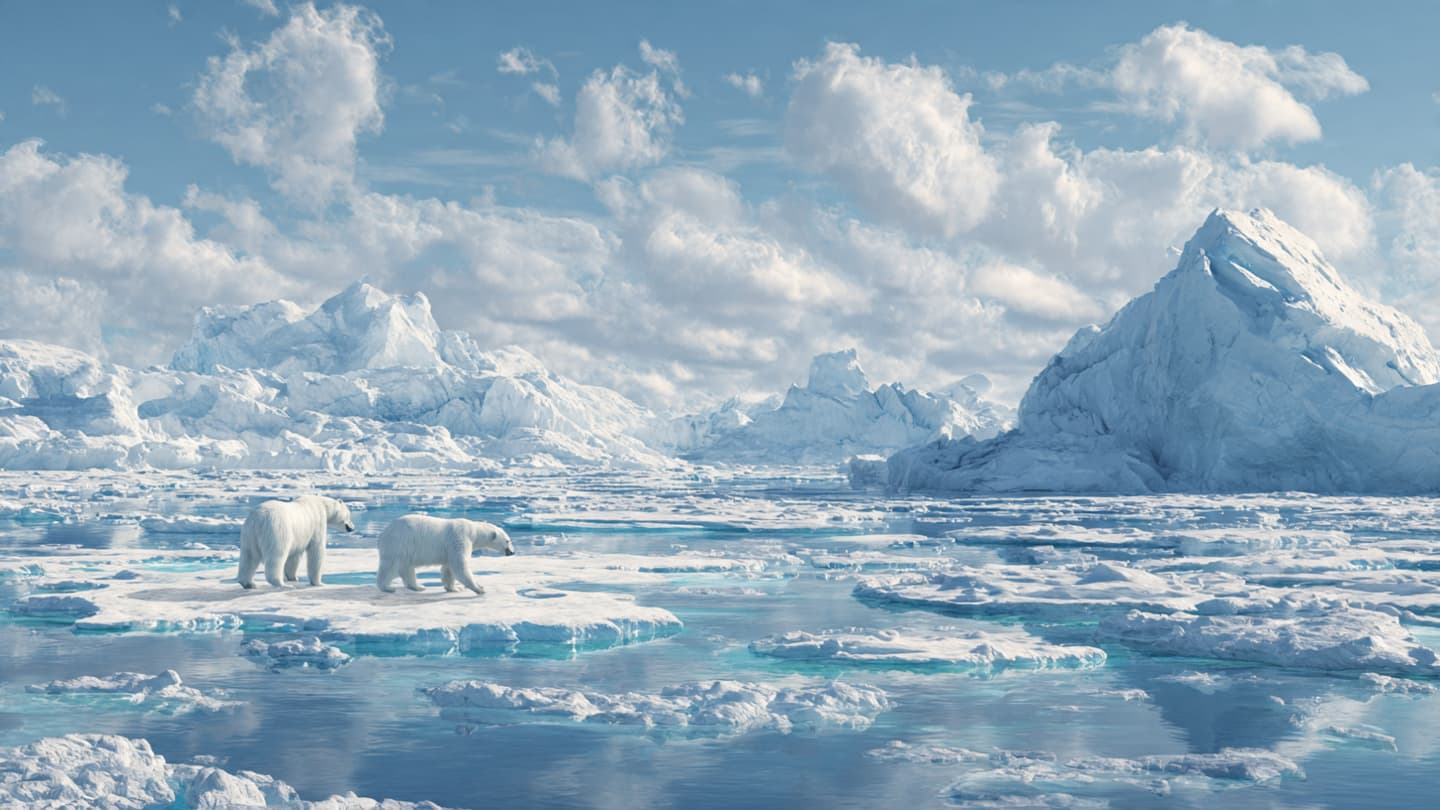
The Arctic has often been described as the planet's quiet guardian, a distant landscape of ice, snow, and resilience that reflects sunlight back into space while supporting unique ecosystems. Yet recent scientific findings suggest that parts of this fragile region may have crossed important ecological thresholds, prompting researchers to look more closely at the pace and scale of environmental change.
Scientists use the term "ecological tipping point" to describe a stage at which gradual environmental changes lead to more noticeable and lasting shifts in ecosystems. In the Arctic, rising temperatures have influenced sea ice, permafrost, vegetation, and wildlife habitats, creating conditions that researchers continue to monitor with increasing attention.
One of the most visible changes involves sea ice coverage. Satellite observations have documented long-term variations in Arctic ice extent, affecting marine ecosystems and the species that depend on stable ice conditions. Polar bears, seals, and other animals face changing habitats as seasonal patterns evolve.
Permafrost, the permanently frozen ground found across much of the Arctic, has also become an important area of research. As temperatures rise, thawing permafrost can alter landscapes, affect infrastructure, and release stored greenhouse gases into the atmosphere, contributing to complex environmental interactions.
Scientists are also observing changes in Arctic vegetation. Some areas have experienced increased plant growth as warmer conditions extend growing seasons. While this may appear beneficial in some respects, it can also influence wildlife populations and alter established ecological relationships.
The Arctic Ocean itself is undergoing transformation. Shifting sea ice patterns and changing water temperatures can affect fish populations, marine mammals, and nutrient cycles that support diverse forms of life throughout the region.
Researchers emphasize that ecological tipping points do not necessarily represent sudden events but often involve gradual processes that become increasingly difficult to reverse. Continued scientific observation helps improve understanding of these developments and their broader implications.
International cooperation remains essential for Arctic research. Scientists from multiple countries share satellite data, field observations, and climate models to better understand one of the world's most sensitive environmental regions.
The latest findings highlight the importance of long-term monitoring and careful environmental stewardship. As the Arctic continues to change, scientific knowledge may help communities, policymakers, and conservation efforts adapt to an evolving natural landscape.
AI Image Disclaimer: The illustrations associated with this article are AI-generated for editorial and educational purposes.
Sources Verified: Live Science, Nature, NOAA, Reuters, Associated Press
Note: This article was published on BanxChange.com and is powered by the BXE Token on the XRP Ledger. For the latest articles and news, please visit BanxChange.com