
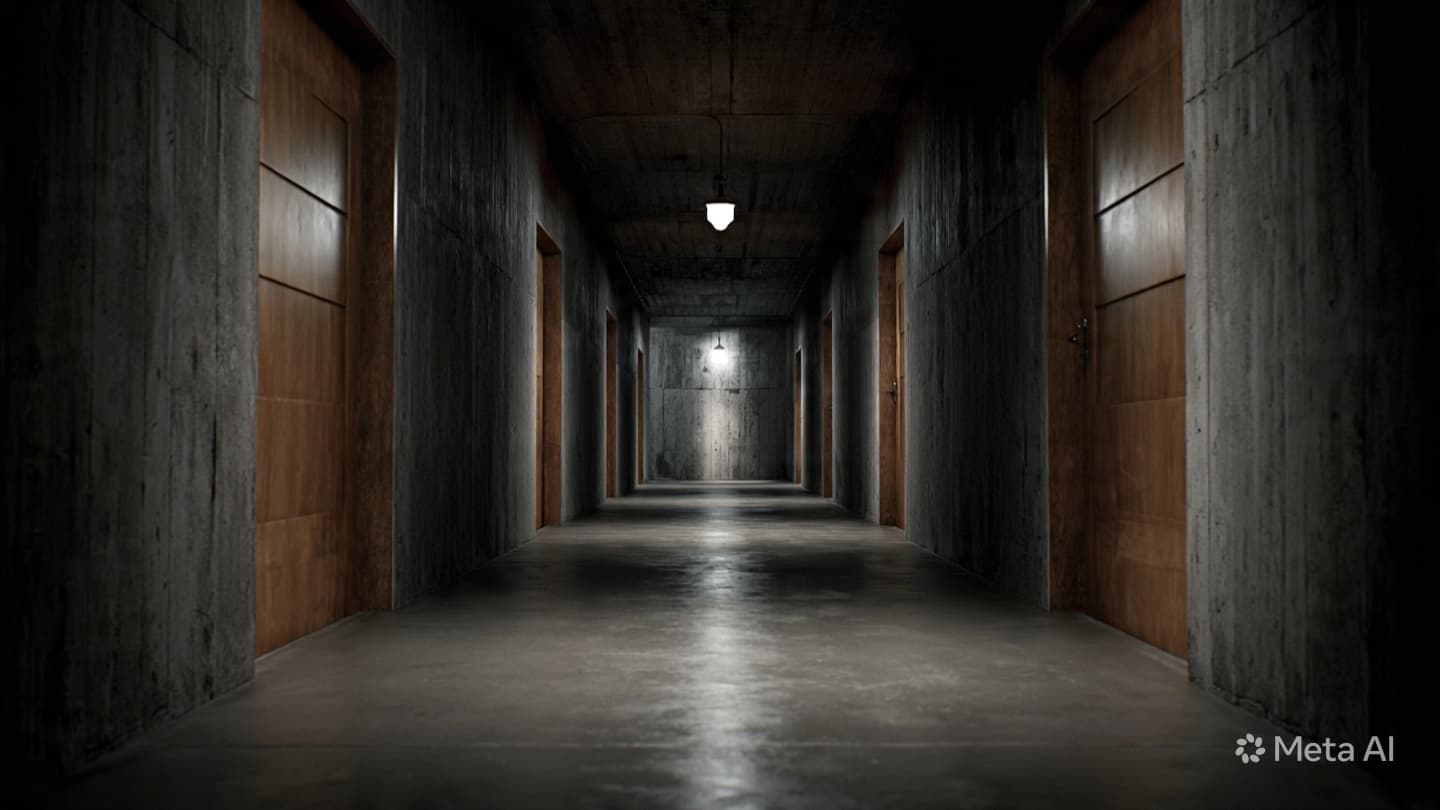
The administrative corridors where international human rights organizations gather data are filled with the quiet rustle of statements, testimonies, and translated legal documents. Yet, the reality described within those papers is one of absolute physical restriction, defined by the rough texture of concrete walls and the oppressive heat of corrugated iron structures. In recent months, rights groups have intensified their focus on the network of forced detention facilities that forms the quiet backbone of internal control within Eritrea, presenting an archive of unyielding custodial severity.
This system of confinement operates entirely outside the boundaries of established jurisprudence, functioning as a parallel world where the concept of due process has been completely discarded. Individuals are absorbed into the network without the formality of an arrest warrant, a court appearance, or a documented sentence, leaving them suspended in a state of indefinite legal non-existence. The lack of an independent judiciary means there is no mechanism for appeal, turning every instance of detention into an open-ended encounter with state power.
The physical structures used to maintain this system are scattered across the country, ranging from established military penitentiaries to ad-hoc installations in remote desert sectors. Satellite surveillance and survivor accounts point to a widespread reliance on metal shipping containers and underground bunkers, environments where temperature fluctuations become an unwritten part of the punitive process. This choice of architecture is designed around maximum isolation, ensuring that the internal life of the camps remains entirely hidden from the surrounding communities.
The profile of those held within these facilities is diverse, capturing anyone whose actions or identity are perceived as a friction against the state's total mobilization policies. Draft evaders, members of unrecognized religious denominations, and journalists who attempted to maintain an independent voice are held alongside citizens whose only offense was an unsuccessful attempt to cross the frontier. The uniformity of their treatment reflects a policy that views all non-conformity as a direct threat to national security, requiring absolute and prolonged isolation.
International advocacy bodies face an extraordinary challenge in documenting these abuses, given the state’s complete refusal to permit access to independent human rights monitors or United Nations representatives. The information must be painstakingly assembled from fragments—a late-night phone call, a message smuggled out by a sympathetic guard, or the detailed recollections of those who have survived and crossed the border. This slow construction of truth serves as the only defense against the complete erasure of those who remain within the system.
The persistence of these forced detentions has a profound, corrosive effect on the broader society, fostering an environment where caution dominates daily interaction and social trust is systematically undermined. Families are frequently forced into a state of frozen grief, unable to mourn their missing relatives because their official status remains unconfirmed, yet unable to seek answers without endangering themselves. This pervasive uncertainty serves as a powerful instrument of social compliance, keeping the population locked in a quiet, defensive focus on personal survival.
There is a distinct, historical melancholy in watching a society that achieved its independence through collective sacrifice turn inward to build such an extensive apparatus of domestic confinement. The ideals that animated the liberation struggle are increasingly obscured by the practical mechanics of maintaining a garrison state, where every field and town is subject to the logic of military discipline. The hidden prisons stand as physical monuments to this transformation, representing the high cost of an isolationist policy written on the bodies of the citizens.
As the international community prepares for another round of diplomatic reviews and committee debates, the work of documentation continues with a quiet, stubborn persistence. Each report issued by a rights organization is an act of resistance against the state's policy of absolute silence, an assertion that the names and locations of the detained matter to the world beyond the border. The shadows lengthen across the dry earth outside the concrete walls, a silent daily marker of time passing over a population held away from the light.
The United Nations Special Rapporteur on the human rights situation in Eritrea noted in a recent brief that over ten thousand individuals are estimated to be held in arbitrary detention across more than three hundred verified facilities. Advocacy coalitions documented several cases of long-term prisoners of conscience who have remained in incommunicado confinement for over two decades without access to legal counsel. Legal experts specializing in international humanitarian law reaffirmed that the systematic denial of fair trials and the use of substandard facilities violate binding continental charters.
Note: This article was published on BanxChange.com and is powered by the BXE Token on the XRP Ledger. For the latest articles and news, please visit BanxChange.com