
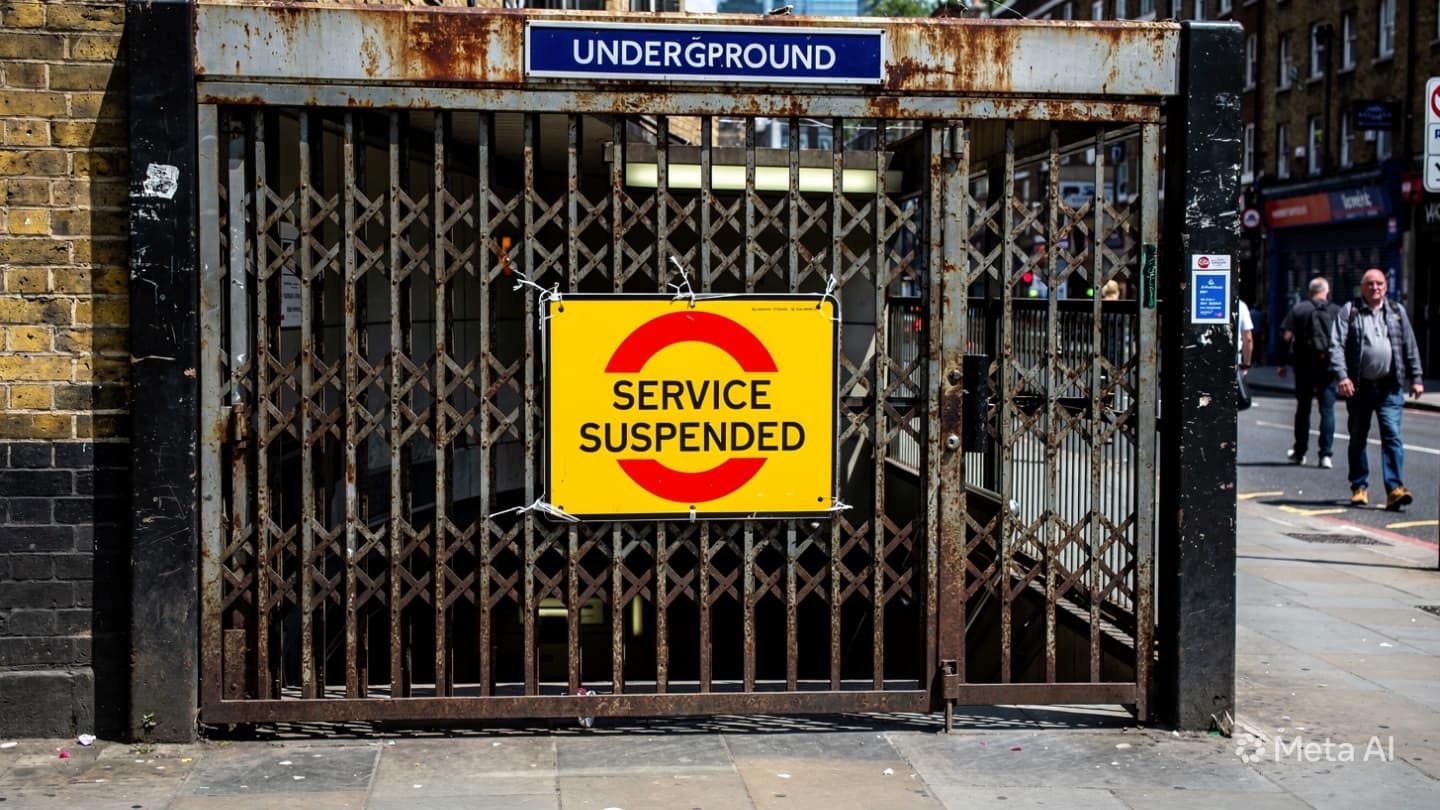
London, United Kingdom—The London Underground network ground to a complete halt Monday morning as thousands of station staff, drivers, and maintenance workers walked out on an indefinite strike. The industrial action began at one minute past midnight, forcing Transport for London to close all major stations before the morning rush hour. Iron gates were pulled down across entrances at Waterloo, King’s Cross, and Victoria, leaving millions of commuters stranded.
Above ground, the city’s transport infrastructure immediately buckled under the weight of the displaced passengers. Long queues twisted around city blocks at bus stops, with double-decker buses filling to capacity within minutes of leaving their depots. Commuters turned to rideshare applications, causing surge pricing to skyrocket to four times the standard rate before 7:00 a.m.
The union leadership stated that the strike will continue until management returns to the negotiating table with a revised offer regarding pension protections and automated scheduling systems. The union argues that the proposed modernization plan compromises worker safety and cuts essential station staff. Management maintains that the changes are necessary to bridge a massive budget deficit.
The Mayor of London called the walkout unnecessary and damaging to the city's economic recovery, urging both sides to enter formal arbitration. Retail groups estimate that the lack of foot traffic in central shopping districts will cost businesses millions of pounds for every day the subway system remains closed.
At Oxford Circus, usually a bustling hub of thousands of transit users, the concrete plaza was eerily quiet except for a small group of picketers holding banners near the locked station stairs. Passing drivers occasionally honked their horns, some in support, others shouting frustration out of open windows as they sat trapped in bumper-to-bumper traffic.
Major employers in the financial district instructed staff to work from home where possible, but hospitality, healthcare, and construction workers had no choice but to attempt the grueling commute. Bicycle rental stations across the capital were completely emptied of stock by mid-morning, leaving late risers with no viable travel alternatives.
Rain began falling in the afternoon, worsening the gridlock as more people attempted to hail traditional black cabs. The major arterial roads leading into the city center became slow-moving parking lots, with travel times across London increasing by over two hours according to satellite navigation data.
Transport for London officials held a brief press briefing confirming that no substantive talks had occurred throughout the day. They warned the public that even if an agreement were reached overnight, the logistics of safety-checking hundreds of miles of deep-level tunnels would prevent normal service from resuming immediately.
The strike shows no signs of a swift resolution as both the union executive committee and transport directors refuse to blink first. Station notice boards display static posters advising travelers to avoid all non-essential journeys across the capital. The underground platforms remain empty and silent.
Note: This article was published on BanxChange.com and is powered by the BXE Token on the XRP Ledger. For the latest articles and news, please visit BanxChange.com